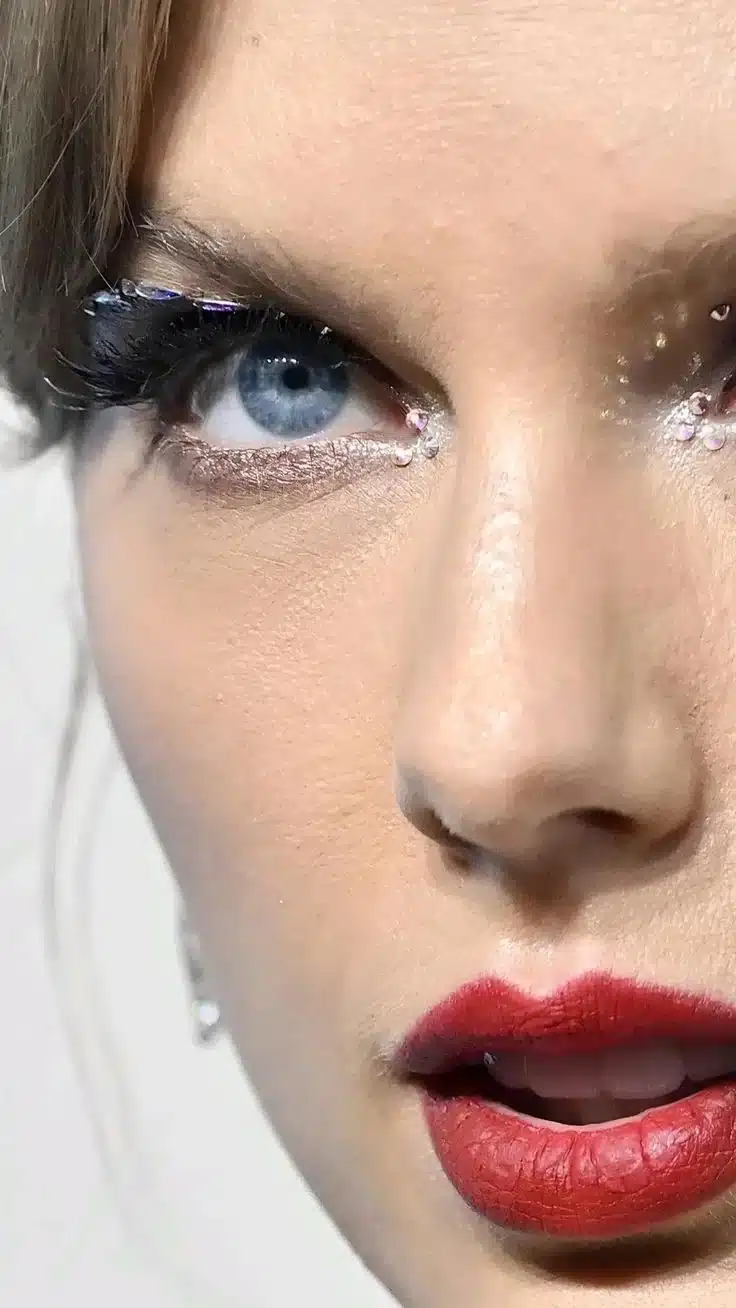
Taylor Swift’s Natural Aging & Facial Harmony Evolution: A NexWell Experts Analysis
The Cultural Rise of Taylor Swift and Why Her Facial Evolution Matters
Taylor Swift has become more than a global music icon—she represents a rare intersection of cultural influence, visual storytelling, aging transparency, and shifting beauty norms. As her presence expanded from country music stages to stadium tours, fashion houses, and film premieres, the public’s visual familiarity with her face created a unique dynamic: people feel they have witnessed her grow up. This makes her one of the most extensively documented examples of natural aging in the public eye.
Her facial evolution is frequently discussed online, yet much of this conversation is speculative or overly simplified. A scientifically grounded perspective reveals something far more meaningful: Taylor Swift’s transformation reflects the predictable, graceful shifts that occur when bone structure, soft tissue, and facial proportions mature from adolescence to adulthood. It also highlights how lighting, styling, weight fluctuations, and expression patterns influence perception far more than people realize.
Why Taylor Swift Became a Case Study in Modern Aging?
In an era dominated by filters, aggressive photo editing, and cosmetic interventions, Taylor Swift’s appearance stands out precisely because her aging process has been comparatively natural. Her facial changes align with:
standard midface maturation,
natural jawline refinement over time,
softening of periorbital contours,
subtle volume shifts typical in late 20s to early 30s,
changes in brow shape due to styling rather than surgical intervention.
This makes her a powerful educational example for understanding how the face evolves across decades—even in individuals without major aesthetic procedures.
The Role of Fame, Cameras, and Constant Visibility
Taylor Swift’s natural aging is examined under a level of scrutiny that most people never experience. High-resolution lenses, varied lighting environments, and rapidly shifting makeup trends amplify even the smallest changes in facial geometry. A shadow cast from a stadium spotlight can make cheekbones appear sharper; soft diffused lighting can make the midface look rounder. These environmental factors shape public perception as much as anatomical evolution.
This is also why many celebrities appear to “change suddenly”—the result of a single widely circulated image taken under atypical conditions. Taylor Swift is no exception: moments captured during intense performances, exhaustion on tour, or high-fashion editorials each create different visual narratives about her face.
Aging as a Mirror of Identity and Public Expectation
Swift’s transformation coincides with her shift from teenage artist to one of the most influential women in global entertainment. As her artistic identity matured, so did her visual presence. This is not merely biological aging—it is a coordinated evolution of expression, styling, posture, confidence, and intentionality.
Analyzing her facial harmony across time allows us to explore how:
identity and aesthetics become intertwined,
subtle facial geometry changes can signal emotional evolution,
natural aging can enhance rather than diminish facial balance.
Why This Analysis Belongs in the Context of Aesthetic Science?
Rather than focusing on rumor-driven interpretations, this editorial frames Taylor Swift’s aging through:
facial proportion theory,
golden ratio alignment,
soft-tissue descent models,
skeletal maturation timelines,
periorbital and perioral aging dynamics,
natural volume redistribution patterns.
This perspective transforms a celebrity discussion into an educational look at facial harmony—grounded in anatomy rather than speculation.
Next, we will explore the precise anatomical changes that occur as the face shifts from adolescence to adulthood, and how Taylor Swift’s evolution reflects these predictable patterns with noteworthy elegance.
The Anatomical Foundations of Taylor Swift’s Facial Evolution
Understanding Taylor Swift’s facial evolution requires separating natural, age-related anatomical changes from the distortions created by lighting, makeup, photography, and social media speculation. From her teenage years to her early 30s, Swift’s transformation aligns closely with established developmental and aging patterns observed in individuals with similar bone structure and soft-tissue composition. Her face provides a clear, real-world example of how subtle anatomical shifts—rather than dramatic interventions—shape the perception of beauty over time.
Bone Structure Maturation: The Framework That Defines Facial Harmony
Between the ages of 15 and 25, the facial skeleton completes its final stage of maturation. In Taylor Swift, this is reflected in:
mandibular angle refinement, giving her jawline a sharper yet still feminine contour,
slight widening and definition of the zygomatic arch, which enhances midface structure,
stabilization of chin projection, creating a more balanced lower-third ratio,
subtle deepening of the temporal hollows, a common feature in naturally slender individuals.
These changes are typical in adults with narrow, elongated facial shapes. They are the anatomical foundation for Swift’s shift from a youthful round-oval profile to a more structured and sculpted appearance in her late 20s and early 30s.
Midface Evolution: Volume Redistribution Rather Than Loss
Many assume that volume loss equals aging. In reality, the midface undergoes redistribution, not uniform depletion, during early adulthood. In Taylor Swift, this has produced:
smoother transitions between the lid-cheek and cheek-jaw regions,
enhanced shadow definition along the zygomatic ridge under certain lighting,
a more contoured appearance during performances or editorial shoots,
reduced baby-fat fullness that characterized her teen years.
Importantly, these changes do not indicate dramatic aesthetic intervention—they align with the natural pattern of facial maturation seen in individuals with her genetic background and physique.
Periorbital Area: The Brow and Eye Shape Across Time
The periorbital region is often responsible for the perception of “aging” or “change.” In Taylor Swift, the shifts have been subtle and predominantly related to:
brow shaping trends, which evolved from rounded arches to softer, straighter brows,
makeup techniques, particularly winged eyeliner, that elongate the eye shape,
volume adjustment in the upper eyelid, typical as soft tissue stabilizes after adolescence,
improved lid-cheek blending, which reflects both maturation and strategic cosmetic styling.
There are no anatomical signs of aggressive surgical alteration—only the natural refinement that occurs as bone and soft tissue settle into adult configuration.
Lower Face & Perioral Geometry: How Expression Influences Perception
The mouth, chin, and jawline contribute significantly to perceived age. Taylor Swift’s lower face evolution demonstrates:
slight definition of the labio-mental angle,
natural softening of the nasolabial region,
more controlled smile dynamics as muscle patterns matured,
stable lip proportions that shift subtly with hydration, expression, and makeup trends.
Contrary to common rumors, Swift’s lips show no hallmark signs of filler overuse; their appearance varies primarily due to:
lighting quality,
gloss or matte textures,
lipstick overlining techniques,
dehydration during tours.
Facial Angles and Proportion Shifts: A Numbers-Based Perspective
The perception of beauty is strongly influenced by the angles and ratios of the face. Swift’s evolution displays:
a slight decrease in facial roundness ratio (due to bone maturation and volume redistribution),
enhanced mandibular-to-zygomatic angle definition, creating a harmonious V-shaped silhouette in certain poses,
consistent facial symmetry, which remains one of her strongest aesthetic attributes,
soft, stable nasal proportions, showing no major structural alteration across time.
These proportional shifts align with the developmental changes typically seen in naturally slender women as they move from adolescence into adulthood.
Why Natural Aging Creates More Harmony Over Time?
Taylor Swift’s adult face displays greater structural balance than her teenage face—not because she altered it, but because her features matured into their proportional relationships. This phenomenon is well-documented in facial harmony studies: the early 20s to early 30s often produce the most aesthetically balanced period of life.
Swift exemplifies this pattern, with enhanced:
midface curvature,
jawline contour stability,
cheek definition,
eye framing,
overall proportional flow.
These characteristics reinforce why her face often appears more striking today than it did 15 years ago—her features have simply aligned into an adult harmony that suits her bone structure and artistic identity.
The next section will explore the social, psychological, and cultural implications of Swift’s facial evolution, and why her natural aging has become a global conversation point.
The Social, Psychological & Cultural Interpretations of Taylor Swift’s Aging
Facial aging does not occur in a vacuum; it unfolds within a complex network of cultural expectations, psychological biases, and social narratives. Taylor Swift is a particularly compelling example because she has lived her entire adulthood in the public eye, allowing millions of people to form parasocial relationships with her—relationships that shape how they perceive even the smallest change in her appearance.
Why People Believe Taylor Swift Has “Changed More” Than She Actually Has?
The perception of dramatic change in Swift’s face stems from several non-anatomical factors that influence how humans interpret visual information:
exposure bias: when the public sees someone regularly for over a decade, minor changes feel magnified,
contrast effect: comparing youthful teen images to adult photographs creates an illusion of accelerated aging,
contextual framing: photo angles, stress, or performance intensity can alter facial expression patterns,
social media algorithms: viral posts exaggerating change receive more engagement and therefore spread faster.
In reality, Swift’s evolution aligns closely with biological norms—yet the context of her visibility amplifies the interpretation.
How Gendered Expectations Shape Perception of Aging
Women’s faces are scrutinized more intensely and more publicly than men’s. Cultural pressures demand that women maintain a narrow aesthetic window—“youthful but not juvenile,” “defined but not sharp,” “elegant but not severe.” Swift’s face is evaluated against these contradictory standards.
This lens shapes commentary in several ways:
natural soft tissue changes are mislabeled as “procedures,”
makeup-driven transformations are mistaken for structural alterations,
fluctuations in weight or hydration are framed as dramatic interventions,
lighting differences are interpreted as intentional aesthetic choices.
Swift’s aging becomes a stage on which gendered beauty expectations are projected.
Parasocial Familiarity: The Illusion of Knowing Someone’s Face
For many people, Taylor Swift is not just an artist—they have followed her through adolescence, heartbreaks, reinventions, and global triumphs. This emotional investment creates parasocial familiarity, where individuals feel intimately connected to the artist despite never meeting them.
This familiarity distorts perception:
viewers expect her to remain visually “frozen” in earlier eras,
any deviation from the remembered face feels personally significant,
nostalgia shapes and often idealizes past versions of her face.
Thus, aging becomes not only a biological process but a symbolic shift in the viewer’s own timeline.
The Influence of Styling, Makeup, and Artistic Reinvention
Taylor Swift is a master of visual storytelling, using makeup, fashion, and styling to reinforce the narratives of each album era. Her artistic evolution—from the soft country curls of her debut era to the sharp eyeliner of “Reputation” and the ethereal softness of “Folklore”—creates distinct aesthetic identities.
These shifts dramatically influence facial perception:
winged eyeliner elongates the eyes,
contouring enhances cheekbone definition,
red lipstick enlarges lip contrast,
soft glam reduces angularity,
high-fashion lighting sharpens midface shadows.
Many perceived “changes” align precisely with these artistic transitions rather than anatomical transformation.
The Role of Stress, Travel, and Performance Demands
Tour cycles, long-haul flights, sleep disruption, and intense physical performance all influence facial appearance temporarily. Dehydration sharpens the jawline; lack of sleep softens the midface; adrenaline alters vascular tone.
These situational changes:
appear suddenly in high-resolution images,
spread widely on social platforms,
create viral narratives of aesthetic transformation.
They reflect the reality of a global touring lifestyle, not surgical alteration.
Why Taylor Swift’s Aging Sparks Global Discussion
Taylor Swift’s influence extends across generations. Her face is not just a face—it is a cultural anchor for millions of people navigating their own transitions from adolescence to adulthood. When Swift ages, she ages with her audience. Her evolution becomes a mirror for:
shifting beauty standards,
collective memory,
emotional nostalgia,
the universal desire for authenticity.
Her aging challenges the idea that beauty must be static. Instead, it demonstrates that facial harmony often becomes more refined—not less—through maturity.
Next, the editorial will explore the scientific side of how lighting, angles, expressions, and performance environments can dramatically alter facial perception—explaining why certain images of Swift go viral with claims of “change,” even when her anatomical features remain constant.
How Lighting, Angles, Lenses, and Performance Environments Create the Illusion of Facial Change
Perception is one of the strongest forces shaping how audiences interpret a celebrity’s appearance. In Taylor Swift’s case, many viral “before and after” comparisons are not documenting anatomical transformation—they are documenting photographic distortion, lighting variables, makeup artistry, and environmental conditions. When images circulate without this context, the brain fills gaps with assumed changes, creating the illusion of dramatic alteration where none exists.
Lens Distortion: The Most Powerful Manipulator of Facial Geometry
Different camera lenses can completely change the appearance of facial proportions without altering the face itself.
Wide lenses (24–35mm) used at concerts or close distances:
widen the midface,
enlarge the forehead,
soften the jawline,
exaggerate facial length,
distort natural symmetry.
Portrait lenses (85–135mm) used in editorials:
compress facial features,
sharpen bone structure,
intensify cheek definition,
refine jawline and chin projection.
The contrast between these two lens types alone can create the impression that Swift’s face has changed dramatically between eras.
The Angle of the Camera Changes Everything
Camera height and tilt influence which facial regions are emphasized.
Slight high-angle shots:
enlarge the eyes,
slim the lower face,
soften the jawline,
shorten the midface.
Low-angle shots:
widen the jawline,
lengthen the chin,
emphasize nasolabial shadows,
intensify cheek contour.
This is why photos taken from fan perspectives during performances often make Swift appear more angular or more tired than she looks in controlled portrait shoots.
Lighting Conditions: The Most Misinterpreted Source of Visual “Change”
Lighting can sculpt or erase facial features. Taylor Swift’s various public environments create starkly different impressions.
Harsh overhead lighting (stadiums, backstage):
deepens under-eye shadows,
sharpens nasolabial folds,
flattens midface volume,
emphasizes fine texture.
Soft diffused lighting (editorials, award shows):
smooths skin texture,
rounds the midface,
reduces the appearance of aging signs,
enhances symmetry.
Colored stage lighting:
alters perceived skin tone,
distorts highlights/shadows,
changes the balance of facial planes.
These variations explain why Swift can appear more angular during a performance and more harmonized during interviews or photoshoots.
Makeup and Styling: A Structured Narrative of Facial Change
Taylor Swift’s eras are defined by distinctive aesthetic identities—each producing unique facial impressions.
Reputation Era:
heavy contouring,
sharp eyeliner,
matte finishes,
dramatic highlights.
This styling created an angular, intense silhouette.
Folklore / Evermore Era:
soft tones,
diffused shadows,
minimal contour,
warm highlights.
This visual language softened her features and emphasized roundness.
Eras Tour:
performance makeup optimized for bright lights,
sharp cheek definition,
deeper lip shades,
precise eyeliner angles.
This set design makes her look more sculpted on stage—even though her anatomy remains unchanged.

Physiological Factors: Why Celebrities Sometimes Look “Different” Overnight
The facial soft tissues change subtly each day due to:
hydration levels,
sodium intake,
hormonal cycles,
sleep patterns,
stress and adrenaline,
physical exertion.
During global tours, these factors fluctuate constantly for Swift. Concert days may produce:
temporary facial swelling,
increased vascular tone,
sharper cheeks due to dehydration,
softer jawlines during fatigue.
These are normal human variations—not structural changes.
The Viral Image Effect: How a Single Photo Can Rewrite Public Perception
A photograph taken under harsh lighting, on a day of fatigue, with a wide lens, at a poor angle, can circulate globally within minutes. Social media then labels it as evidence of dramatic change—even if:
the next day’s photos contradict it,
the anatomy remains stable,
the “difference” comes entirely from camera settings.
Swift’s face becomes a canvas onto which audiences project narratives, misunderstandings, and cultural expectations.
The next section will integrate these scientific insights with a larger reflective perspective—how Taylor Swift’s aging journey demonstrates empowerment, authenticity, and the evolving definition of beauty in modern culture, concluding with NexWell Experts’ editorial insights.
Expert Insights: What Taylor Swift’s Aging Journey Reveals About Modern Beauty
Taylor Swift’s facial evolution is more than a chronicle of one woman’s aging—it reflects the broader cultural transformation in how society interprets beauty, maturity, and authenticity. In an era where images are constantly manipulated, filtered, and scrutinized, Swift’s public aging highlights a critical truth: harmony does not depend on suspension of time, but on the natural alignment of features as they mature.
Aging as a Continuum of Identity, Not a Decline
From adolescence to early adulthood and now into her 30s, Swift’s face has followed the predictable biological arc of maturation. Her evolution shows that aging can enhance balance, deepen character, and highlight structural beauty. The refinement of her jawline, the softening of midface volume, the stabilization of brow position—these are not signs of erosion but expressions of adult harmony.
This challenges the misconception that youth is the only aesthetic ideal. Instead, Swift represents a growing global appreciation for faces that evolve with authenticity rather than resist natural progression.
The Power of Narrative in Shaping Perception
Swift’s image has evolved alongside her artistic eras, reinforcing the idea that beauty is contextual. People often read meaning into facial changes because they associate them with emotional milestones—albums, breakups, reinventions. Her face becomes a visual metaphor for personal growth, resilience, and reinvention.
This phenomenon explains why even subtle shifts feel significant: audiences attach emotional narratives to visual perception. When the narrative changes, the face seems to change with it.
A Counterpoint to the “Anti-Aging” Culture
In a beauty landscape dominated by aggressive interventions, Swift’s natural progression demonstrates that maturity can look elegant, structured, and confident. She exemplifies:
stable facial symmetry,
balanced proportions,
controlled volume distribution,
expressive authenticity.
These attributes resonate because they counter the unrealistic expectation that women remain visually static across decades.
Lessons for Patients and Aesthetic Practitioners
For clinicians, Swift’s evolution reinforces key principles:
natural harmony develops over time,
proportional balance is more important than isolated features,
lighting and context shape perception as much as anatomy,
subtle changes can dramatically affect public interpretation.
For patients, her journey provides reassurance that aging—when allowed to unfold organically—can enhance sophistication rather than diminish beauty.

A Modern Definition of Beauty: Dynamic, Not Fixed
Taylor Swift illustrates that beauty is not a fixed point but a dynamic state shaped by anatomy, expression, personal identity, lifestyle, and era-specific styling. Her face has always aligned with her artistic moment: soft during her country debut, structured during her Reputation era, ethereal during Folklore, and polished yet natural in the present.
These shifts do not represent reinvention through procedures, but evolution through maturity and narrative intention. This is why her aging captivates global audiences: it feels like a shared journey, not a concealed transformation.
Written by NexWell Experts