Written by the NexWell editorial team. Medically informed content. How we create content
Beyoncé Smile & Facial Aesthetics: Power, Symmetry and Timeless Femininity
An in-depth look at Beyoncé's smile and facial aesthetics: exploring symmetry, control, expression, and how confidence shapes timeless beauty.
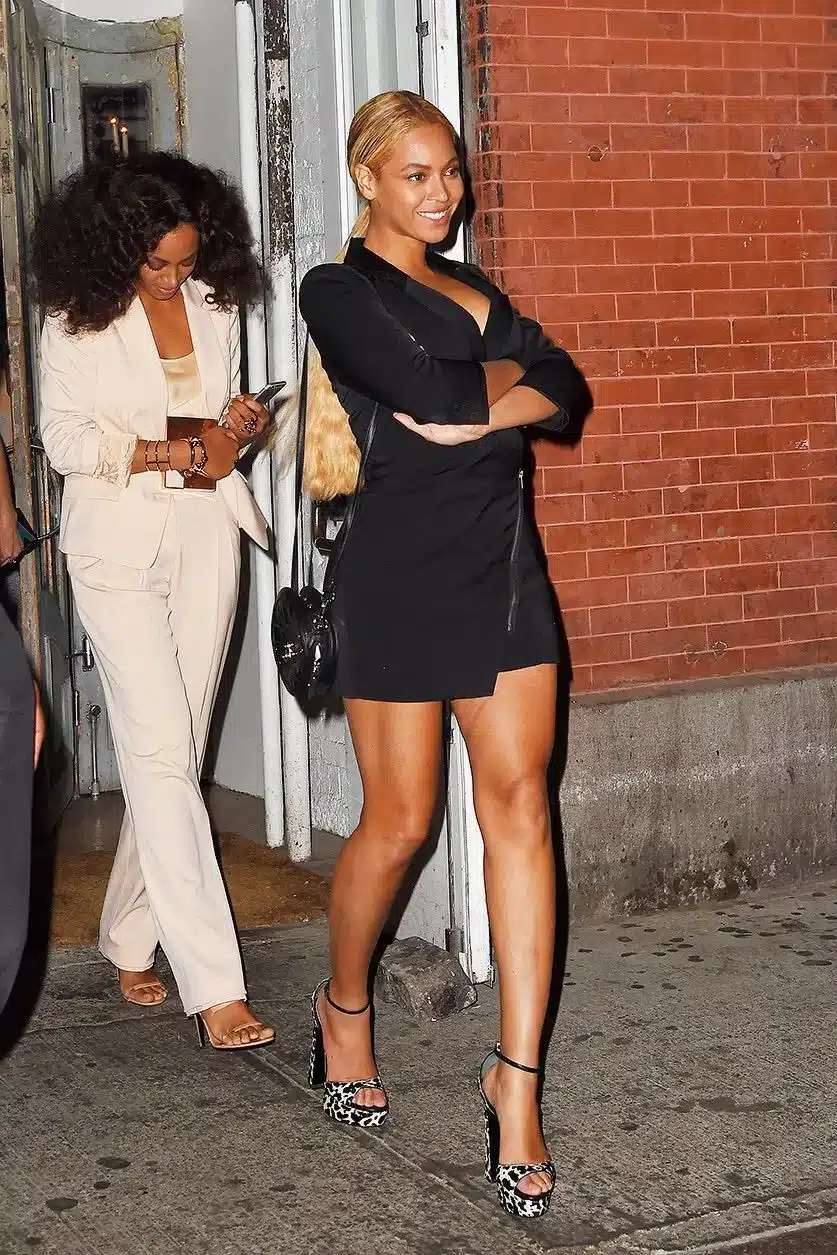
Quick answer
Beyoncé has not confirmed any specific dental work, and this analysis does not speculate on personal procedures. Observationally, her smile shows shade uniformity, strong arch consistency and defined central incisors: traits consistent with professional cosmetic dentistry, though the exact treatments are not publicly documented. A comparable bright, high-arc smile design costs around $2,000–$5,200 for select veneers in Turkey.
Beyoncé's face has been studied, photographed, and referenced in aesthetic medicine for two decades, not because it follows a classical template, but because it projects something harder to define: authority through proportion. Her smile does not invite the eye in. It commands the space around it.
This editorial analysis by NexWell Experts examines the geometry, enamel design, lip dynamics, and facial architecture behind one of the most visually powerful smiles in modern entertainment.
Why Beyoncé's Smile Reads as Powerful Rather Than Pretty
Most celebrity smiles are analysed for softness, symmetry, or youthfulness. Beyoncé's smile is different. Its defining quality is not warmth: it is authority. The proportions, the lip architecture, and the enamel surface all function together to project presence rather than approachability.
This distinction matters clinically. Aesthetic dentistry increasingly recognises that smile goals are not universal. Some patients want an expression that draws people in; others want one that holds space. Beyoncé's smile is the most analysed reference case in the second category.
The key elements that create this effect: - Strong central incisor dominance, where the two front teeth clearly lead the arch visually - High smile arc curvature that rises sharply at the corners during full expression - Lip volume that frames without softening: the lips are full but controlled - Bright but warm enamel that reflects stage lighting without appearing thin or translucent - Minimal gingival display at moderate expression, which adds composure
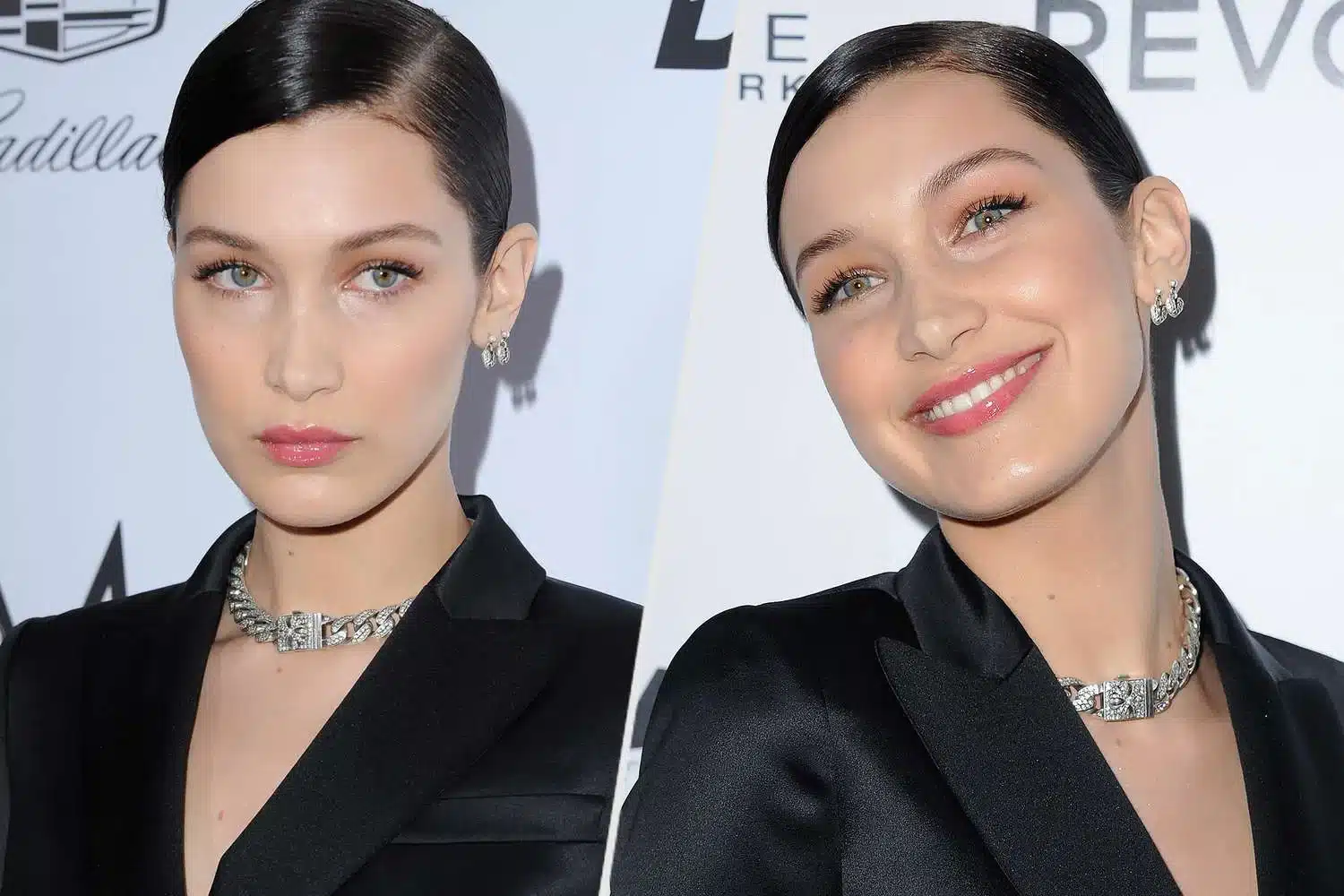
The Midface Architecture Behind Her Facial Presence
Beyoncé's midface is structured around high zygomatic arches and a defined orbital ridge: features that cast precise shadows and create clear geometric separation between facial thirds. This bone structure means her face reads as three-dimensional in both flat photography and live performance.
The consequence for smile design is significant: the midface provides so much visual information that the teeth function as a finishing element rather than the central feature. They complete the composition without needing to compete with it.
Practically, this explains why her smile appears controlled even in highly expressive moments. The facial architecture does the heavy lifting. The smile follows the structure rather than overriding it.
For patients with similar facial geometry, defined cheekbones, strong orbital framing, a longer lower third, aesthetic dentistry can often achieve a comparable sense of presence without aggressive intervention. The architecture is already there.

Treatment Planning
Want a smile like Beyoncé's? Here's how to plan it.
We translate aesthetic goals into a clinical treatment plan — then treat you at NexWell Clinics with the right team for your case.
Lip Dynamics: Controlled Volume and Smile Arc
Beyoncé's lips are among the most studied in aesthetic reference discussions, not primarily for their volume but for their control in motion. At rest, the lip line sits with a slight downward curve that adds gravity to the expression: the corners do not float upward. During smiling, the arc lifts decisively and symmetrically.
This combination, composed rest, decisive expression, is what gives her smile its signature quality. It does not appear to be always working. When it activates, it activates completely.
Lip-tooth harmony principles: - The upper lip lifts to reveal central and lateral incisors cleanly, without excessive gum line exposure - The lower lip frames the incisal edges with a parallel relationship at high-expression level - Corner elevation is bilateral and steep, producing a high-arc smile curve
Patients who reference Beyoncé's smile are often responding to this arc shape and the decisiveness of the lip movement. Clinically, this is achievable through smile design that prioritises arch curvature and correct incisor display height.
Enamel Design: Bright, Structured, and Stage-Ready
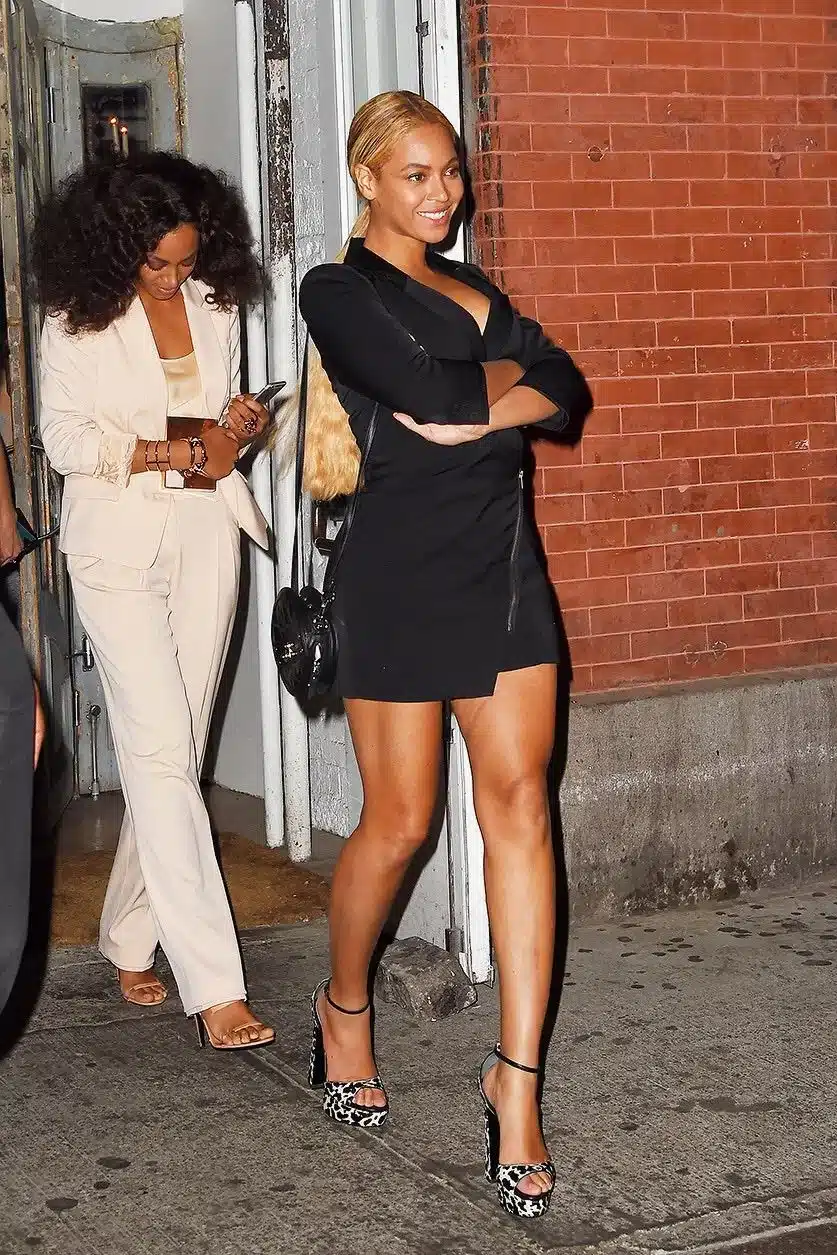
Beyoncé's enamel consistently photographs as bright across all lighting environments: stadium performances, high-fashion editorials, and press events. The shade sits in the upper-bright range (approximately B1/BL2 on classical scales) without appearing translucent or thin.
This opacity matters. Under intense stage and concert lighting, highly translucent enamel can appear grey or disappear optically. Beyoncé's tooth surface reflects light with high opacity, which maintains visual dominance even at large distances.
Surface texture observations: - Smooth to slightly polished finish, reducing micro-shadow patterns - Limited surface translucency: the teeth appear solid and controlled rather than delicate - Consistent shade across the visible arch, from canine to canine
For performance-context patients, those who are frequently photographed, appear on stage, or work in broadcast environments, this brightness-with-opacity approach produces more consistent results than natural-transparency aesthetics.

Aesthetic Evolution: How Her Smile Has Changed Over Two Decades
Beyoncé's dental aesthetic has refined consistently over her career, following a pattern of controlled improvement rather than dramatic transformation. Early career images show a naturally proportioned smile with slightly more colour variation and less brightness uniformity. By her mid-career period, the shade became more consistent, the edges more defined, and the arch curvature more deliberate.
These changes reflect the pattern of elite performer dental care: regular professional maintenance, selective refinement, and shade management over time rather than full-mouth replacement.
What remained constant across all eras: - Central incisor dominance - High-arc expression - Strong midface framing - Controlled lip architecture
The core aesthetic identity was never disrupted: it was refined. This is the clinical lesson most often drawn from her case: continuity of identity through selective, staged improvement.

Clinical Application: What Patients Can Learn From This Analysis
Patients who reference Beyoncé in consultation are usually not asking for a specific tooth shape or shade. They are describing a quality of presence: a smile that projects confidence and control rather than warmth and approachability.
In clinical planning, translating this into treatment means: - Prioritising central incisor proportion and dominance in the arch - Selecting a bright, opaque shade rather than a translucent natural tone - Designing for high-arc expression rather than a flat or conservative curve - Ensuring the smile works at performance distance, not just in close-up
These are achievable goals for many patients, but they require designing for the right reference. A Beyoncé-inspired smile and an Ariana Grande-inspired smile use entirely different design philosophies. The first is built for authority; the second for approachability. Mixing the principles produces neither.
For patients pursuing this bright, high-arc style, see current Hollywood smile prices in Turkey for how this level of case is typically planned and priced.

Frequently asked questions
Has Beyoncé had veneers?
This analysis does not speculate on personal procedures. Observationally, her smile shows characteristics consistent with professional cosmetic dentistry: shade uniformity, arch consistency, and incisor definition. The specific treatments involved are not publicly documented.
What makes Beyoncé's smile look so powerful?
The combination of strong central incisor dominance, high smile arc curvature, bright opaque enamel, and controlled lip architecture creates a sense of authority rather than approachability. The midface bone structure reinforces this by providing clear geometric framing.
Can a similar aesthetic be achieved through cosmetic dentistry?
Yes. The key design principles, shade brightness, arch curvature, incisor proportion, are reproducible through smile design. The result will depend on individual facial architecture, but the approach can be tailored toward a power-aesthetic rather than a softness-aesthetic.
How is Beyoncé's smile different from a soft celebrity aesthetic like Taylor Swift's?
Taylor Swift's smile is built for emotional connection, soft asymmetry, warm tones, relatable expression. Beyoncé's is built for authority, high arc, opaque brightness, decisive activation. Both are effective; they serve different aesthetic and interpersonal goals.
Guide: The Complete Medical Tourism Handbook
Cost comparisons, clinic evaluation checklist, packing list & recovery tips. Everything you need to plan your treatment in Turkey.
Related reading
plastic-surgery
Most Beautiful Celebrities with Golden Ratio Faces
Facial proportion analysis of 17 celebrities ranked by golden ratio scores: what their features reveal about rhinoplasty, smile design, jawline contouring, and real aesthetic surgery planning.
beauty-and-wellness
Taylor Swift Smile Aesthetics: Soft Symmetry & Natural Dental Harmony
Explore the soft symmetry, expressive geometry, enamel warmth, and emotional impact behind Taylor Swift's iconic smile, analysed by NexWell Experts.
beauty-and-wellness
Ariana Grande Smile Analysis: Aesthetic Harmony, Facial Balance & Natural Beauty
A detailed aesthetic analysis of Ariana Grande's smile, facial harmony, and evolving beauty: explained through dental proportions, facial balance principles, and natural smile design.
beauty-and-wellness
Zendaya's Sublime Smile Aesthetics: Natural Geometry & Modern Dental Design
Explore the natural geometry behind Zendaya's youthful smile. NexWell Experts analyse her proportions, enamel warmth, lip dynamics, and modern minimalist aesthetic.
dental
Hollywood Smile in Turkey
Achieve a symmetrical, brilliantly white smile with E-max and zirconia veneers at Istanbul's leading cosmetic dental clinics. Digital Smile Design technology lets you preview your new look before treatment begins.
dental-treatments
Veneers Turkey Cost 2026: Composite vs Porcelain Pricing Guide
Understand veneer pricing in Turkey by case size, material, smile design complexity, and the difference between cosmetic volume clinics and high-control aesthetic workflows.