Laminate Veneers in Turkey: Minimal Prep, Materials and Case Selection
A NexWell guide for patients comparing laminate veneers in Turkey with a clearer view of minimal-prep logic, E.max versus feldspathic choices, no-prep claims and when laminates make more sense than traditional veneers.
- JCI-accredited hospitals
- TEMOS-accredited clinics
- Board-certified surgeons and a licensed clinical team
- 3,000+ international patients treated
- 5-star chain hotel accommodation
- VIP airport transfers
Written quote from a NexWell coordinator, usually within 24 hours.
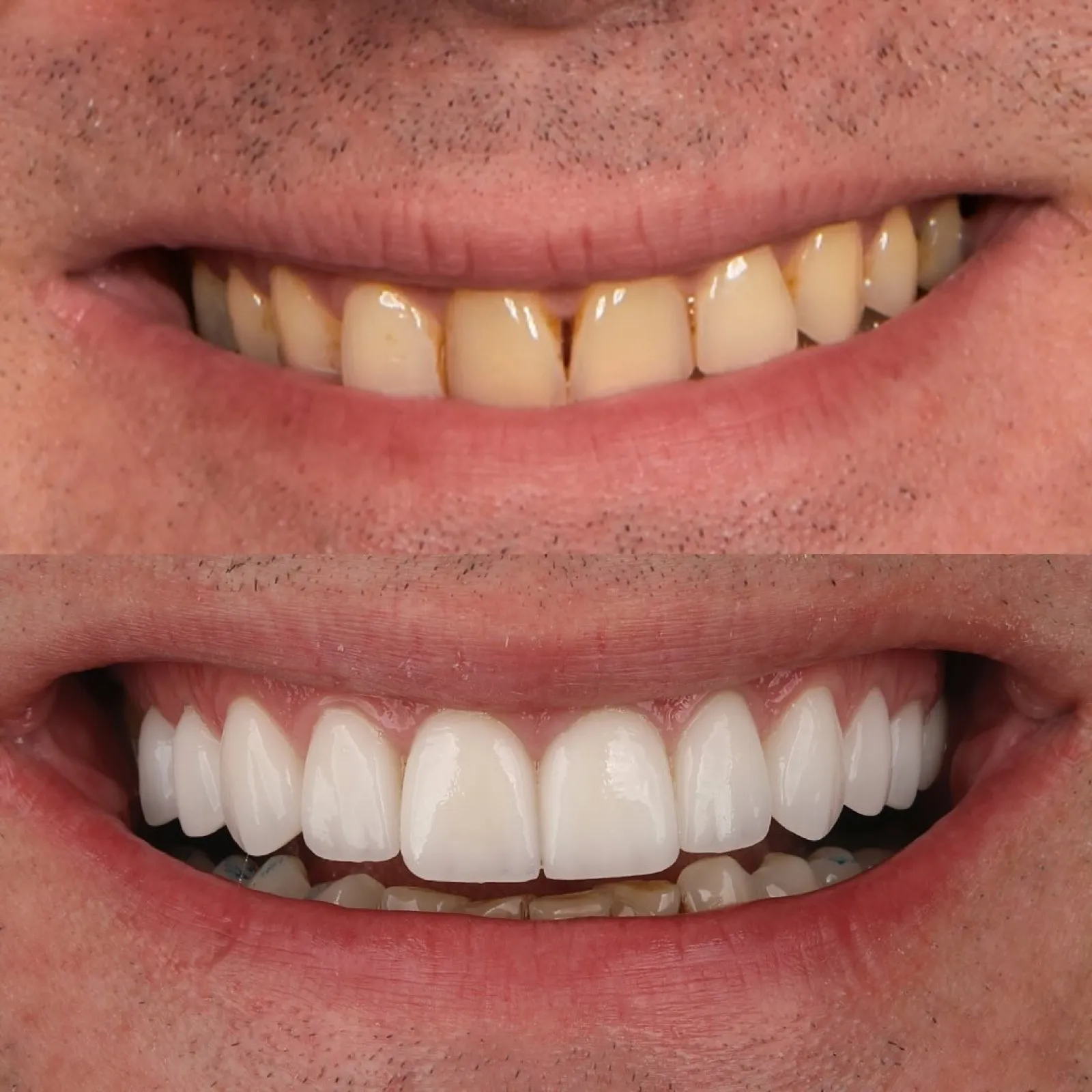
Written quote from a NexWell coordinator, usually within 24 hours.
Quick answer
Laminate veneers in Turkey cost $230–$520 per tooth ($1,840–$4,160 for an 8-unit upper case), all-inclusive of the lab work and fitting, up to 90% less than the UK's $760–$1,800 per tooth (2026). No-prep, Lumineer-style veneers run higher, from roughly €280–€350 per tooth, because of the thinner, more technique-sensitive ceramic.
Laminate Veneers Are Mostly About Preserving Tooth Structure
Patients usually choose laminate veneers because they want cosmetic improvement with less irreversible preparation. That makes the planning logic different from a heavier smile makeover route. The question is not only how white or symmetrical the result will look. It is how little healthy enamel needs to be changed to get there.
Laminate veneers work best as conservative cosmetic planning, not a shortcut to a full smile rebuild. The best cases are usually the ones where the patient's existing teeth already give the clinician enough structure to improve shape, proportion or color without turning the case into a more aggressive restoration.
When teeth are crowded rather than only the wrong shape, clear aligners first can let the laminates stay even thinner.
Laminate veneers work best as conservative cosmetic planning, not a shortcut to a full smile rebuild.
What Are the Different Types of Laminate Veneers?
| Feature | Typical scope | Planning effect |
|---|---|---|
| E.max laminate | Balanced option for thin ceramic work with stronger durability and good aesthetics | Often chosen as the practical all-round option |
| Feldspathic laminate | Ultra-thin, high-aesthetic ceramic for appearance-led cases | Often chosen when maximum translucency is the main goal |
| No-prep or Lumineer-style route | Very conservative cases where little to no prep is claimed | Needs tighter case selection because not every smile can absorb added thickness naturally |
The right comparison is not just brand language. It is whether the material and prep depth match the starting tooth position.
Laminate Veneers vs Traditional Veneers: What's the Difference?
Laminate veneers are usually better suited to patients with relatively good tooth structure who want subtle-to-moderate cosmetic improvement. Traditional veneers often become more appropriate when discoloration is heavier, shape correction is larger or more room is needed to control the final result.
This is why patients should be cautious with blanket no-prep promises. Conservative treatment is valuable only when the final smile still fits naturally in thickness, bite and profile.
Patients sometimes also come across removable, mail-order clip-on veneer kits online. These are a different category of product entirely, not a cheaper version of laminate veneers, and our pop-on (clip-on) veneers reviewed guide explains why, with sourced ratings and complaint patterns before you compare the two.
Laminate Veneers Turkey Cost: Per Tooth and Full Case
Single laminate veneer
Turkey
$230-$520 (£180–£410 / €210–€480)
USA
$1,000-$1,500
UK: $760-$1,800 · Saving: Often up to 90% lower in Turkey
8-unit upper laminate case
Turkey
$1,840-$4,160 (£1,450–£3,280 / €1,690–€3,830)
USA
$8,000-$12,000
UK: $6,100-$14,200 · Saving: Often up to 90% lower in Turkey
No-prep or Lumineer-style case
Turkey
EUR280-EUR350 per tooth
USA
$1,200-$1,800 per tooth
UK: EUR900-EUR1,400 per tooth · Saving: Often up to 90% lower in Turkey
| Procedure | Turkey | USA | UK | Saving |
|---|---|---|---|---|
| Single laminate veneer | $230-$520 (£180–£410 / €210–€480) | $1,000-$1,500 | $760-$1,800 | Often up to 90% lower in Turkey |
| 8-unit upper laminate case | $1,840-$4,160 (£1,450–£3,280 / €1,690–€3,830) | $8,000-$12,000 | $6,100-$14,200 | Often up to 90% lower in Turkey |
| No-prep or Lumineer-style case | EUR280-EUR350 per tooth | $1,200-$1,800 per tooth | EUR900-EUR1,400 per tooth | Often up to 90% lower in Turkey |
These figures are directional. The meaningful comparison depends on whether preview work, temporary restorations, material brand and refinement stages are part of the same quote.
When Laminate Veneers Usually Make More Sense
Laminate veneers are usually strongest when the patient has enough healthy enamel, needs modest shape or color correction and wants a more conservative aesthetic route. They often suit cases where the smile already works structurally but needs refinement rather than complete redesign.
They are less convincing when the patient needs major masking, broad structural correction or a more aggressive geometry change than minimal prep can absorb cleanly.
How NexWell Reviews a Laminate Veneer Plan Before Recommending a Clinic
NexWell looks for:
Chasing the thinnest veneer available is the wrong question. The right one is whether enamel can be preserved without compromising how the final result looks and lasts.
- 1whether the patient is a real minimal-prep candidate
- 2whether the clinic explains material choice clearly rather than using only package branding
- 3added thickness, edge position and profile checked before any no-prep claim
- 4preview and refinement stages built in before final bonding
- 5whether the planned outcome favors natural fit over exaggerated size or shade
Treatment Plan
Ready for a written Laminate Veneers in Turkey: Minimal Prep, Materials and Case Selection quote?
A NexWell coordinator reviews your case and replies with a personalised treatment plan and indicative pricing — usually within 24 hours.
What Happens During the Laminate Veneers Procedure in Turkey?
A laminate veneer case in Turkey can often be completed in a single visit of approximately five to eight days, depending on case complexity and lab turnaround. The typical workflow begins with a shade and shape consultation, photographs and possibly a digital smile design preview or wax-up mockup to establish aesthetic targets before preparation.
Once the treatment plan is agreed, the existing teeth are prepared to a minimal depth to accommodate the veneer thickness. Shade selection happens under controlled conditions. Temporaries are placed while the lab fabricates the final restorations.
The bonding appointment follows technical approval of the veneers. Edge fit, colour and contour are evaluated before and during bonding. Minor refinements can sometimes be made chairside, though shape changes after bonding are more limited.
For patients who cannot complete both appointments in one trip, some clinics can manage the preparation and temporary stage during a first visit and finalise bonding during a second visit. This is less common for laminate cases than for implant cases but can be arranged with planning.
How Do You Take Care of Laminate Veneers After Treatment?
High-quality laminate veneers bonded to a well-prepared surface can last ten to twenty years depending on material, bite forces and daily care. The risks that shorten veneer lifespan most commonly are bruxism, nail-biting, biting hard objects and unmanaged bite load at the veneer edges.
Patients with heavy bites or parafunctional habits should discuss this before treatment. A night guard during sleep is often recommended alongside veneers to protect both the restorations and the bonding interface.
Sensitivity in the days immediately following preparation is normal and usually resolves. Long-term sensitivity can indicate an issue with bonding or the proximity of preparation to the pulp. Good clinics pre-empt this by discussing sensitivity risk before preparation starts.
Routine care involves normal brushing and flossing, with awareness that very hard or abrasive toothpastes can dull the veneer surface over time. Professional clean and polish visits every six to twelve months are recommended to maintain surface texture and detect any emerging margin issues early.
How to Evaluate Whether Your Teeth Are Actually Suitable for Minimal-Prep Laminates
The most important decision in a laminate veneer case is not which material to use but whether the teeth are genuinely suited to minimal or no preparation. Patients with crowded, rotated, heavily discoloured or structurally compromised teeth may hear a no-prep claim but receive a more aggressive preparation than expected once the clinical reality is assessed.
Teeth that already have significant rotations or labial inclinations and cannot be managed with an overlay without adding bulk will require more prep to create a result that looks natural and sits flat. Patients should ask the clinic to show them what happens to tooth position and profile if no prep is performed and whether the result would look right in three-dimensional fit.
Good pre-treatment assessment includes photographs, models or digital simulation that show what the restorations would add in thickness at each tooth position. If the clinic cannot produce this kind of preview, the no-prep claim should be evaluated with more caution.
Questions to Ask Before Booking Laminate Veneers in Turkey
Before committing to a laminate veneer plan in Turkey, patients should have answers to:
- Is the case no-prep, minimal-prep or standard-prep and what criteria define that for these teeth?
- Is there a digital or physical mock-up stage before preparation?
- What material will be used and why does it suit these teeth specifically?
- How many teeth are included in the planned case?
- Are provisionals placed after preparation and what do they look like?
- What is the bonding protocol and what happens if a veneer debonds in the first year?
- How does the clinic manage patients who bite heavily or have existing wear patterns?
- What is the schedule for the visit and how many clinic days are needed?
Laminate veneers are a long-term investment and the preparation stage is irreversible. Getting clear answers before treatment starts ensures the patient enters the process with realistic expectations and a defensible outcome in view.
How NexWell Reviews a Laminate Veneer Case Before Recommending a Clinic
NexWell reviews laminate veneer proposals by checking whether the preparation strategy is genuinely driven by the patient's tooth anatomy and treatment goals or by a standard technique applied uniformly. Minimal preparation is a valid approach for suitable teeth.
It is not a universal answer, and clinics that promise it without examining the specific case configuration may create restorations that appear over-bulked or that compromise natural light transmission.
We also review whether the design process includes a formal preview stage before any enamel is removed. A mock-up or digital preview is the point at which misalignment between patient expectation and planned outcome can be caught and corrected without cost. Clinics that build this step in as standard are more aligned with the patient's interests than those that proceed directly from photographs to preparation.
For patients who have received two or three laminate proposals with different tooth counts, preparation descriptions or material specifications, NexWell helps establish which plan represents the most conservative approach to the patient's specific anatomical situation and which is likely to deliver the natural-looking result they described.
This comparison often reveals meaningful differences that are not apparent from price or package label alone.
How Much Do Laminate Veneers Cost in Turkey?
Laminate veneers in Turkey typically cost $230–$520 per tooth, or $1,840–$4,160 for an 8-unit upper-arch case, compared with $760–$1,800 per tooth in the UK, a saving of up to 90% for a comparable material and lab quality. No-prep, Lumineer-style veneers cost more per tooth, from roughly €280–€350, because the ultra-thin ceramic is more technique-sensitive to fabricate.
Within these ranges, price depends mainly on material (E.max versus feldspathic ceramic), tooth count and whether a digital or physical mock-up preview stage is included. Ask for a written quote that separates the preview stage, temporaries and final bonding before comparing clinics.
See the full price breakdown for veneers in Turkey for per-tooth, full-set and package figures across every material.
Are Laminate Veneers Painful?
Laminate veneer preparation is typically minimal and carried out under local anaesthesia, so most patients feel light pressure rather than pain. Mild sensitivity to hot, cold or pressure is common for a few days after preparation and while wearing temporaries, usually resolving on its own.
Because laminate veneers are designed to preserve enamel, the preparation is generally more comfortable than a full crown. Long-term sensitivity after bonding can indicate an issue with the bonding process or how close preparation came to the tooth's nerve, and should be raised with your clinic.
How Long Do Laminate Veneers Last?
High-quality laminate veneers bonded to a well-prepared surface typically last ten to twenty years, depending on material, bite forces and daily care. E.max veneers generally offer stronger durability, while feldspathic veneers are prized for their translucency but can be more technique-sensitive over the long term.
The factors that most shorten veneer lifespan are bruxism, nail-biting, biting hard objects and unmanaged bite load at the veneer edges. Patients with heavy bites or parafunctional habits are usually advised to use a night guard during sleep from the start of treatment to protect both the veneers and the bonding interface.
Am I a Candidate for Laminate Veneers?
Good candidates for laminate veneers typically have enough healthy enamel remaining, want modest-to-moderate correction of shape, colour or minor gaps, and do not have significant structural damage or decay on the teeth being treated. Patients with crowded or rotated teeth are sometimes better served by clear aligners before veneers, which can keep the final preparation thinner.
Heavier discolouration, larger structural correction needs or a strong preference for maximum change in one visit usually point toward traditional veneers or a crown-led route instead. A photo review by a NexWell-affiliated dentist will confirm whether your teeth suit a minimal-prep laminate approach before you book travel.
How Long Does the Laminate Veneer Procedure Take?
A laminate veneer case in Turkey can often be completed in a single visit of five to eight clinic days, depending on case complexity and lab turnaround. The schedule typically includes a shade and shape consultation with a preview or mock-up stage, minimal-depth preparation, temporary placement while the lab fabricates the veneers, and a final bonding appointment.
Patients who cannot complete both stages in one trip can sometimes arrange preparation and temporaries on a first visit with bonding on a second, though this is less common for laminate cases than for implant cases and needs to be planned in advance with the clinic.
Are Laminate Veneers in Turkey Safe?
Laminate veneers carry the risks common to any bonded ceramic restoration, sensitivity, occasional debonding or a chip requiring repair, which are uncommon when the case is properly selected and prepared by an experienced cosmetic dentist. Because preparation is irreversible even at minimal depth, case selection matters more for safety than for most other cosmetic procedures.
A mock-up stage worked into the workflow early, along with CE- or FDA-approved ceramic materials, is what NexWell screens for before adding a clinic to the network. Since preparation cannot be undone, the case-selection criteria, preview process and material specification are worth confirming in writing before that stage begins.
Medically reviewed by Dt. Taner Bektaş, DDS: Prosthodontics. Last reviewed March 2026
Contracted clinics
NexWell coordinates with TEMOS-accredited clinics or Ministry of Health–licensed facilities in Turkey.
Board-certified review
Content reviewed by Dt. Taner Bektaş — Turkish Dental Association (TDB).
5.0★ from real patients (2 reviews)
“I'd been self-conscious about my teeth my entire adult life: crowded, discoloured, chipped. I sent photos, got a digital smile design back within 48 hours, and booked. Five days in Istanbul, and I came home with a completely new smile.…” — James T., Dublin, Ireland
No obligation
Get your Laminate Veneers in Turkey: Minimal Prep, Materials and Case Selection plan
Send your case and a coordinator returns a written plan and an indicative quote — usually within a day.
Questions Patients Ask Before They Commit
Related reading

dental-treatments
Veneers Turkey Cost 2026: Composite vs Porcelain Pricing Guide
Understand veneer pricing in Turkey by case size, material, smile design complexity, and the difference between cosmetic volume clinics and high-control aesthetic workflows.
dental
Hollywood Smile in Turkey
Achieve a symmetrical, brilliantly white smile with E-max and zirconia veneers at Istanbul's leading cosmetic dental clinics. Digital Smile Design technology lets you preview your new look before treatment begins.
dental-treatments
E.max vs Zirconia Crowns: Which Material Makes More Sense?
A decision guide comparing e.max and zirconia crowns for front teeth, full-smile cases, strength, translucency, and long-term value.
Dental Guide
Affordable Cosmetic Dentistry in Turkey
Cosmetic dentistry in Turkey from £150/tooth. Porcelain veneers, smile makeover & zirconia crowns at JCI-accredited Istanbul clinics. Get your quote in 24 hrs.
Plan the next step clearly
Use this page as a decision-support guide, then move into quote review, treatment comparison, and travel planning with coordinator support.
Decision Context
Patients compare this treatment inside the trip around it
Treatment pages perform better when they acknowledge arrival flow, destination trust, and the recovery rhythm patients are trying to visualise before booking.

The provider decision starts with arrival confidence
Patients compare treatment pages while also asking how first-day logistics, transfers, and scheduling will actually work.

The destination still influences medical trust
A treatment page is stronger when it recognises that the city itself remains part of the decision frame for international patients.

Recovery pacing changes how people evaluate options
Different procedures feel more or less realistic depending on how patients picture the slower hours between appointments.