Do I Need Full Mouth Dental Implants? Candidacy Checklist
Learn how dentists evaluate whether full mouth dental implants are appropriate for you: clinical signals, common candidacy profiles, reasons to delay, and questions to ask before deciding.
Quick answer
Learn how dentists evaluate whether full mouth dental implants are appropriate for you: clinical signals, common candidacy profiles, reasons to delay, and questions to ask before deciding.
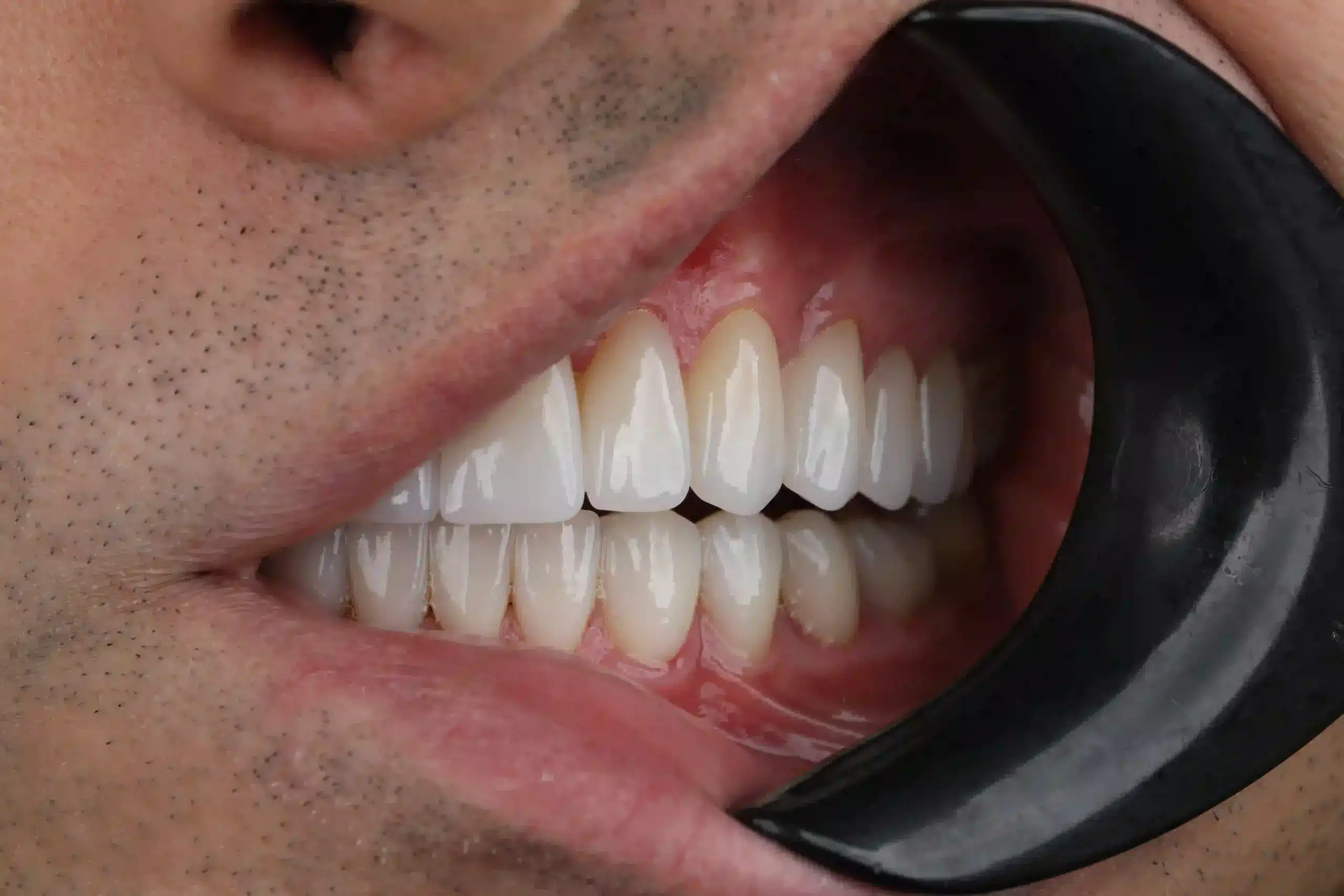
If you are asking this question, it usually means something has changed in your day-to-day reality: chewing feels cautious, restorations keep failing, dentures feel unstable, or your bite no longer settles into a consistent position. Full mouth dental implants are not a 'bigger' version of routine implant treatment. They are a system-level solution designed for situations where local repairs stop being predictable.
This page explains how candidacy is typically evaluated in clinical practice, clearly and without sales pressure.
A Quick Self-Check: Clinical Signals That Usually Matter
These patterns suggest the mouth may be operating as an unstable system rather than a set of isolated problems:
- Repeated failures: crowns fracture, bridges loosen, or repairs repeat in the same areas - Bite instability: your bite feels different across the day, or you cannot find a comfortable closing position - Functional avoidance: you avoid specific foods because chewing feels risky or uncomfortable - Denture limitations: movement, sore spots, adhesives, or constant awareness of the prosthesis - Progressive tooth mobility: often linked to periodontal breakdown or structural compromise - Severe wear / clenching: flattening, fractures, or constant tension that 'restarts' after dental work
None of these automatically means you need full mouth implants. They simply indicate that the mouth may require a system-level solution rather than further local repairs.
Who Is Typically a Candidate for Full Mouth Dental Implants
Heavily restored dentition with recurring failures: multiple crowns and bridges over time, with repeated breakage or retreatment in the same areas.
Unstable dentures: function is limited, confidence is low, and adaptation has plateaued despite adjustments.
Advanced periodontal compromise: mobility, shifting, spacing changes, or a bite that no longer holds steady despite treatment.
Severe wear patterns: bite collapse, reduced vertical dimension, or fracture cycles in high-force patients.
Collapsed posterior support: missing back teeth leading to overload on remaining teeth and progressive breakdown.
In these profiles, the main goal is not 'more teeth.' The goal is restoring a stable, maintainable bite system. The number of implants follows from that functional objective, not from a predetermined package.
Tool · instant estimate · no sign-up
How much would your implants cost in Turkey?
Enter the quote you were given at home and see your typical all-inclusive Turkey price for All-on-4, All-on-6 or full mouth implants — plus your estimated saving, instantly.
Who May Not Be Ready Yet, and Why
These are not disqualifiers in most cases. They are signals that treatment design must be tighter and more staged before proceeding:
- Uncontrolled inflammation or infection: active disease needs stabilisation to reduce long-term risk; proceeding through active disease compromises healing and implant integration - Unaddressed force habits: severe clenching or grinding may require occlusal strategy and protection planning before final restoration - Medical considerations: systemic factors can influence healing and risk management, evaluated individually by treating clinicians - Expectations mismatch: if the goal is 'never any maintenance,' the plan must be reframed before proceeding - Inconsistent follow-up ability: long-term stability improves with structured review and hygiene routines; patients who cannot commit to follow-up are higher-risk candidates
What Clinicians Evaluate First: The Practical Checklist
A thorough implant assessment includes:
1. Imaging and bone architecture: CBCT scan to assess bone volume, density, and anatomy. Bone quality determines implant distribution and whether grafting is needed.
2. Bite stability and force distribution: Where are forces concentrated? Are there bruxism signs? Occlusal analysis shapes the entire prosthetic design.
3. Soft tissue and hygiene access: Is the planned prosthetic design cleanable? Will tissue levels support the restoration long-term?
4. Provisional strategy and adaptation: Will there be a provisional phase to test function and phonetics before final restoration? This is one of the strongest predictors of long-term satisfaction.
Questions to Ask Before You Decide
If the answers to these questions are specific to your anatomy and force profile, you are usually in a safer planning environment. If the answers are generic and identical for every patient, that is a signal to slow down.
- What is the main clinical reason you recommend a full-arch plan in my case? - Which risks are you actively designing around: force, hygiene access, bone limits? - What is the maintenance plan, and what is considered 'normal service' over time? - Will there be a provisional phase to test function and bite behaviour before finalisation? - If I grind or clench, how does that change materials and occlusal design? - If something chips or loosens later, how serviceable is the system?

Frequently asked questions
Can I get full mouth implants if I still have some natural teeth?
It depends on the condition of those teeth. If natural teeth are structurally viable and have acceptable prognosis, a staged approach preserving them may be clinically preferable. Full extraction before implants is only recommended when preservation is no longer predictable.
I wear dentures and am unhappy with them: does that mean I need implants?
Denture instability is one of the most common drivers toward implant consultation. Implant-retained overdentures (snap-on dentures) may be a less invasive intermediate step. Full fixed implants are typically recommended when overdentures no longer meet functional needs.
My crowns keep breaking: is that a sign I need full mouth implants?
Repeated crown failure in the same area can signal an underlying bite or force problem. Before proceeding to full-arch implants, clinicians typically investigate why failures are recurring: addressing bruxism, occlusal imbalance, or periodontal disease may resolve the pattern without full replacement.
How do I know if I have enough bone for implants?
Bone volume is assessed with CBCT imaging, standard practice before any implant consultation. Insufficient bone can often be addressed through grafting or through angulated implant techniques such as All-on-4, which use available bone more efficiently.
What is the first step if I think I might need full mouth implants?
Request an assessment from an implant specialist that includes CBCT imaging and an occlusal analysis. NexWell can coordinate a digital pre-assessment with imaging review before you travel, so you arrive at the clinical consultation with a clearer picture of your options.
Guide: The Complete Medical Tourism Handbook
Cost comparisons, clinic evaluation checklist, packing list & recovery tips. Everything you need to plan your treatment in Turkey.
Related reading
dental
New Teeth in Turkey: Implants, All-on-4 & Fixed Teeth Explained
Want 'new teeth'? This dentist-reviewed guide explains your fixed options in Turkey: single implants, All-on-4, All-on-6 and full-mouth, how they compare to dentures, what they cost, how long treatment takes, and how to choose a clinic.
dental-treatments
Full Mouth Dental Implants: Treatment Analysis, Clinical Scenarios & Outcomes
A clinical analysis of full mouth dental implants: when they are genuinely indicated, when they are not, treatment pathways, ethical decision-making, and what separates durable outcomes from early failures.
dental-treatments
Full Mouth Dental Implant Risks and Complications: A Realistic Overview
A clear, clinical overview of full-arch implant risks: biologic, mechanical, and force-related. Understanding complications in advance is what makes long-term outcomes manageable.
dental-treatments
Life After Full Mouth Dental Implants: What It Actually Feels Like
What daily life is really like after full mouth dental implants: eating freely, adapting speech, reduced self-consciousness, and how the experience shifts quietly over months and years.
dental-implant-guides
All-on-4 vs All-on-6 Dental Implants: Which Full-Arch Solution Is Right for You?
A clinical comparison of All-on-4 and All-on-6 full-arch implant systems: load distribution, bone requirements, cost differences, and which option suits your jaw anatomy.
dental
How Long Do New Teeth Last? Implants, Bridges & Dentures
How long do new teeth last? Dental implants can last 15–25 years or a lifetime, while the bridge or crown on top is usually replaced every 10–15 years. Here's the lifespan of each option and what actually decides how long yours survive.
Written by the NexWell editorial team. Medically informed content. How we create content