Cosmetic Dentistry Myths Debunked: The Real Facts About Veneers, Crowns, Bonding, and Whitening
12 common cosmetic dentistry myths debunked: veneers, zirconia crowns, bonding, and whitening: compare lifespan, prep, and find the right treatment.
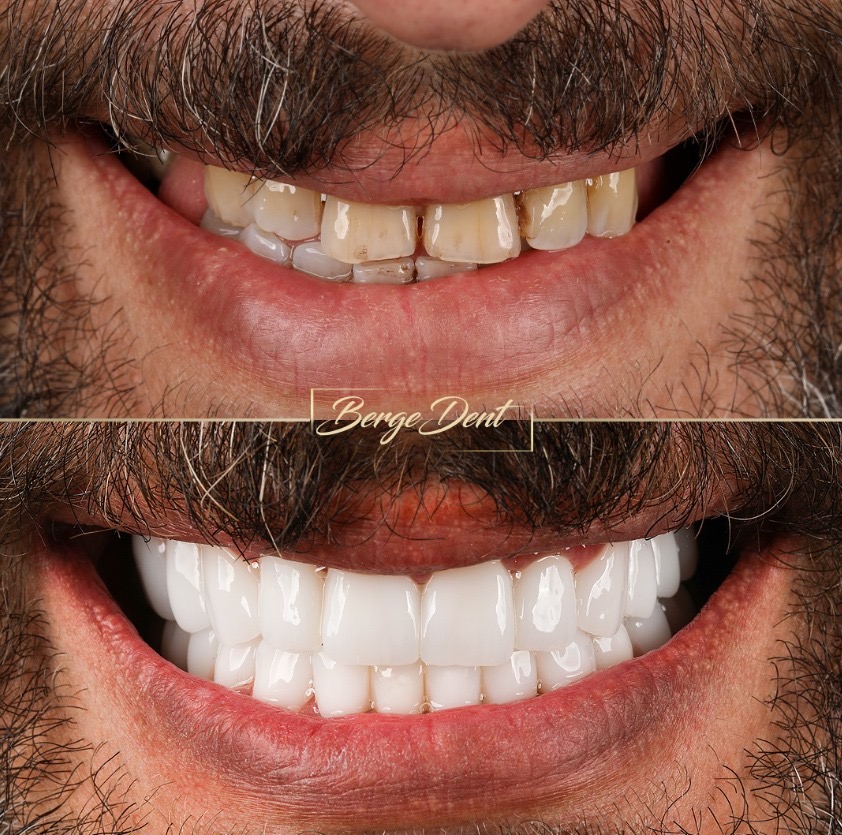
Quick answer
12 common cosmetic dentistry myths debunked: veneers, zirconia crowns, bonding, and whitening: compare lifespan, prep, and find the right treatment.
- Laminate veneers are bonded only to the front surface of the tooth and typically require minimal enamel reduction (roughly 0.3–0.7 mm): the idea that they "ruin" your teeth is a myth.
- Zirconia crowns cover the entire tooth and require more extensive tooth reduction; they're typically recommended for teeth with extensive decay or a history of root canal treatment.
- Bonding (composite) is generally the most affordable and conservative option, though it has a shorter lifespan and stains more easily.
- Professional teeth whitening doesn't dissolve or weaken enamel; any post-treatment sensitivity is usually temporary, and how long results last depends largely on your habits.
- Smile design is about far more than tooth color: it's a personalized process that considers shape, alignment, gum contour, and facial harmony together. The right plan depends on individual clinical evaluation.
The Field of Cosmetic Dentistry: Definition, Technology, and Philosophy
Cosmetic dentistry sits at the intersection of health and aesthetic care. It's not simply about making teeth look better. It's about preserving chewing function, supporting long-term dental health, and harmonizing your smile with your facial proportions, all at the same time.
Historical Context and Modern Science
Fifteen to twenty years ago, laminate veneer preparation removed considerably more tooth structure than it does today. Now, minimally invasive techniques are the standard of care, and advances in materials, bonding systems, and preparation design mean veneers can be placed while preserving much more of the natural tooth.
Multi-Parameter Design
Modern smile design doesn't focus on a single factor like color: it considers six key elements together:
- Color and shade (brightness level, harmony with skin and hair tone)
- Tooth shape (form and edge design)
- Alignment and spacing (proportional distances between teeth)
- Gum architecture (contour and symmetry)
- Smile line (how much tooth shows when you smile)
- Facial harmony (tooth proportions relative to overall facial structure)
This is why a well-planned aesthetic treatment is, at the same time, a functional health plan.
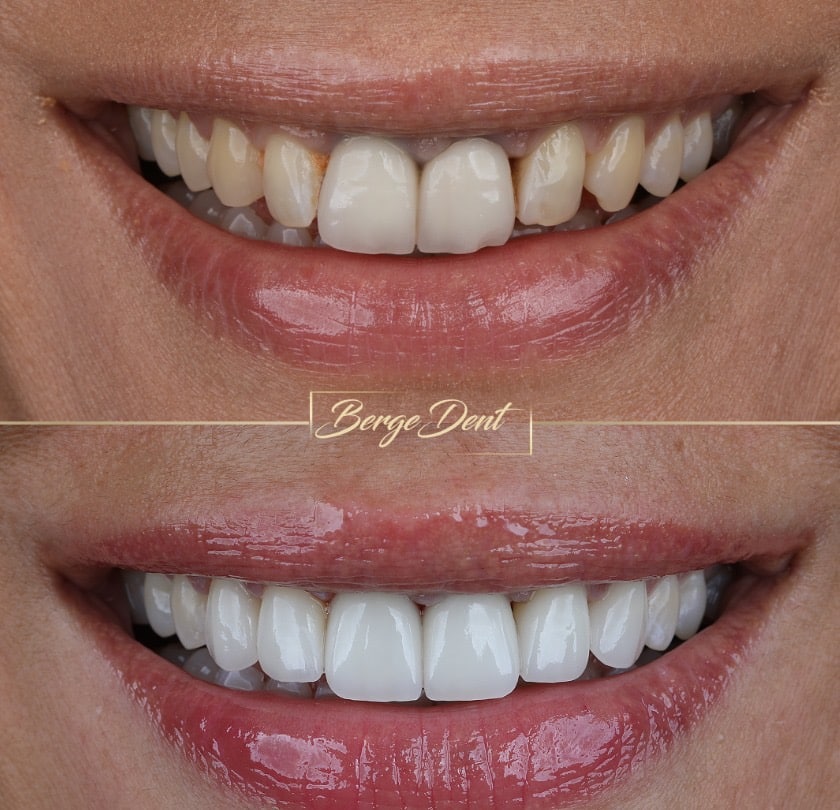
12 Common Cosmetic Dentistry Myths. Myth vs Fact
1. "Laminate Veneers Severely Wear Down Teeth and Ruin Them"
Myth: Getting laminate veneers means grinding away a large portion of your tooth structure, causing irreversible damage and exposing the tooth to decay.
Fact: Modern veneer technique is built on the minimal-prep principle. The amount of enamel removed is typically only 0.3–0.7 mm: well clear of the nerve. In select cases, even less preparation (or none at all) is possible with no-prep veneers.
What matters: The real issue isn't the technique itself but how skillfully the dentist prepares the tooth and shapes the margins. Careful, precise preparation:
- Helps protect the nerve (pulp) from unnecessary exposure
- Creates a precise margin fit that helps reduce decay risk at the edges
- Strengthens the bond between veneer and tooth
With conservative preparation and good care, laminate veneers can last 10–15 years or longer.
2. "Zirconia Crowns and Laminate Veneers Are the Same Thing"
Myth: Both are essentially "crowns on teeth," and any difference is just about material and durability.
Fact: These two treatments are designed for fundamentally different purposes.
- Coverage area, Laminate Veneer: Front surface only (labial), Zirconia Crown: Entire tooth, all sides
- Tooth preparation (average), Laminate Veneer: 0.3–0.7 mm enamel, Zirconia Crown: Full circumference, more extensive (typically 1.5–2 mm)
- Best suited for, Laminate Veneer: Healthy tooth with enamel damage, Zirconia Crown: Extensive decay, broken crown, or root canal-treated tooth
- Lifespan expectation, Laminate Veneer: ~10–15 years, Zirconia Crown: ~10–20 years; 20+ years with good care
- Aesthetic quality, Laminate Veneer: Excellent natural appearance, light translucency, Zirconia Crown: Modern zirconia is highly aesthetic: the outdated, "opaque" look is a thing of the past
- Typical indications, Laminate Veneer: Color, shape, minor alignment issues, Zirconia Crown: Large cavities, root canal-treated teeth, fractures, or structural loss
Bottom line: Laminate veneers are among the least invasive options and ideal for minor issues in otherwise healthy teeth. Zirconia crowns are protective restorations for already-compromised teeth, with a longer expected lifespan. The right choice depends on your tooth's condition and your dentist's clinical evaluation.
3. "Teeth Whitening Dissolves Enamel and Weakens Tooth Structure"
Myth: Whitening gel acts like an acid, dissolving enamel crystals and damaging tooth structure.
Fact: Professional, dentist-supervised whitening works by oxidizing pigment molecules within the tooth to lighten its color: it doesn't dissolve or alter the enamel structure itself. The bleaching agent used is pH-balanced and applied under controlled conditions.
The chemistry: Whitening agents (typically hydrogen peroxide or carbamide peroxide) work by breaking down pigment chains. This is a color change, not structural damage.
Important safety note: Unregulated over-the-counter whitening products can have inconsistent pH and concentration, which may irritate gums or increase sensitivity. Dentist-prescribed systems, whether in-office or take-home, are formulated and monitored to minimize these risks.
For more on this topic, see our teeth whitening FAQ.
4. "Post-Whitening Sensitivity and Damage Are Permanent"
Myth: After whitening, teeth remain permanently sensitive and weakened.
Fact: Post-whitening sensitivity is usually temporary and typically resolves within a few days, up to a maximum of 4–6 weeks.
Why sensitivity occurs: Whitening can temporarily open the dentin tubules as the tooth structure responds to treatment; this effect is functional and reversible.
Management strategies:
- Fluoride gel application (by your dentist)
- Sensitivity-reducing toothpaste (potassium nitrate or arginine-based)
- Avoiding hot/cold beverages for about a week
When can lasting problems occur?
- Excessive, frequent whitening (2+ times per week, self-applied)
- Undetected cavities or cracks present before whitening
- Unregulated commercial products with high pH
Bottom line: Professional, dentist-supervised whitening is generally considered low-risk; permanent damage is rare.
5. "A Hollywood Smile Works for Everyone and Can Be Copied Directly from Social Media"
Myth: The perfect smile you see on social media can be recreated on anyone with minor adjustments.
Fact: The guiding principle of smile design is simple: every face and every smile is unique. There's no one-size-fits-all formula.
Why copy-paste doesn't work:
- Face shape: Round, narrow, square-jawed, rectangular. Each face shape calls for different tooth proportions.
- Age dynamics: A 25-year-old and a 55-year-old may suit different aesthetics, since natural smile contours change with age.
- Gender-related preferences: Softer, rounder tooth edges are often considered more flattering for a feminine smile, while sharper, more angular edges are often preferred for a masculine one. Though this comes down to individual preference.
- Lip movement and muscle structure: How much your lips move when you smile and how much gum shows varies from person to person.
- Skin tone, hair, and eye color harmony: The whiteness level must suit these features; excessive brightness can look artificial.
The right approach: Your dentist uses photo analysis, frontal and profile evaluation, and digital simulation to build your personalized design. This individualized process is the key to a natural-looking result.
6. "Smile Design Is Only About Appearance; Function Doesn't Matter"
Myth: A smile is successful as long as it looks good. Nothing else counts.
Fact: Smile design rests on three equally important pillars: aesthetics, function, and biomechanics. A beautiful-looking smile with poor function is likely to run into problems over time.
Functional parameters:
- Occlusal (bite) harmony: Making sure the teeth come together properly. A misaligned bite can contribute to veneer fracture, gum problems, and jaw issues.
- Chewing forces: Laminate veneers are aesthetic but can be vulnerable to strong horizontal forces (such as teeth grinding or clenching). The design has to account for this.
- Gum health: An asymmetrical smile line or gum contour can make hygiene harder, encourage plaque buildup, and contribute to gum disease.
- Lip support: Restored teeth should support the lips and allow for balanced facial muscle function.
A successful aesthetic result generally requires:
- A pleasing appearance
- Comfortable chewing
- Long-term stability
- Healthy gums
All four criteria matter together.
7. "Cosmetic Restorations Last a Lifetime; No Touch-Ups Are Ever Needed"
Myth: Once laminate veneers, crowns, or bonding are placed, no further treatment will ever be needed.
Fact: Cosmetic restorations are durable, but they have a limited lifespan. Aging restorations may eventually need repair or replacement.
Expected lifespan (with good care):
- Laminate veneers: 10–15 years (in some cases, 18–20 years)
- Zirconia crowns: 10–20 years (20+ years possible)
- Composite bonding: 5–8 years
Signs a restoration may be reaching the end of its lifespan:
- Marginal cavities or discoloration at the edges
- Small cracks or edge separation
- Color fading (especially with bonding)
- Gum recession or an opening margin
Habits that help extend lifespan:
- Avoid aggressive brushing (use a soft-bristle brush)
- Wear a night guard if you grind your teeth (bruxism)
- Limit staining habits (tobacco, dark coffee, red wine)
- Floss daily to keep margins clean
- Avoid biting hard foods (ice, nuts, hard candy)
- Keep up with regular dental checkups (every 6–12 months)
8. "Teeth Whitening Makes All Teeth the Same Shade Uniformly"
Myth: After whitening, all teeth reach the same, perfectly uniform brightness.
Fact: Whitening results depend heavily on your starting tooth color, tooth structure, and mineralization. So some variation between teeth is normal afterward.
Reasons for color differences:
- Starting color:
- Yellowish teeth (warm pigment) tend to respond well to whitening
- Gray-toned teeth often show a weaker, more limited response
- Tooth structure variation:
- Teeth with thicker dentin tend to stay darker
- Thinner or more translucent enamel lightens more
- Root canal-treated teeth: Color response depends on how the canal space was filled. These teeth may need internal (inside-the-tooth) whitening.
- Surface-stained teeth: Response varies depending on the type and depth of the stain
Options for a more uniform result:
- Laminate veneers (on select teeth)
- Bonding
- A combined approach (whitening plus selective veneers)
Your dentist should discuss your expected color range and set realistic expectations before treatment.
9. "Smile Design Equals Teeth Whitening; Color Change Alone Is Enough"
Myth: Smile design is basically just whitening your teeth. Nothing else is needed.
Fact: Smile design covers all six parameters described earlier: color is only one piece of it.
The complete smile design picture:
- Color (brightness level): whiteness matched to skin tone
- Tooth shape: oval, triangular, rectangular, square options
- Alignment and spacing: even tooth arrangement, closing diastemas (gaps)
- Length and visibility: how many millimeters of tooth show when smiling (typically 7–10 mm)
- Gum contour: festooning (scalloped gumline), symmetry
- Smile line: harmony with the lower lip and face height
A comprehensive design is a personalized project that addresses all six together.
Example: whitening alone can...
- Fix mild color issues ✓
- ...but won't address shape problems ✗
- ...won't fix alignment issues ✗
- ...won't correct asymmetry ✗
In most cases, whitening alone falls short of a full smile makeover.
10. "Bonding and Laminate Veneers Give the Same Result, and Bonding Is Cheaper: So Choose That"
Myth: Since bonding is more affordable, why bother with veneers if the outcome is the same?
Fact: Bonding and veneers differ in material, lifespan, and appearance. The choice should be based on your needs, not price alone.
In-Depth Comparison:
- Material, Bonding (Direct Composite): Tooth-colored resin, Laminate Veneer: Ceramic/porcelain (lab-made)
- Durability, Bonding (Direct Composite): Moderate; wears over time, Laminate Veneer: High; long-lasting
- Color stability, Bonding (Direct Composite): Prone to fading (6–12 months), Laminate Veneer: Highly stable; color holds well
- Wear rate, Bonding (Direct Composite): Faster than natural tooth, Laminate Veneer: Similar to natural tooth
- Tooth preparation, Bonding (Direct Composite): Minimal (0–0.2 mm), Laminate Veneer: Approximately 0.3–0.7 mm
- Treatment time, Bonding (Direct Composite): Single appointment, quick, Laminate Veneer: 1–2 appointments (impression + cementation)
- Light translucency, Bonding (Direct Composite): Decreases over time, Laminate Veneer: Natural, tooth-like translucency preserved long-term
- Repair, Bonding (Direct Composite): Easy, same-day, Laminate Veneer: More complex; may require replacement
- Lifespan, Bonding (Direct Composite): 5–8 years; 8–10 with excellent care, Laminate Veneer: 10–15 years; 18+ years possible
- Cost, Bonding (Direct Composite): Lower, Laminate Veneer: Moderate to higher
Decision logic:
- Bonding may suit you if: you have small gaps, minor edge chips, slight color issues, budget constraints, or expect to make further changes soon
- Veneers may suit you if: you have broader aesthetic concerns, want long-term durability and color stability, and can maintain excellent oral hygiene
The right choice depends on a combined discussion between you and your dentist.
11. "Teeth Inevitably Re-Stain After Whitening. Nothing Helps"
Myth: Teeth will inevitably return to their original dark shade within a year or two.
Fact: Re-staining is not inevitable. How long results last depends largely on your lifestyle habits.
Factors that speed up staining:
- Tobacco (smoking, chewing, hookah): the single biggest cause of staining
- Dark beverages: coffee, tea, cola, red wine
- Acidic foods and drinks: lemon juice, vinegar, sports drinks (lower pH can increase stain uptake)
- Certain medications: such as tetracycline, which is associated with staining
People with a lower re-staining risk tend to:
- Avoid tobacco products
- Limit tea and coffee consumption
- Drink mostly water and clear beverages
- Maintain good oral hygiene habits
Typical re-staining timeline:
- Good habits: minimal fading even after 6–12 months
- Moderate habits: a noticeable color shift within 6–9 months
- Poor habits: significant staining within 3–6 months
Protection and maintenance:
Dentist-prescribed at-home touch-up sessions can be quite effective. These are typically short, 15–30 minute treatments every 3–6 months. Much simpler than the initial whitening.
12. "Cosmetic Dental Treatment Is Very Painful and Hard to Tolerate"
Myth: Reshaping teeth or any cosmetic dental procedure is extremely painful and difficult to get through.
Fact: Modern cosmetic dentistry prioritizes pain control and patient comfort, and most procedures are well tolerated.
Comfort profile by procedure type:
- Laminate veneers:
- Local anesthesia is used
- During preparation, you may hear or feel vibration; this is usually experienced as mild discomfort rather than pain
- Cementation typically causes little to no discomfort
- Some temporary post-treatment sensitivity is possible
- Bonding:
- Local anesthesia is usually unnecessary given the minimal preparation involved
- A slight warmth may be felt during light curing
- Quick and generally comfortable
- Teeth whitening:
- No anesthesia needed
- Mild warmth during light exposure; temporary sensitivity afterward is possible
- Patients who are informed beforehand tend to manage the experience well
- Zirconia crown:
- Local anesthesia is used
- Preparation and impression (first visit): roughly 30–45 minutes
- Cementation (second visit): roughly 5–10 minutes
- Generally well tolerated and designed to minimize discomfort
Pain management techniques dentists use:
- Effective local anesthesia technique
- Allowing enough time for anesthesia to fully take effect
- High-speed handpieces that generate less heat
- Frequent water cooling during preparation
- Clear communication about what to expect at each step
In short: modern cosmetic dental treatment is not a painful ordeal, but a carefully managed clinical procedure.
Laminate Veneers, Zirconia Crowns, and Bonding. A Comprehensive Comparison
Each treatment option has its own indications, advantages, and best-fit applications. The right choice depends on the extent of damage, your aesthetic goals, budget, and your dentist's clinical evaluation.
Laminate Veneers. The Most Conservative Approach
Definition: Thin porcelain or ceramic shells, made in a dental lab, bonded to the front surface of the tooth.
Indications:
- Mild color issues
- Minor shape corrections
- Small gaps (diastema)
- Mild misalignment
- Limited enamel damage or decay
Technical Features:
- Minimal tooth preparation (0.3–0.7 mm)
- No-prep option available in select cases
- Bonded with a light-cured adhesive resin
- Typically 2 appointments: impression, then cementation
Advantages:
- Among the most conservative options (preserves the most tooth structure)
- Natural appearance thanks to ceramic translucency
- Excellent aesthetics
- Generally low sensitivity risk
Limitations:
- Not suitable for large cavities or significant damage
- Higher fracture risk on back teeth
- Cannot be placed over existing crowns
Lifespan Expectation: 10–15 years (18–20 years possible with excellent care)
Bonding. The Most Economical, Direct Option
Definition: Direct composite resin applied and sculpted onto the tooth chairside; no lab work required.
Indications:
- Very small gaps
- Edge chips
- Mild color issues
- Minor shape corrections
- Patients working within a tighter budget
Technical Features:
- Minimal or no preparation (0–0.2 mm)
- Single appointment (usually 30–60 minutes)
- Resin applied in layers and cured with light
- Dentist sculpts the final shape chairside
Advantages:
- More affordable
- Fast: completed in a single visit
- Minimally invasive
- Easy to touch up or repair
- Tooth-colored
Limitations:
- Shorter lifespan (5–8 years; up to 10 years in some cases)
- Color can fade over time
- Wears faster than natural tooth structure
- More prone to staining
Lifespan Expectation: 5–8 years (up to 10 years possible with excellent care)
Zirconia Crown. The Most Durable Option
Definition: A zirconia oxide ceramic crown covering the entire tooth, designed in the lab using CAD/CAM technology.
Indications:
- Large cavities
- Root canal-treated teeth
- Fractured teeth
- Discolored or failing old crowns
- Cases where maximum durability is a priority
Technical Features:
- More extensive tooth preparation (all surfaces, typically 1.5–2 mm)
- 2 appointments: preparation, then cementation
- A temporary crown is worn between visits
- Designed digitally (CAD/CAM), then milled
Advantages:
- High durability
- Long expected lifespan (10–20 years; 20+ possible)
- Excellent modern aesthetics
- Generally very reliable, with few complications
- Well suited to back teeth
Limitations:
- More tooth structure is removed
- Some post-treatment sensitivity is possible
- Aesthetics may not fully match veneers in some cases
- Generally higher cost
Lifespan Expectation: 10–20 years (20+ years with good care)
Treatment Planning
Want to understand how to achieve a smile like this?
We translate aesthetic goals into a clinical treatment plan — then arrange your treatment at our contracted clinics with the right team for your case.
Strategies for Setting Realistic Expectations
Successful cosmetic treatment combines skilled technique with clear communication. Managing expectations is key to long-term satisfaction.
Critical Questions to Ask Your Dentist
- "Which treatment options are available for my teeth, and why do you recommend this one?"
- "How much tooth structure will be removed during preparation, and where?"
(The preparation method directly affects lifespan and tooth health.)
- "How long should this restoration reasonably last, and how often might it need touch-ups or repair?"
(Useful for budgeting and planning.)
- "What alternative treatments could work, and why is this one recommended over the others?"
(Your dentist should walk you through your specific situation.)
- "Should I expect any sensitivity after treatment, and how long might it last?"
(Helps set a realistic timeline.)
- "How will my profile and lip support change? Can I see photos or a simulation?"
(Ask to see visual examples where possible.)
- "How will the smile line and gum symmetry look after treatment?"
(These parameters should be demonstrated visually, not just described.)
- "If something breaks later, a crack or chip, what's the process? Can it be repaired or does it need replacing?"
(Helps you understand the long-term picture.)
Setting Realistic Goals
Color (Whiteness Level). A Realistic Target:
- Modest lightening (1–3 shades) usually looks natural and harmonious
- Excessive brightness (4+ shades) can look artificial, especially if it doesn't match your skin tone
- Whiteness level should complement your other features (skin and hair color)
Shape and Alignment: A Realistic Target:
- Teeth should be proportional to the width and structure of your face
- Roughly 95% alignment often looks more natural than perfect, mechanical symmetry
- A touch of gum asymmetry often looks more natural than absolute symmetry
Post-Treatment Recovery: Realistic Expectations:
- Mild, temporary sensitivity: 3–10 days is considered normal
- A slight difference in color or shine in the first few weeks is normal as the restoration settles into your bite
- Cavity risk is never reduced to zero: good margins lower the risk but don't eliminate it entirely
Signs of Successful Treatment
To gauge success, your dentist (and you) can look at these parameters:
- Pain/Sensitivity: If sensitivity resolves within the first week or two, problems are uncommon. Persistent or severe sensitivity is worth discussing with your dentist.
- Margin Fit: Margins should feel smooth and flush. Running a fingernail along the edge shouldn't catch on a gap.
- Bite and Food Impaction: Teeth should close comfortably with no ongoing food-catching issues (some initial catching that resolves is normal).
- Gum Health: No ongoing swelling, bleeding, or recession (early irritation should settle within about a week).
- Aesthetic Goals: Did the color, shape, and alignment turn out the way you planned? Are you satisfied with the result?
- Short-Term Durability: No small cracks or new staining within the first 6 months.
If these hold up, the treatment can generally be considered a success.
Why These Myths Are So Popular and Widespread
Understanding where misinformation comes from can help you separate fact from fiction.
Social Media and Editing Effects
Instagram, TikTok, and Pinterest are full of "perfect" smiles. But keep in mind:
- Images are often heavily edited and filtered
- Professional photography and lighting play a big role
- Marketing language ("Look at my results!") shapes perception
- The result is often unrealistic expectations far removed from typical clinical outcomes
Lingering Memories of Older Technology
15–20 years ago:
- Laminate veneer preparation was more invasive
- Zirconia aesthetics weren't as refined
- Bonding material faded and stained more quickly
Technology has moved on, but old impressions tend to stick around.
Secondhand Stories from Inexperienced Sources
Stories passed along by friends, such as:
- "I had to replace my veneers after 5 years: total disaster"
- "Whitening didn't work for me"
- "My teeth were ruined"
These accounts often reflect a poor diagnosis or an inexperienced provider: not a flaw in the technique itself.
The Challenge of Choosing the Right Dentist
Unfortunately, finding an experienced cosmetic dentist can be difficult. A less experienced provider may:
- Remove more tooth structure than necessary
- Create a poor margin fit
- Fail to set realistic expectations upfront
- Use lower-quality materials
This is exactly why referrals, reviewing a dentist's portfolio, and careful clinical judgment matter.
When and Why You Should See a Dentist
Seeking professional guidance for cosmetic dentistry isn't a luxury. It's a sensible health step.
Signs You Should See a Dentist
Problems with an existing cosmetic restoration:
- Fracture, crack, or a marginal opening on veneers, crowns, or bonding
- Persistent pain, swelling, or sensitivity after treatment
- Signs of decay at the margins (darkening, softness)
- Unexpected color change or fading beyond what's typical
- Gum bleeding, recession, or darkening near the margins
Considering new cosmetic treatment:
- Concerns about the color of your smile
- Misalignment or shape issues with your teeth
- Small gaps (diastema)
- Chipped or worn edges
- A general desire to improve your smile
General oral health warning signs:
- Gum bleeding or swelling
- Chronic bad breath
- Loose teeth
- Signs of decay (darkening, sensitivity)
It's best to address these underlying health issues before pursuing cosmetic treatment.
The Treatment Journey: Process and Expectations
When you visit your dentist, the initial exam is typically followed by a smile analysis.
Preparing Before Your Visit
- Write down your specific concerns
- Save photos of smiles you like for reference
- List your relevant medical/family history, allergies, and medications
- Prepare questions about the cosmetic treatment you're considering
What Typically Happens at Your First Appointment
- Clinical examination: Tooth condition, decay, and gum health are assessed
- Smile analysis: Photos are taken; frontal and profile views are reviewed
- Digital simulation: A visual preview of the expected result, if available
- Treatment options: Your dentist explains suitable options and associated costs
- Setting expectations: Realistic timelines, expected lifespan, and care instructions are discussed
Follow-Up and Maintenance
- First checkup: 1–2 weeks after treatment
- Second checkup: around 3 months afterward
- Routine checkups: every 6–12 months
- Touch-up sessions: every 6–12 months (for example, whitening maintenance)
Summary and Action Plan
A practical formula for cosmetic dentistry success:
- Get informed: Rely on reliable, evidence-based sources rather than myths
- Choose carefully: Review portfolios, ask for references, and weigh clinical judgment over price alone
- Set realistic goals: Aim for a natural, achievable result rather than perfection
- Communicate openly: Have a clear, detailed conversation with your dentist
- Follow aftercare instructions: Good aftercare helps your results last longer
- Monitor your results: Catch small issues early and seek guidance promptly
Your smile is one of the most prominent features of your face. With the right guidance and careful follow-through, a natural-looking, aesthetic, and long-lasting result is a realistic goal for most patients.
Your Next Step: A Personalised Assessment
This guide is educational and is not a substitute for an in-person clinical examination. Whether a treatment is right for you, and which approach makes sense, can only be confirmed by a qualified dentist who reviews your specific case, imaging and health history. If you are weighing your options, the most useful next step is a personalised assessment.
NexWell can arrange a no-pressure assessment of your situation, with your case reviewed directly by the specialists we work with.
Guide: The Complete Medical Tourism Handbook
Cost comparisons, clinic evaluation checklist, packing list & recovery tips. Everything you need to plan your treatment in Turkey.
Related reading
dental
Teeth Whitening: The Complete Guide From Science to Safe Results
A complete guide to teeth whitening: how it works, in-office vs. at-home options, side effects, how long results last, and who's a good candidate.
dental
Gum Disease: A Complete Guide to Gingivitis, Periodontitis, and Treatment Options
Understand gingivitis vs. periodontitis, plus symptoms and surgical treatments like flap surgery, gum grafting, and bone grafting.
Medically reviewed by Dt. Tunç Berge, MSc: Esthetic Dentistry & Implantology. Last reviewed July 2026