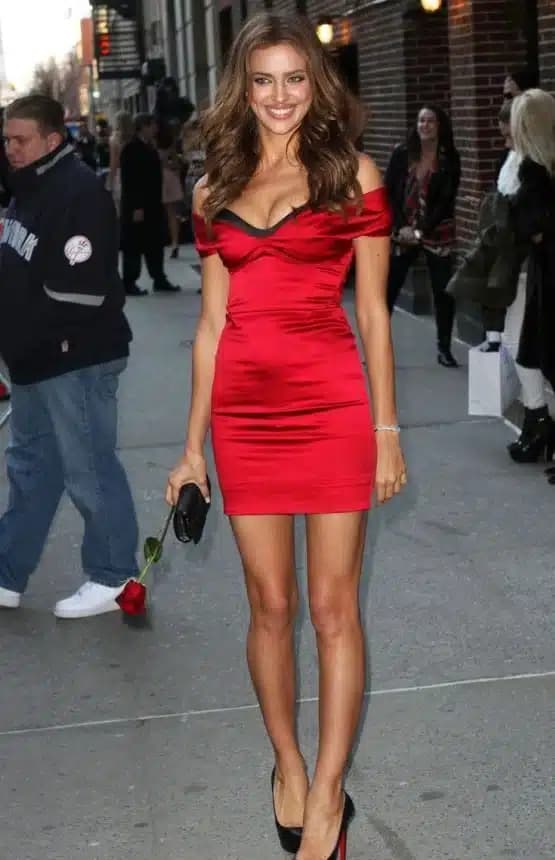
Irina Shayk Smile & Facial Aesthetics: Proportions, Confidence, and Natural Elegance
Irina Shayk’s Aesthetic Signature: Quiet Control, Facial Structure, and a Smile That Never Overpowers Irina Shayk’s beauty is often described as “strong” and “effortless,” but what people are really noticing iscontrol. Not control in a stiff or posed way—control in the sense that her facial structure,expression, and smile stay coherent across settings: runway lighting, close-up [...]

Overview
Irina Shayk’s beauty is often described as “strong” and “effortless,” but what people are really noticing is control . Not control in a stiff or posed way—control in the sense that her facial structure, expression, and smile stay coherent across settings: runway lighting, close-up editorial shots, candid street photos, and high-definition video.
If Ariana Grande’s aesthetic reads as soft and emotionally warm, Irina’s reads as sculpted minimalism . Her smile does not lead the face; it supports it. That single design principle— “support, don’t dominate”—is a major reason her look feels timeless rather than trend-dependent.
The “Model Smile” Effect: Less Display, More Impact
Many runway icons have what could be called a “model smile”: slightly more restrained tooth display, less dramatic corner lift, and a controlled smile arc that avoids turning the lower third into the main event. Irina’s smile typically sits in that category. It reads elegant because it does not compete with the face’s structural cues—cheek contour, jawline definition, and eye focus remain primary.
This becomes especially clear when you compare her aesthetic strategy to celebrities whose brand is built on high-energy smile expressiveness. For example, the wide expressive style discussed in Julia Roberts’ smile transformation represents a different “communication style” of beauty—more outward, more open, more animated. Irina’s approach is the opposite: quiet, refined, and controlled.
Facial Structure First: Why Harmony Matters More Than a “Perfect” Smile
Irina Shayk’s face is perceived as powerful largely because her beauty is anchored in structure: the midface reads lifted, the cheekbones appear directional, and the lower third looks supported. In practical aesthetic terms, this means her smile can remain subtle without weakening her presence.
If you want to understand this “structure-led” beauty logic in a more systematic way, it helps to review facial-harmony frameworks in other well-known examples on NexWell.
For instance, Bella Hadid facial harmony highlights how modern beauty is often read through midface vectors and proportion coherence, while Hailey Bieber facial harmony demonstrates the clean-minimal aesthetic where balance and restraint outperform drama.
Why Her Smile Feels “Expensive” (Even When It’s Not Loud)
The perception of “luxury beauty” is frequently tied to restraint. Irina’s smile tends to communicate confidence without asking for attention. Instead of a high-contrast, high-whiteness focal point, the face stays integrated: teeth, lips, skin texture, and expression feel like they belong to the same identity.
This is also why people often confuse “subtle” with “simple.” Subtle smiles are not easy—they require proportion discipline. When patients request a refined look (rather than a dramatic makeover), the best clinical conversation is usually about natural brightness, surface realism, and identity preservation rather than extreme shade choices.
If you want a practical reference for how that planning is approached, start with Cosmetic Dentistry in Turkey and treat celebrity inspiration as a direction, not a blueprint.
Irina vs. Cristiano: Two Different “Power Aesthetics”
Irina’s presence is powerful in a quiet way; Cristiano Ronaldo’s is powerful in an assertive way. Both can be read as “iconic,” but the visual strategy differs. Ronaldo’s smile is part of a high-performance brand identity—stronger, more dominant, more obviously “signature.” If you want that contrast for readers (and a natural internal-link bridge), see Cristiano Ronaldo’s smile makeover .
What Makes This Smile Aesthetically Attractive?
At the foundation level, Irina Shayk’s smile is attractive because it:
- supports facial structure instead of overpowering it,
- stays controlled and coherent across different lighting and contexts,
- signals confidence through restraint rather than exaggeration,
- protects identity—her smile always looks like her .
Lip Framing, Smile Arc Control, and the Strength–Softness Balance
Irina Shayk’s smile is a study in restraint . Where many public figures rely on generous tooth display to project warmth, Irina’s expression communicates confidence through control. The defining factor here is not tooth shape alone, but how the lips frame the teeth and how the smile arc behaves in motion.
This balance—strength without hardness, softness without fragility—is largely determined by two elements: lip framing and smile arc moderation . Together, they dictate whether a smile feels commanding, gentle, or overly assertive.
Lip Framing: The Invisible Architecture
Lip framing refers to how the upper and lower lips outline the teeth during expression. In Irina Shayk’s case, the lips create a controlled window rather than a wide reveal. This means the smile does not pull the viewer’s attention away from her facial structure—cheekbones, eyes, and jawline remain dominant.
From an aesthetic standpoint, restrained lip framing often reads as more refined. Facial-perception research suggests that observers associate moderate dental exposure with composure and confidence rather than overt friendliness, particularly in editorial and high-fashion contexts . This aligns closely with Irina’s public image.
Smile Arc Control: Why Subtle Curvature Signals Strength
Unlike highly expressive smiles that exaggerate curvature to maximize friendliness, Irina’s smile arc remains gentle and controlled. The curvature follows the lower lip without deepening into a theatrical arc. This restraint prevents the smile from feeling performative.
In aesthetic dentistry, exaggerated smile arcs are often associated with youthful exuberance. Controlled arcs, by contrast, tend to project authority and maturity. Irina’s smile consistently falls into the second category, reinforcing her identity as a model whose presence is anchored in structure rather than animation.
Strength vs. Softness: A Deliberate Equilibrium
One of the most compelling aspects of Irina Shayk’s aesthetic is how her smile negotiates the boundary between strength and softness. Too much softness can dilute presence; too much strength can feel severe. Her expression avoids both extremes.
This equilibrium is particularly visible in video. During interviews or candid moments, the smile remains responsive without becoming dominant. This is why her expression adapts well to both high-fashion editorials and natural, off-guard photography.
Comparative Context: Different Expressions of Power
Comparing Irina’s smile behavior with other high-profile figures highlights how varied “power aesthetics” can be. For instance, the assertive, performance-driven style discussed in Cristiano Ronaldo’s smile makeover uses stronger tooth display and sharper transitions to communicate dominance. Irina’s power, by contrast, is quieter and more internalized.
You can also see this restraint-based approach echoed in other model-centric aesthetics, such as the controlled elegance explored in Bella Hadid facial harmony , where facial structure leads and the smile follows.
Clinical Relevance: Translating This Look Into Real Planning
When patients reference Irina Shayk, they are often expressing a preference for refinement over transformation. In clinical conversations, this usually means prioritizing lip–tooth proportion, conservative tooth display, and surface realism rather than aggressive reshaping.
Understanding these priorities helps guide realistic treatment pathways. A helpful overview of how these decisions are balanced in practice can be found in Smile Design in Turkey , where structure, expression, and identity are evaluated together.
What Makes This Smile Aesthetically Attractive?
At this level of analysis, Irina Shayk’s smile remains compelling because it:
- uses restrained lip framing to protect facial structure,
- maintains a controlled smile arc that signals confidence,
- balances strength and softness without tipping into extremes,
- adapts seamlessly to both editorial and natural settings.
Next: Part 3 will explore dynamic behavior in motion —how Irina’s smile performs during speech, walking, and emotional transition, and why minimal smiles often age better than expressive ones.
Dynamic Minimalism: How Motion, Posture, and Expression Preserve Power
Irina Shayk’s aesthetic strength becomes most apparent in motion . While static images capture structure, movement reveals whether a smile is truly integrated with the face. Walking, speaking, turning the head, or transitioning between expressions can expose imbalance instantly. In Irina’s case, motion reinforces control rather than disrupting it.
This is the essence of dynamic minimalism: the smile does not announce itself, yet it remains coherent through posture shifts and emotional changes. The face stays organized, even when the expression changes quickly.
Why Minimal Smiles Often Age Better
Highly expressive smiles rely on large muscular movements and generous tooth display. Over time, these characteristics can exaggerate aging cues or feel stylistically dated. Minimal smiles, by contrast, depend on proportion and coordination, which tend to remain visually relevant as facial features mature.
Research on dynamic facial perception shows that observers evaluate attractiveness more favorably when expressions remain stable across motion, rather than peaking only in posed moments. In other words, a smile that behaves well during movement is often perceived as more authentic and more attractive . This principle strongly applies to Irina’s public presence.
Posture, Head Position, and Smile Reading
Another factor that amplifies Irina Shayk’s aesthetic impact is posture. Upright posture and controlled head positioning influence how smiles are read by observers. When posture is stable, the smile does not need to compensate for visual imbalance.
In runway and editorial contexts, Irina’s posture allows the smile to remain secondary—supportive rather than dominant. This reinforces the impression of authority and calm, rather than friendliness or openness.
Speech and Transitional Expressions
During speech, many smiles lose coherence: lips pull unevenly, teeth dominate suddenly, or muscular tension appears around the mouth. Irina’s smile transitions more gradually. The lips open and close without abrupt exposure changes, keeping the lower face visually controlled.
This is one reason her expression photographs consistently across candid moments. The smile does not “switch on and off”; it blends into facial movement.
Comparative Motion Styles in Public Figures
When compared with more performance-driven aesthetics, the contrast becomes clear. The assertive, high-energy motion style described in Cristiano Ronaldo’s smile makeover relies on stronger transitions and higher expressiveness to project dominance. Irina’s dominance is quieter: it comes from stillness and continuity rather than expansion.
A similar minimal-motion philosophy can be seen in other structure-led aesthetics, such as the controlled facial dynamics explored in Hailey Bieber facial harmony, where restraint allows identity to remain intact across time and trends.
Clinical Insight: Designing for Motion, Not Photos
In aesthetic planning, this distinction is critical. Designing a smile for still photographs alone often leads to overcorrection. Designing for motion prioritizes balance, muscular coordination, and proportion.
For patients seeking a refined, long-lasting result, understanding dynamic evaluation is essential. The principles outlined in Digital Smile Design explain how movement analysis helps prevent outcomes that look good in photos but feel artificial in daily life.
What Makes This Smile Aesthetically Attractive?
From a dynamic perspective, Irina Shayk’s smile remains compelling because it:
- maintains visual stability during movement,
- transitions smoothly between expressions,
- relies on posture and structure rather than exaggeration,
- protects authority and identity over time.
Next: Part 4 will examine surface texture, light behavior, and how restrained brightness reinforces luxury aesthetics —especially in high-definition photography and video.
Surface Texture, Light Discipline, and the “Luxury Neutral” Smile
If Irina Shayk’s aesthetic can be summarized in one visual rule, it is this: light is guided, not amplified . Her smile does not chase extreme brightness or contrast. Instead, it maintains a controlled surface behavior that reads refined under runway lights, studio strobes, and natural daylight alike.
This is why her smile is often perceived as “expensive.” Not because it draws attention, but because it avoids visual noise. In aesthetic perception, restraint is frequently interpreted as confidence—and confidence as luxury.
Why Extreme Whiteness Breaks Realism
Teeth are reflective surfaces. When reflectivity is pushed too far—through ultra-white shades or overly polished finishes—the surface can behave like plastic under strong lighting. This creates harsh highlights and flattens depth, especially in high-definition video.
Research into enamel optics and visual perception shows that observers prefer smiles with controlled translucency and micro-texture because these features diffuse light in a way the brain recognizes as natural material rather than artificial coating . This preference explains why “natural brightness” consistently outperforms maximum whiteness.
How Irina’s Smile Manages Light
Irina Shayk’s smile rarely appears overly reflective, even under intense lighting. The surface reads calm. Highlights are present, but they do not overpower form. This allows facial structure—cheekbones, eyes, jawline—to remain visually dominant, with the smile acting as a supporting element rather than a focal flare.
In editorial photography, this is a strategic advantage. It prevents the smile from “blowing out” detail and keeps skin tone, makeup, and expression integrated. The result is consistency across environments.
Material Logic in Real Aesthetic Planning
In clinical terms, achieving this effect depends on material behavior, not just shade choice. Different ceramics interact with light differently, which is why discussions about translucency, layering, and surface finish matter more than selecting the brightest option on a shade guide.
If you are evaluating aesthetic options with this mindset, a practical starting point is the comparison between E-max versus zirconia crowns , which explains how material optics influence realism and long-term visual comfort.
Brightness as a Psychological Signal
Brightness is not neutral—it sends a message. Extremely white, highly reflective smiles often signal performance or display. Softer brightness tends to signal control, maturity, and confidence. Irina Shayk’s aesthetic sits firmly in the second category, aligning with her overall presence.
This distinction becomes clearer when contrasted with more assertive styles. For example, the high-contrast, performance-oriented aesthetic discussed in Cristiano Ronaldo’s smile makeover uses brightness and dominance as part of brand identity. Irina’s identity, by contrast, is reinforced by restraint.
What Makes This Smile Aesthetically Attractive?
From a surface and light-behavior perspective, Irina Shayk’s smile remains compelling because it:
- diffuses light naturally rather than reflecting it aggressively,
- preserves depth through controlled translucency and texture,
- supports facial structure instead of competing with it,
- signals confidence through visual discipline.
Timelessness Over Trends: How Cohesion Protects Identity
When you step back and view Irina Shayk’s smile as part of a complete system, a clear pattern emerges: it is not designed to impress in a single moment—it is designed to endure. Proportion, motion, and surface behavior work together without competing for attention. This cohesion is what allows her look to remain relevant across fashion cycles, camera technologies, and cultural shifts.
Many aesthetic results fail over time because they are optimized for trends. Extreme whiteness, exaggerated uniformity, or hyper-expressive smiles can look striking initially, but they often age quickly as faces mature and visual standards evolve. Irina’s aesthetic avoids this by staying within natural visual limits.
Why Trend-Driven Smiles Date Quickly
Trend-based smile design often emphasizes visibility and contrast. The teeth become the focal point, sometimes at the expense of facial balance. As the surrounding features change with age, the smile can begin to feel disconnected—too loud for the face it sits on.
Irina Shayk’s smile avoids this problem by never demanding center stage. It remains proportional to her facial structure, allowing the overall face to evolve naturally without creating aesthetic tension.
Identity Preservation as a Design Principle
One of the most valuable lessons in celebrity-inspired aesthetic analysis is the importance of identity preservation. Irina’s smile reinforces her existing presence—it does not redefine it. This is why her look feels familiar year after year, even as styling, makeup, and context change.
In real clinical planning, this translates into a simple but powerful rule: successful smile design should refine identity, not replace it . When identity is protected, long-term satisfaction tends to be significantly higher.
Quiet Power vs. Assertive Power
Throughout this series, a contrast has appeared repeatedly: Irina Shayk’s quiet power versus more assertive, performance-driven aesthetics. This difference becomes especially clear when compared with figures whose smile is a primary branding element.
The assertive, high-visibility strategy explored in Cristiano Ronaldo’s smile makeover relies on dominance and immediacy. Irina’s strategy relies on restraint and continuity. Neither is “better”— but they communicate very different values.
How This Perspective Helps Real Decision-Making
People who reference Irina Shayk are often signaling a desire for refinement rather than transformation. They want to look composed, confident, and natural across time—not dramatically different overnight.
Understanding this intention helps frame realistic treatment conversations. Resources such as Smile Makeover in Turkey are useful not because they promise celebrity outcomes, but because they explain how individualized planning leads to results that age well.
What Makes This Smile Aesthetically Attractive?
When the full analysis is brought together, Irina Shayk’s smile remains compelling because it:
- integrates proportion, motion, and surface behavior into a single system,
- avoids trend dependency in favor of visual longevity,
- supports facial structure rather than competing with it,
- protects personal identity through restraint and coherence.
This is why her smile continues to feel modern without chasing novelty—and why it stands as a reference point for timeless aesthetic balance rather than momentary perfection.
.
Related reading
Dental Guide
Zirconia Crowns in Turkey: Advantages, Procedure, and Cost Overview
Discover why zirconia crowns are popular in Turkey — learn about material advantages, lab craftsmanship, cost savings, and what to expect during treatment.
Dental Guide
How to Choose the Best Dental Clinic in Turkey?
Discover the ultimate guide to choosing the best dental clinic in Turkey. Learn about accreditations, cost savings, top treatments, travel tips for your dental
Dental Guide
Why Turkey is the Leading Destination for Dental Implants?
Turkey has become the top choice for dental implants among international patients. Find out why — quality, cost, accredited clinics, and all-inclusive packages
Dental Guide
Top 25+ Dental Services in Turkey (2025) | NexWell Experts Guide to Implants, Veneers & More
Looking for the best dental services in Turkey? Discover expert insights into implants, Invisalign, veneers, crowns, laser dentistry & more. Written by NexWell
plastic-surgery
Rhinoplasty Turkey Cost 2026: Open, Closed & Revision Prices
A buyer-focused cost guide for rhinoplasty in Turkey, covering open, closed and revision pricing with package evaluation criteria.
medical-tourism
International Patient Treatment Process: From Inquiry to Follow-Up
A full-process guide showing how international treatment journeys should work from first inquiry to quote, travel, treatment, recovery, and aftercare.
Plan the next step clearly
Use this page as a decision-support guide, then move into quote review, treatment comparison, and travel planning with coordinator support.