BBL vs Butt Implants: Safety, Longevity and Cost Compared
A balanced comparison of the Brazilian Butt Lift (fat transfer) and silicone butt implants: how each works, their safety profiles, how natural and durable the results are, and how to decide which suits your body and goals.
- JCI-accredited hospitals
- TEMOS-accredited clinics
- Board-certified surgeons and a licensed clinical team
- 3,000+ international patients treated
- 5-star chain hotel accommodation
- VIP airport transfers
Written quote from a NexWell coordinator, usually within 24 hours.

Written quote from a NexWell coordinator, usually within 24 hours.
Quick answer
A balanced comparison of the Brazilian Butt Lift (fat transfer) and silicone butt implants: how each works, their safety profiles, how natural and durable the results are, and how to decide which suits your body and goals.
Two Different Procedures, Two Different Principles
Gluteal augmentation can be achieved two ways, and they are not variations of the same operation. They are fundamentally different.
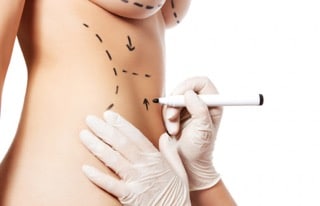
A Brazilian Butt Lift (BBL) uses your own fat. Fat is harvested from donor areas via liposuction, purified, and injected into the buttocks. There is no foreign material; the augmentation is entirely autologous tissue, and the liposuction simultaneously contours the donor areas such as the waist and flanks.
Butt implants (gluteal implants) use solid silicone implants placed surgically within or beneath the gluteal muscle through an incision, usually in the crease between the buttocks. They add volume in a fixed, predictable shape regardless of how much body fat you have.
The right choice depends heavily on your starting point, particularly how much donor fat you have available. Someone very lean may not have enough fat for a meaningful BBL and may be better suited to implants; someone with ample donor fat usually achieves a more natural result with a BBL. The rest of the decision comes down to the trade-offs below.
A Brazilian Butt Lift (BBL) uses your own fat.
Safety Compared
Both procedures are surgery under general anaesthesia and carry real risks, but the risk profiles differ.
The BBL's headline risk is fat embolism (fat entering the bloodstream through gluteal veins), which is why it has historically carried the highest mortality rate of any cosmetic procedure. Crucially, this risk is now near-eliminable with correct technique: subfascial (above-muscle) fat placement, ultrasound guidance and an experienced surgeon.
When those standards are met, the BBL's most serious risk is largely controlled. Our BBL safety guide covers the protocol in detail.
Butt implants avoid the fat-embolism risk entirely but introduce the risks associated with any implant: infection, capsular contracture (hardening of scar tissue around the implant), implant shifting or rotation, and a higher rate of revision surgery over time. The incision site in the gluteal crease can also be prone to wound-healing problems.
In broad terms, a modern BBL performed to current safety standards and gluteal implants are both considered acceptable-risk procedures in the right hands, but they fail in different ways, and that difference matters when choosing.
Treatment Plan
Ready for a written BBL vs Butt Implants: Safety, Longevity and Cost Compared quote?
A NexWell coordinator reviews your case and replies with a personalised treatment plan and indicative pricing — usually within 24 hours.
Natural Feel and How Long Results Last
Feel and appearance: Because a BBL uses your own soft fat, the result typically feels and moves more naturally than a solid implant. Implants can feel firmer and, in leaner patients, may be more palpable or visible at the edges. For most patients seeking a natural result with enough donor fat, the BBL wins on feel.
Longevity: This is where the comparison is more nuanced. A portion of BBL fat is reabsorbed in the first months, after which the surviving fat is generally permanent, but it behaves like the rest of your body fat and will grow or shrink with significant weight change. We cover this fully in how long a BBL lasts.
Implants do not change with weight and hold a fixed volume, but they are medical devices: they do not necessarily last a lifetime and may eventually need replacement, and revision rates are higher than for a well-retained BBL.
Neither is strictly "more permanent." A BBL's retained fat is durable but weight-dependent; an implant's volume is stable but the device itself has a finite lifespan.
Recovery and Cost
Recovery: Both require avoiding direct pressure on the buttocks while healing, but the reasons differ: a BBL protects fragile transferred fat (see the BBL recovery timeline), while implants protect the surgical pocket and incision. Implant recovery is often reported as more uncomfortable in the first days because the implant sits within the muscle.
Both keep you off prolonged sitting for several weeks.
Cost: A BBL is frequently the more cost-effective option because it uses your own tissue rather than a manufactured device, and the liposuction component adds contouring value elsewhere on the body. Implants carry the additional cost of the devices themselves and a higher likelihood of future revision surgery, which adds to the lifetime cost.
For most patients comparing prices, a fat-transfer BBL in Turkey is both the more natural and the more economical route, provided there is enough donor fat to achieve the desired volume.
Which Should You Choose?
There is no universally better procedure. There is only the better fit for your body and goals.
A BBL is usually the preferred option when you have enough donor fat, want the most natural feel, and value the added benefit of body contouring from the liposuction. It is also often the more cost-effective choice and avoids the long-term considerations of a medical device.
Butt implants are worth considering when you are very lean with insufficient donor fat for a meaningful fat transfer, or when you specifically want a large, fixed increase in projection that fat transfer cannot reliably deliver in one session.
Many patients who think they want implants are in fact better candidates for a BBL once their donor fat is assessed, and some are better served combining a BBL with other body procedures as part of a mommy makeover. The honest answer comes from an individual assessment, not a rule of thumb.
A surgeon should examine your donor areas, discuss your target shape, and explain why one route suits you better than the other before any plan is agreed.
Medically reviewed by Op. Dr. Gökhan Efe, Op. Dr.: Plastic, Reconstructive & Aesthetic Surgery. Last reviewed June 2026
Contracted clinics
NexWell coordinates with TEMOS-accredited clinics or Ministry of Health–licensed facilities in Turkey.
Board-certified review
Content reviewed by Op. Dr. Gökhan Efe — Plastic, Reconstructive & Aesthetic Surgery (Türkiye).
No obligation
Get your BBL vs Butt Implants: Safety, Longevity and Cost Compared plan
Send your case and a coordinator returns a written plan and an indicative quote — usually within a day.
Questions Patients Ask Before They Commit
Related reading
aesthetic-surgery
Brazilian Butt Lift (BBL) in Turkey
Enhance your buttocks using your own body fat with a safety-first approach. Board-certified surgeons at internationally accredited hospitals using advanced fat grafting techniques.
Treatment Guide
BBL Recovery Timeline: Sitting, Sleeping and When You Actually Heal
Week-by-week BBL recovery: the no-sitting rule, sleeping positions, the BBL pillow, flying home, and returning to work and exercise.
Treatment Guide
How Long Does a BBL Last? Fat Survival and Longevity Explained
What determines how long a Brazilian Butt Lift lasts: fat survival, the 60-80% retention rule, weight changes, and how to make a BBL last.

aesthetic-surgery
Liposuction in Turkey
Turkey has become one of the world's leading destinations for liposuction: board-certified plastic surgeons, internationally accredited hospitals, and all-inclusive packages that cost 60–70% less than the UK, US, or Germany.
aesthetic-surgery
Mommy Makeover in Turkey
Combine tummy tuck, breast surgery, and liposuction in a single Istanbul visit. Restore your pre-pregnancy body at 60–70% less than UK or US prices.
Plan the next step clearly
Use this page as a decision-support guide, then move into quote review, treatment comparison, and travel planning with coordinator support.
Decision Context
Patients compare this treatment inside the trip around it
Treatment pages perform better when they acknowledge arrival flow, destination trust, and the recovery rhythm patients are trying to visualise before booking.

The provider decision starts with arrival confidence
Patients compare treatment pages while also asking how first-day logistics, transfers, and scheduling will actually work.

The destination still influences medical trust
A treatment page is stronger when it recognises that the city itself remains part of the decision frame for international patients.

Recovery pacing changes how people evaluate options
Different procedures feel more or less realistic depending on how patients picture the slower hours between appointments.