Medically reviewed by Op. Dr. Gökhan Efe, Op. Dr.: Plastic, Reconstructive & Aesthetic Surgery. Last reviewed March 2026
Breast Augmentation in Turkey: Planning, Implant Options and Cost Guide
- TEMOS-accredited clinics
- JCI-accredited hospitals
- Board-certified surgeons and a licensed clinical team
- 3,000+ international patients treated
A NexWell planning guide for patients considering breast augmentation in Turkey: who is a realistic candidate, how silicone and anatomical implants compare, what all-in costs include and how to evaluate clinics beyond the promotional price.
Written quote from a NexWell coordinator, usually within 24 hours.
Quick answer
Breast augmentation in Turkey costs $3,000–$4,800 for silicone implants, all-inclusive of the surgeon, anaesthesia, implants and hospital stay, around 60% less than the UK's $7,600–$12,700 (2026). Combining augmentation with a lift runs $4,200–$6,500. Implant type (round vs anatomical) and profile are what mainly change the final price.
What Breast Augmentation in Turkey Actually Involves
Breast augmentation (augmentation mammoplasty) places an implant behind the breast tissue or the chest muscle to increase volume, improve symmetry or restore what was lost after pregnancy or weight change. In Turkey, the procedure is performed under general anaesthesia and typically takes 60 to 90 minutes. Patients stay in the clinic overnight and are usually cleared to fly after four to five days.
The real variables in any augmentation plan are implant type, implant position, incision site and surgeon experience with your specific anatomy. A good clinic explains all four clearly before the patient books travel, not after arrival.
The real variables in any augmentation plan are implant type, implant position, incision site and surgeon experience with your specific anatomy.
Implant Choice: Silicone, Cohesive Gel and Profile Selection
Most clinics in Turkey use cohesive silicone gel implants from major brands such as Mentor, Motiva or Nagor. Round implants are the most commonly placed option; anatomical (teardrop) implants produce a different volume distribution and require precise positioning to stay correctly oriented.
Profile selection, low, moderate or high, determines how the implant projects from the chest wall relative to its base width. A proper consultation includes 3D imaging or at minimum a clear conversation about your frame, your starting volume and what result is anatomically achievable for your body dimensions.
Patients who arrive with a specific implant brand or size based on social media content sometimes need those expectations adjusted. A credible clinic will tell you when a request is outside what would look proportional or safe. This is a sign of clinical integrity, not reluctance.
Who Is a Suitable Candidate for Augmentation
Turkey-based clinics typically accept patients who:
- have fully developed breast tissue (most surgeons prefer patients over 18, usually 21 for silicone implants)
- are within a healthy and stable weight range, augmentation works best when the patient is not planning significant weight changes post-surgery
- do not smoke or can stop for the recommended period before and after surgery
- have no active infection, mastitis or unresolved breast pathology
- have realistic volume and shape expectations discussed and agreed with the surgeon
Patients seeking augmentation after pregnancy, breastfeeding-related volume loss or asymmetry correction are common presentations. Patients who are overweight and still in active weight loss, or who have significant ptosis requiring a concurrent lift, are handled differently, some cases require a combined augmentation-mastopexy plan rather than implant placement alone.
Treatment Plan
Ready for a written Breast Augmentation in Turkey: Planning, Implant Options and Cost Guide quote?
A NexWell coordinator reviews your case and replies with a personalised treatment plan and indicative pricing — usually within 24 hours.
What Breast Augmentation Costs in Turkey vs the UK and US
| Procedure | Turkey | UK | USA |
|---|---|---|---|
| Breast Augmentation (silicone) | $3,000–$4,800 | $7,600–$12,700 | $8,000–$15,000 |
| Breast Augmentation + Lift | $4,200–$6,500 | $10,800–$17,800 | $12,000–$20,000 |
| Breast Lift (mastopexy) | $2,800–$4,500 | $7,600–$12,700 | $8,000–$14,000 |
| Breast Reduction | $2,500–$4,200 | $7,600–$13,950 | $8,000–$16,000 |
The gap is not primarily about cutting corners. Turkey has lower overheads, lower labour costs and a mature surgical tourism infrastructure built on volume and competition. However, lower cost does not automatically mean equivalent quality, the clinic, surgeon and aftercare model still need to be evaluated independently of the package price.
See a detailed UK cost comparison for a line-by-line breakdown of what drives the price gap.
Recovery: First Days, First Weeks and What to Expect Over Six Months
Immediately post-surgery: compression bra worn continuously for the first four to six weeks. You will have tightness, swelling and soreness, paracetamol and prescription analgesia manage most of this in the first week.
Days 4–5: most patients are comfortable to fly. Avoid heavy lifting, upper body exertion and reaching overhead for the first month.
Weeks 1–3: resume light work and walking. Implants feel high and tight, this is normal and resolves as the tissue relaxes around the pocket.
Weeks 3–6: upper body activity can gradually return. The implant begins to settle into final position.
Months 3–6: final shape becomes visible. Swelling fully resolves. Scars (usually in the inframammary fold, periareolar or transaxillary) continue to fade over 12–18 months.
Knowing the recovery arc before travel is important. Most complications that need attention arise in the first six weeks, when you are likely home. A clinic that provides clear remote support and a defined threshold for returning to Turkey or seeking local care is better preparation than one that describes post-op as simply easy.
Risks Worth Understanding Before You Book
Breast augmentation is a routine procedure with a well-characterised risk profile. The complications patients should understand before travelling include:
- Capsular contracture, scar tissue that tightens around the implant over years. More common with older textured implants, largely phased out in favour of smooth designs.
- Implant displacement, can occur if the pocket is not created precisely or if heavy impact happens early in recovery.
- Asymmetry, surgical technique, implant position and tissue settling all contribute. Minor asymmetry after surgery does not always require correction and may resolve as swelling subsides.
- Sensory changes, temporary or sometimes longer-lasting numbness around the nipple. Usually resolves but may take several months.
- Seroma or haematoma, fluid accumulation post-surgery. Managed with drainage if significant.
Revision rates vary by clinic. Asking for a surgeon's documented revision rate and revision policy for the first 12 months is a reasonable part of clinic evaluation.
How NexWell Screens Breast Augmentation Clinics in Turkey
NexWell looks for consistent surgical approach across patient cases, not just high volumes of before-and-after imagery. Specific criteria include:
Patients comparing clinics based only on promotional pricing are comparing the wrong dimension. The dimension that matters most is how problems are handled when they occur, because with any routine surgery, they sometimes do.
- 1a surgeon who performs dedicated aesthetic breast surgery, not general plastics switching between case types on the same list
- 2case planning that includes frame analysis and proportion review, not a one-click price quote
- 3implant selection logic shared with the patient before travel
- 4a clear consent and preparation protocol with pre-operative bloodwork
- 5remote follow-up access after surgery with a defined complication response plan
Eight Questions to Ask Before Booking Breast Augmentation in Turkey
Patients who ask these questions before committing are usually better prepared:
1. Which surgeon will perform my procedure, and can I speak with them before travelling? The person doing the consultation is not always the operating surgeon in high-volume practices.
2. What implant brand and size range do you recommend for my anatomy, and why? A credible answer includes a rationale, not just a product name.
3. How is the implant pocket created for my body type, subglandular, submuscular or dual-plane? This affects both the aesthetic outcome and the recovery arc.
4. What is your documented capsular contracture rate, and what is your revision policy if I develop it?
5. What pre-operative tests are required, and can I submit results from my home country in advance to avoid delays on arrival?
6. How are compression garments provided, on-site, or am I responsible for purchasing my own before travel?
7. What is your process if I develop a complication after returning home? Specifically, is there a designated point of contact, and what is the threshold for a return visit versus local management?
8. Can you provide references from international patients who have undergone the same procedure at your clinic, ideally from patients who have passed their 12-month follow-up?
Clinics that answer these questions clearly before a deposit is paid are demonstrably more organised than those that defer answers to arrival. Organisation before surgery tends to reflect standards during and after it.
Before committing, ask each clinic for written confirmation of what your package includes, specifically the surgeon's name, implant brand and product code, planned technique and revision policy for the first 12 months. Comparing written summaries from two or three clinics is far more reliable than comparing website descriptions or sales conversations.
Clinics that decline to provide written confirmation of their standard practices before a deposit is paid are telling you something important about how disputes will be handled if they arise.
Vetted partner network
NexWell coordinates with TEMOS-accredited clinics or Ministry of Health–licensed facilities in Turkey.
Board-certified review
Content reviewed by Op. Dr. Gökhan Efe — Plastic, Reconstructive & Aesthetic Surgery (Türkiye).
No obligation
Get your Breast Augmentation in Turkey: Planning, Implant Options and Cost Guide plan
Send your case and a coordinator returns a written plan and an indicative quote — usually within a day.
Questions Patients Ask Before They Commit
Related reading
aesthetic-surgery
Tummy Tuck in Turkey
A tummy tuck removes excess skin and fat from the abdomen while tightening the underlying muscles. Turkey offers the same surgical outcomes as Western Europe at 60–70% lower cost.
aesthetic-surgery
Liposuction in Turkey
Turkey has become one of the world's leading destinations for liposuction: board-certified plastic surgeons, internationally accredited hospitals, and all-inclusive packages that cost 60–70% less than the UK, US, or Germany.
aesthetic-surgery
Rhinoplasty in Turkey
Turkey performs more rhinoplasties per capita than any other country. NexWell connects you with surgeons who specialise exclusively in nose reshaping: many with 1,000+ procedures annually. Open, closed & piezo techniques. 3D simulation included.
aesthetic-surgery
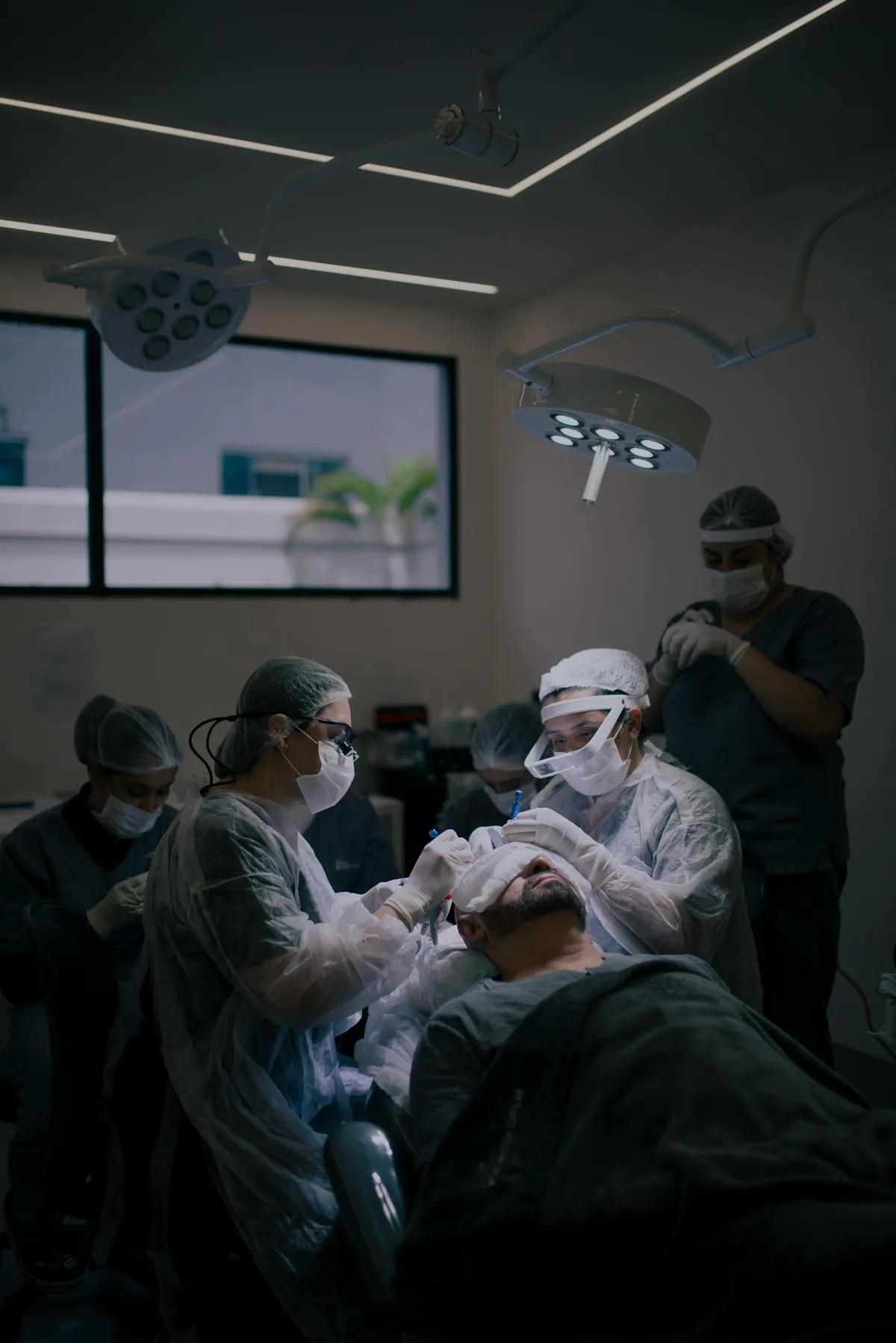
Hair Transplant in Turkey
Turkey performs more hair transplants than any other country: over 1 million procedures annually. NexWell Clinics is TEMOS-accredited and offers all-inclusive packages.
plastic-surgery
Breast Augmentation Turkey Cost 2026: Implants, Lift & Combo Guide
A practical pricing guide for breast augmentation in Turkey, comparing implant types, augmentation with lift, and mummy makeover combo packages.
Plan the next step clearly
Use this page as a decision-support guide, then move into quote review, treatment comparison, and travel planning with coordinator support.
Decision Context
Patients compare this treatment inside the trip around it
Treatment pages perform better when they acknowledge arrival flow, destination trust, and the recovery rhythm patients are trying to visualise before booking.
The provider decision starts with arrival confidence
Patients compare treatment pages while also asking how first-day logistics, transfers, and scheduling will actually work.

The destination still influences medical trust
A treatment page is stronger when it recognises that the city itself remains part of the decision frame for international patients.
Recovery pacing changes how people evaluate options
Different procedures feel more or less realistic depending on how patients picture the slower hours between appointments.