Why Celebrity Culture Made the BBL Mainstream, And What the Safety Data Actually Says
Reality TV and social media turned the Brazilian Butt Lift into a beauty standard. Here's what board-certified surgeons and safety researchers actually say about the risks, and how to tell a safe procedure from a dangerous one.
Quick answer
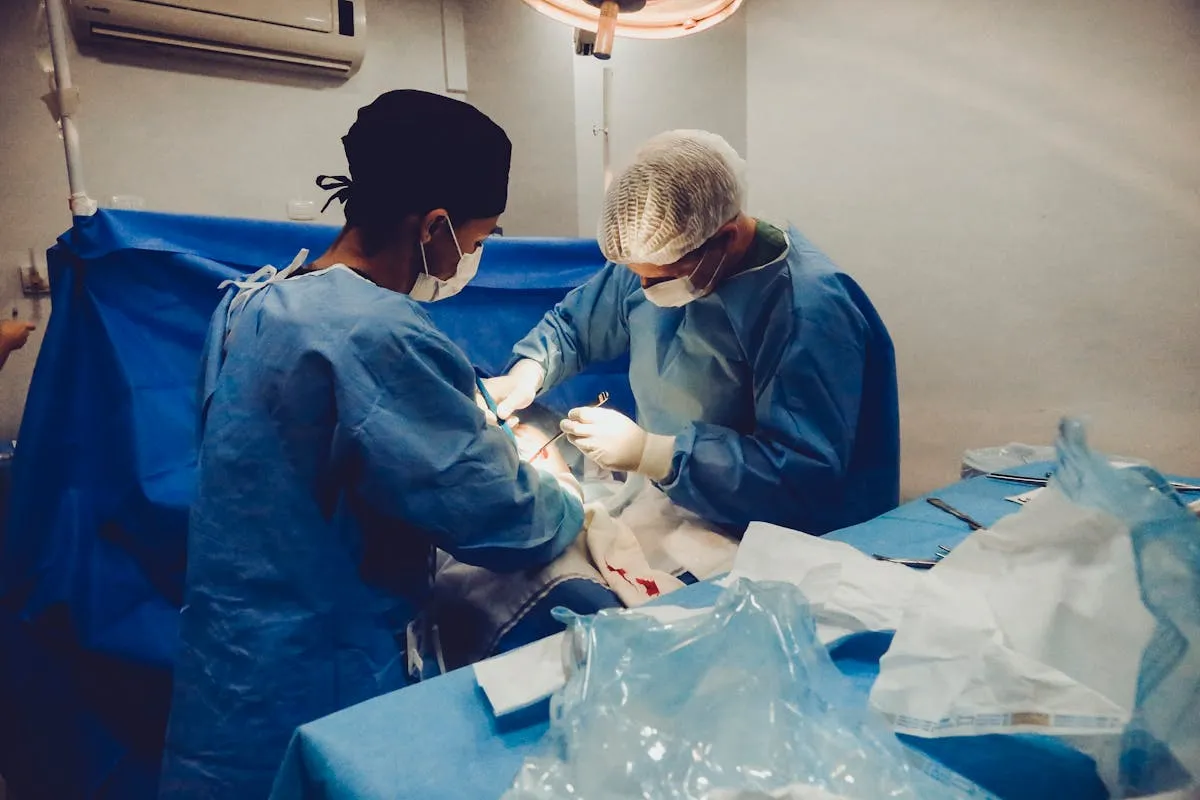
A BBL performed by a board-certified surgeon using above-muscle (subfascial) fat placement is now considered a manageable-risk cosmetic procedure: mortality dropped roughly fourfold after 2018 safety guidance. The procedure's dangerous reputation comes almost entirely from a second, unrelated category: unlicensed black-market injections, which are a different act performed by different people in different settings.
The Brazilian Butt Lift went from a niche request to one of the most-searched cosmetic procedures in the world: driven almost entirely by pop culture. Here's what actually changed in the safety data, and how to tell an accredited procedure from the black-market injections that gave the BBL its dangerous reputation in the first place.
The Celebrity Effect: How Pop Culture Normalized the BBL
For most of the 2010s, a curvier, more sculpted silhouette moved from a niche aesthetic into a mainstream beauty standard: driven less by fashion editorials than by reality TV, hip-hop culture, and Instagram. Reality stars, musicians, and influencers didn't just adopt the look; several publicly discussed how they got it, which normalized the conversation in a way earlier cosmetic trends never had.
That openness cuts both ways, and it's worth looking at honestly. Cardi B has spoken candidly about paying roughly $800 for injections in a Queens apartment before she was famous: a decision she has since warned young fans against, telling them plainly not to "result to shots." K.
Michelle has described black-market "hydrogel" injections that later required over a dozen corrective surgeries, and has used her own recovery story to warn others publicly. Blac Chyna filmed and shared her own reversal journey in 2023, a moment outlets described as symbolic of a broader cultural shift.
On the other end of the spectrum, NeNe Leakes documented a fully transparent, surgeon-performed procedure with a named clinic and surgeon: a useful contrast to the injection stories above. Latto and Nicki Minaj have both spoken openly about getting a BBL earlier in their careers, with Latto later reflecting that she "didn't need that" and choosing a personal trainer over a second procedure.
The throughline across nearly all of these public accounts isn't the procedure itself: it's where and how it was done. The stories that ended in years of corrective surgery involve unlicensed injectors and non-medical settings. The stories that didn't involve a named, credentialed surgeon and an accredited facility.
That distinction is the entire subject of this article, and it's the one piece of the trend that consumer coverage of "celebrity BBLs" most often blurs together.
What the Safety Data Actually Shows
BBL mortality has fallen roughly fourfold since 2018, when the field's leading safety bodies identified deep intramuscular fat injection as the cause of nearly all fatal cases and recommended surgeons switch to subfascial (above-muscle) placement. Surveyed surgeons who adopted the change now report outcomes broadly in line with other major body-contouring procedures.
The Brazilian Butt Lift earned a genuinely alarming reputation in plastic surgery research.
A 2017 survey by the Aesthetic Surgery Education and Research Foundation (ASERF) Gluteal Fat Grafting Task Force estimated the procedure's mortality at roughly 1 in 3,000 to 1 in 6,000 cases at the time, the highest death rate ever recorded for an elective cosmetic procedure, almost entirely linked to fat being injected into or below the gluteal muscle, where it can enter a major vein and cause a fatal pulmonary fat embolism.
That finding triggered a joint safety advisory from ASERF, the American Society of Plastic Surgeons (ASPS) and other international bodies in January 2018, recommending surgeons switch to subfascial (above-muscle) fat placement only, ideally with ultrasound guidance to confirm the injection stays clear of the muscle and its vessels.
A follow-up ASERF survey in 2019, after that guidance had spread through the field, found the mortality rate had fallen to approximately 1 in 15,000 cases: a roughly fourfold improvement, and comparable to the risk profile of a tummy tuck (Source: Aesthetic Surgery Journal, "Brazilian Butt Lift–Associated Mortality: The South Florida Experience," 2022, citing the 2019 ASERF follow-up survey: pubmed.ncbi.nlm.nih.gov/35959568).
Demand, meanwhile, hasn't slowed down. Buttock augmentation was the fastest-growing surgical cosmetic procedure category worldwide in 2024, up 56.8% year-over-year to 820,762 procedures, according to the International Society of Aesthetic Plastic Surgery's 2024 Global Survey (Source: isaps.org, Global Survey 2024 Full Report).
Put together, those two data points tell the real story: the procedure got dramatically safer at almost exactly the moment it got dramatically more popular. The danger that made headlines through the 2010s was real, but it was a specific, identified, and largely corrected technical error, not an inherent property of the surgery.
It's worth being precise about what "BBL risk" statistics actually measure from here, because two very different procedures get lumped under the same name in casual conversation.
Board-Certified vs Black Market: What the Numbers Are Really Comparing
| Feature | Board-certified BBL (surgical fat transfer) | Unlicensed injections (silicone/biopolymer) |
|---|---|---|
| Material | Your own fat, harvested by liposuction | Industrial silicone, biopolymer or unknown filler: illegal for body injection in most countries |
| Setting | Accredited surgical facility, anaesthesia team on site | Non-medical setting: reported cases include private apartments and hotel rooms |
| Technique standard (post-2018) | Subfascial (above-muscle) placement, often ultrasound-guided | No technique standard; material is injected freehand |
| Documented mortality | Approximately 1 in 15,000 (2019 ASERF follow-up survey) | Not systematically tracked in a denominator study: case reports and outlet investigations document repeated deaths and hospitalisations, but no equivalent large-scale survey exists |
| If something goes wrong | Standard surgical revision | Frequently multiple reconstructive surgeries over years: one public case involved 13 procedures in a single year |
Neither Side of This Table Is Risk-Free
Figures reflect surgeon-reported survey data (ASERF 2017/2019, published in Aesthetic Surgery Journal, 2022), not a national mortality registry: treat as the best available estimate rather than a precise national rate.
To be equally honest about the other side of this table: board-certified, subfascial BBL surgery is not risk-free. Fat embolism remains a recognised, if now much rarer, complication, and any surgery, done at home or abroad, carries the standard risks of anaesthesia, infection and unpredictable healing.
No credible surgeon or clinic will promise a zero-risk outcome, and it's reasonable to be skeptical of any marketing that implies otherwise.
How to Vet a BBL Surgeon or Clinic Before You Book
Because the entire safety gap between "acceptable-risk cosmetic surgery" and "one of the deadliest procedures in medicine" comes down to who performs it and how, the vetting questions matter more than almost anything else in the decision:
- Ask for board certification, not just "years of experience." Certification in plastic surgery (or an equivalent recognised surgical specialty) should be verifiable, not just claimed: ask for the registration body and number.
- Ask specifically whether fat is placed subfascially. This is the single technique change that drove the fourfold mortality drop. A surgeon who can't answer this clearly and confidently is a warning sign.
- Confirm the facility is accredited, with an on-site or contracted anaesthesiologist and a documented emergency protocol, not just a clean-looking private room.
- Ask what happens if you have a complication after you've left. For post-operative follow-up, this question matters for any BBL, at home or abroad, and a credible provider will have a clear, specific answer.
- Treat heavily discounted, rushed-booking pricing as a red flag. The corners that get cut to hit an unusually low price are rarely cosmetic ones.
These are the same standards worth applying to any clinic you're comparing: including NexWell itself, which is held to exactly this checklist as our own internal standard.
Where Turkey Fits In
Turkey has become one of the largest destinations globally for board-certified BBL surgery, in large part because accredited private hospitals there operate to the same subfascial-technique standard described above, at a materially lower price than the US or UK. All-inclusive BBL pricing in Turkey typically runs $4,560–$10,260, compared with $7,600–$15,250 in the UK and $8,000–$16,000 in the US.
The vetting questions above apply exactly the same way when the clinic is abroad: arguably more so, since you're choosing a provider you can't visit in person first.
Our BBL in Turkey guide covers technique, accreditation and full pricing in detail, and our BBL vs butt implants comparison is worth reading if you haven't settled on fat transfer as the right procedure for your body yet.
This article discusses general safety statistics sourced to the named studies above; it is not a substitute for an individual surgical consultation with a board-certified plastic surgeon.
References
- ASERF Gluteal Fat Grafting Task Force: Report on Mortality from Gluteal Fat Grafting (PubMed)
- ASPS / Multi-Society Gluteal Fat Grafting Safety Advisory (January 2018)
- Aesthetic Surgery Journal: "Brazilian Butt Lift–Associated Mortality: The South Florida Experience" (2022)
- ISAPS Global Survey 2024: Full Report
- ISAPS Gluteal Fat Grafting Safety Advisory
Frequently asked questions
Is a BBL the deadliest cosmetic surgery?
It was, based on 2017 survey data, before the field identified that deep intramuscular fat injection was the cause of almost all fatalities. After surgeons widely adopted subfascial-only placement in 2018, mortality fell roughly fourfold to about 1 in 15,000: a very different risk profile from the earlier headlines.
Why do so many celebrities get their BBLs removed?
Most public removal stories involve unlicensed black-market injections, silicone or biopolymer placed outside any medical setting, rather than surgical fat-transfer BBLs. Removal of those materials is a separate, often repeated reconstructive process, not a typical outcome of board-certified surgery.
What's the difference between a BBL and butt injections?
A BBL is a surgical procedure: liposuction plus transfer of your own fat under medical conditions. "Butt injections," in the cases that make headlines, usually mean unlicensed silicone or biopolymer material injected outside a medical setting: a fundamentally different and far riskier act.
Does going abroad for a BBL increase the risk?
Not inherently: accredited hospitals abroad use the same subfascial technique and certification standards as leading providers elsewhere. The added consideration is logistical: confirming follow-up care and emergency protocol before you book matters more when you can't simply walk back into the clinic the next day.
Guide: The Complete Medical Tourism Handbook
Cost comparisons, clinic evaluation checklist, packing list & recovery tips. Everything you need to plan your treatment in Turkey.
Instant download. Your email is only used to send the guide and a few planning tips. No spam, unsubscribe anytime.
Related reading
aesthetic-surgery
Brazilian Butt Lift (BBL) in Turkey
Enhance your buttocks using your own body fat with a safety-first approach. Board-certified surgeons at internationally accredited hospitals using advanced fat grafting techniques.
Treatment Guide
BBL vs Butt Implants: Safety, Longevity and Cost Compared
Brazilian Butt Lift (fat transfer) versus silicone butt implants compared on safety, natural feel, longevity, recovery and cost.
Written by the NexWell editorial team. Medically informed content. How we create content