Full mouth dental implants in Turkey: from $11,400, up to 80% less than the US
Single arch (All-on-4) from $5,700 per arch.
Full mouth dental implants in Turkey cost Full price list → all-inclusive for both arches with All-on-4 or All-on-6: up to 80% less than the US and around 80% less than the UK, using Straumann and Nobel Biocare implants at TEMOS-accredited Istanbul clinics.
Get your full arch dental implants cost breakdown for Turkey
Your records are reviewed by a board-certified implantologist at NexWell Clinics before any figure is issued. You receive an itemised treatment plan within 24 hours.
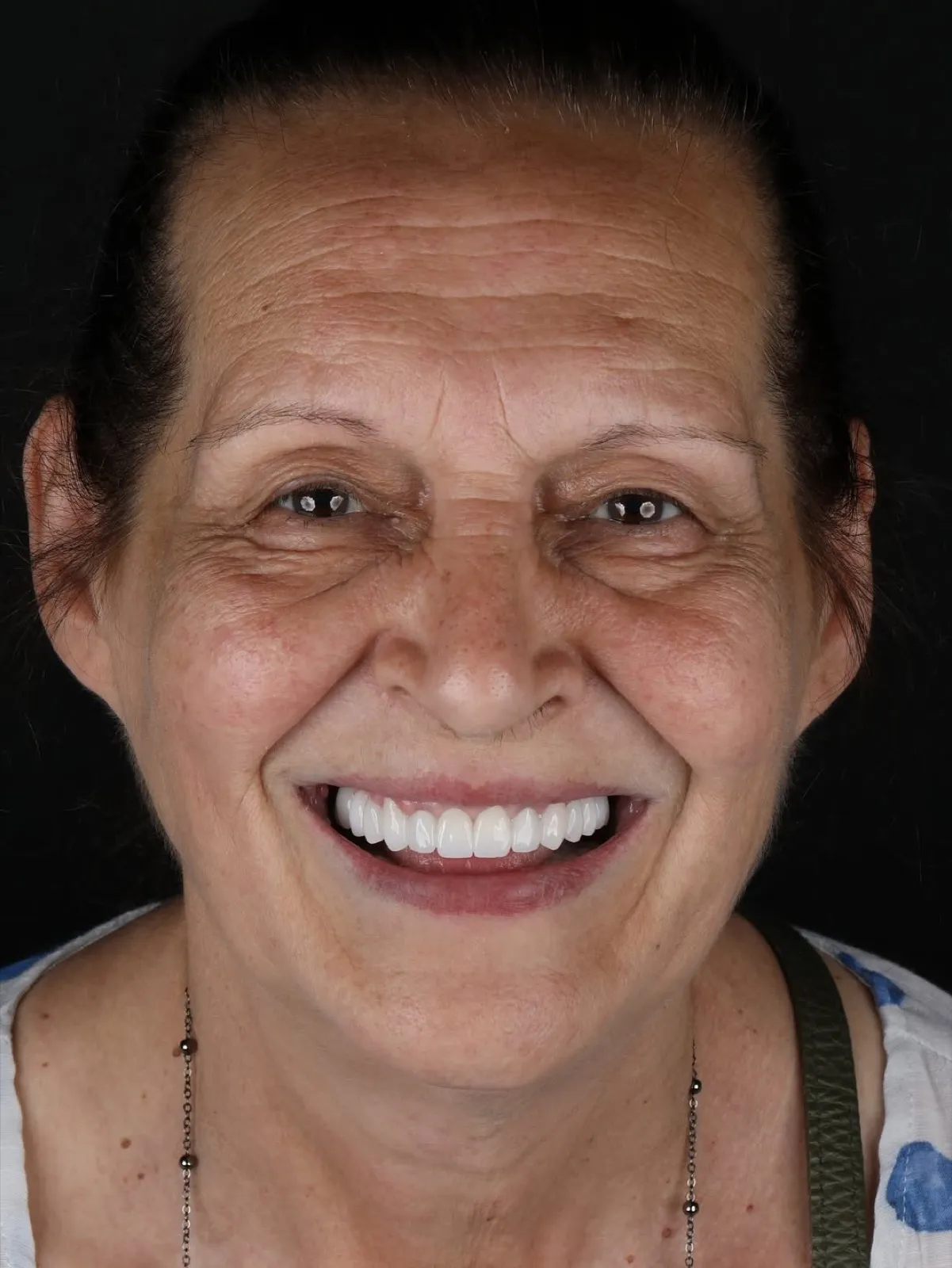
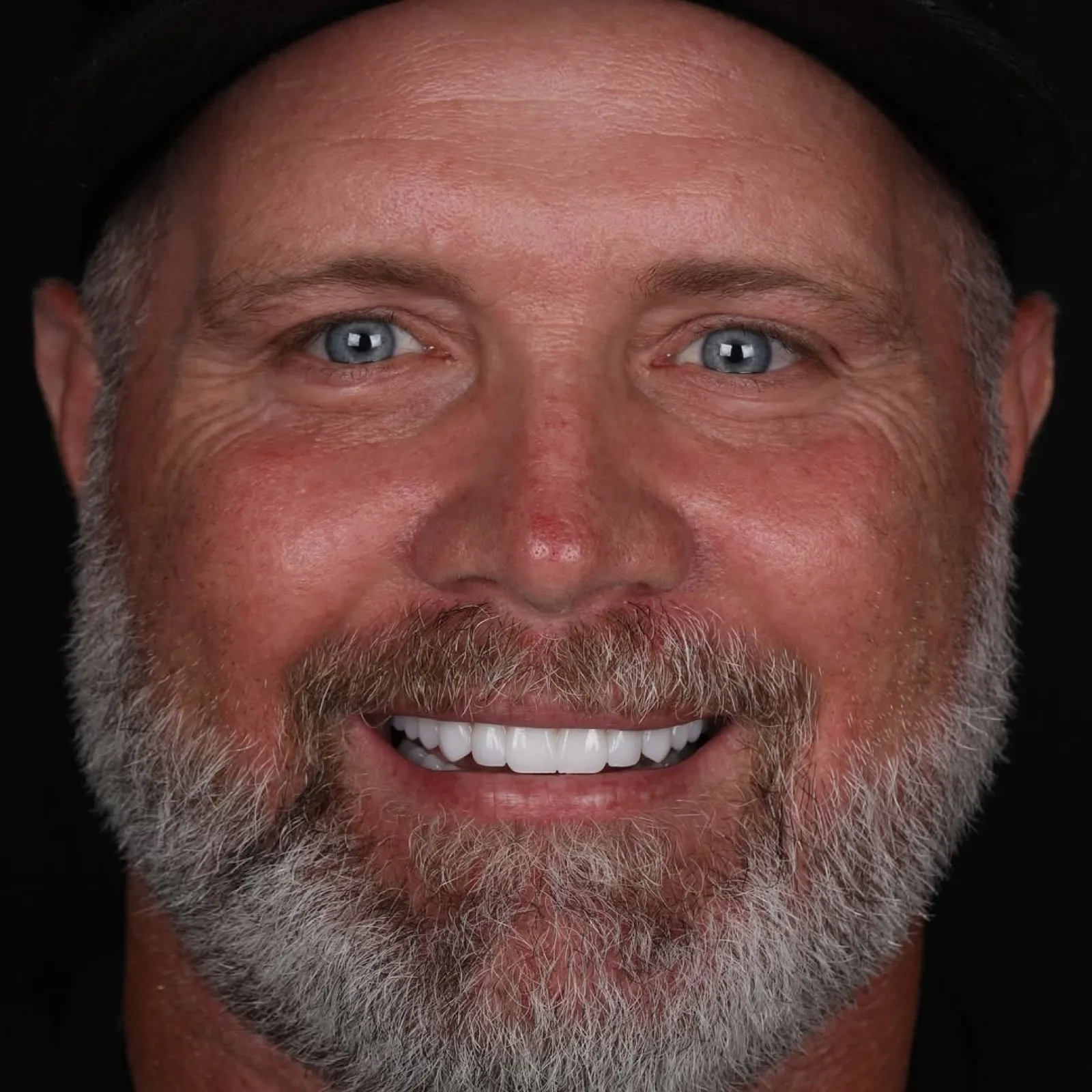 Real patient result
All-on-4 / All-on-6 — NexWell Clinics, Istanbul
$11,400+
Full mouth, both arches
Up to 80%
Less than UK/US
Same day
Teeth in a day
24h
Consultation
Single arch (All-on-4) from $5,700 per arch: shown above as the full-mouth (both-arch) total.
All-on-6 implants in Turkey, before and after: what happened, in order.
Example boarding pass — treatment specifics confirmed with your doctor, not a package.

Starting point
Complete tooth loss in both the upper and lower jaw, confirmed with a full oral exam and CBCT scan before any treatment was planned.
Treatment performed
Full-arch implants placed in both jaws, with a temporary fixed prosthesis fitted before returning home — planned and performed by our clinical team at a TEMOS-accredited facility in Istanbul.
Return home
Flew home after the first visit with a fixed, functioning temporary restoration already in place.
Follow-up
A follow-up check confirmed the temporary restoration was stable and healing was on track, ahead of the permanent prosthesis fitted on the second visit about three months later.
Real patient results
Dental tourism in Turkey: fifteen implants cases treated at our Istanbul clinic.
Every photograph below is a patient of the clinic, shown before treatment and after the final restoration. Treatment plans differ from case to case — what these have in common is that each one started with an assessment, not a price list.
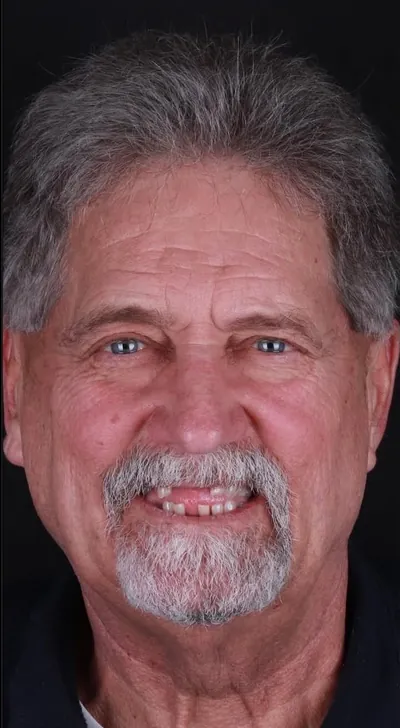
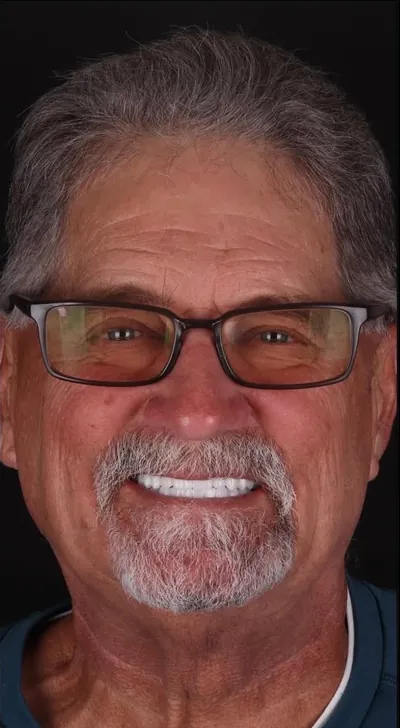
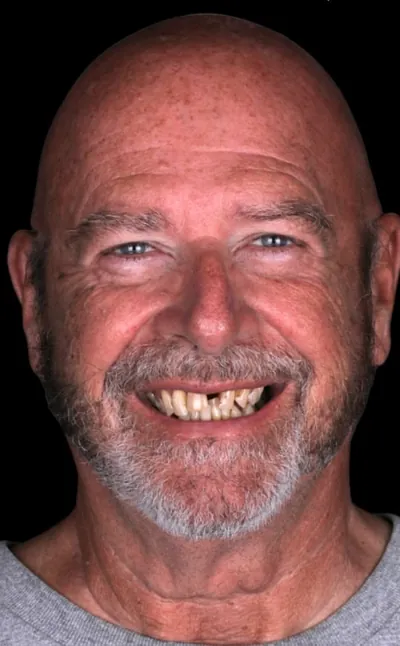
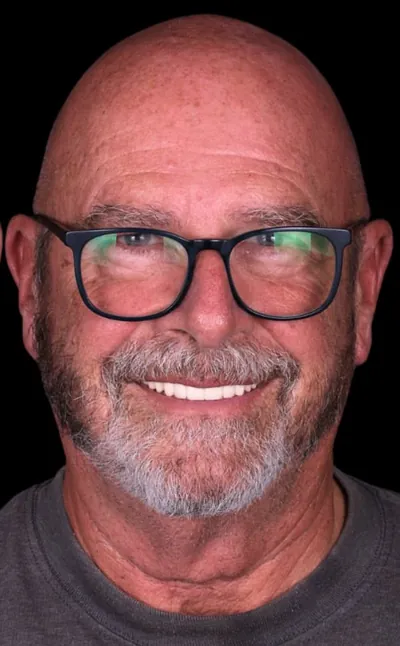
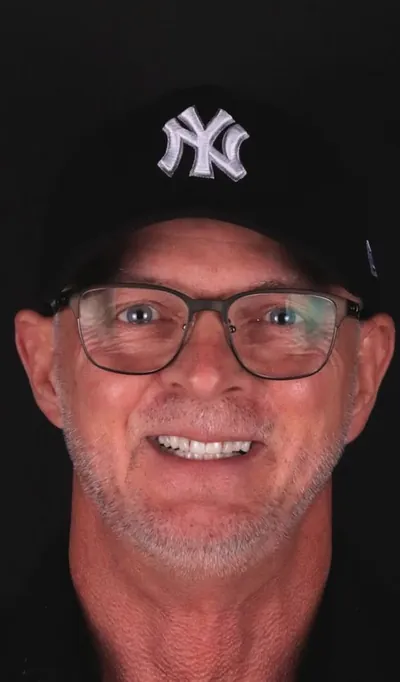
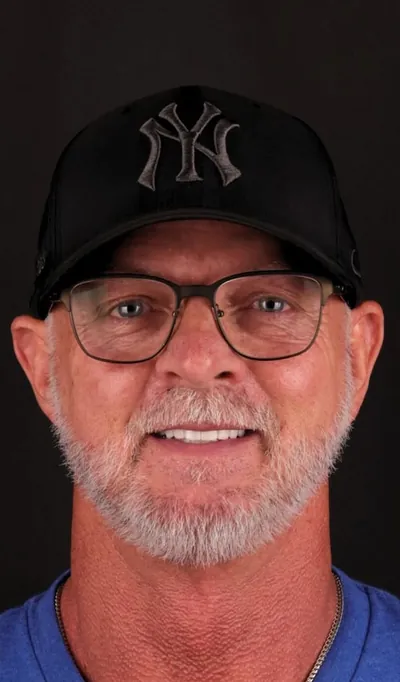
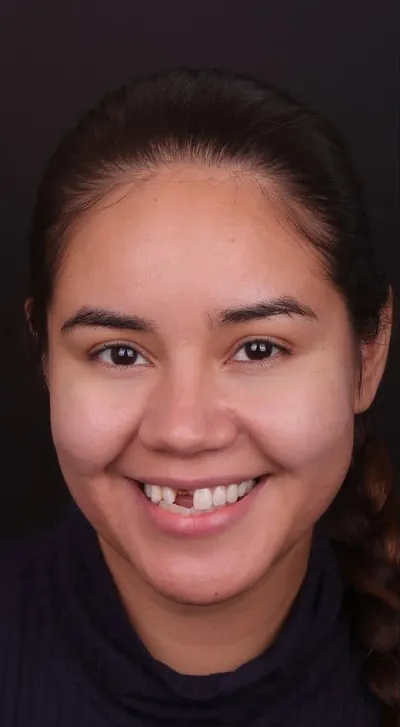
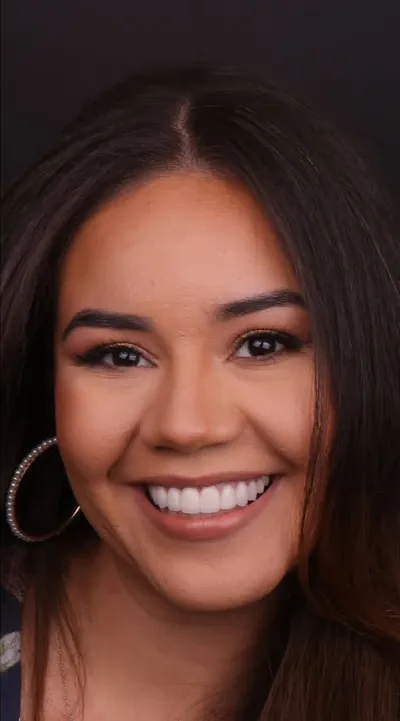
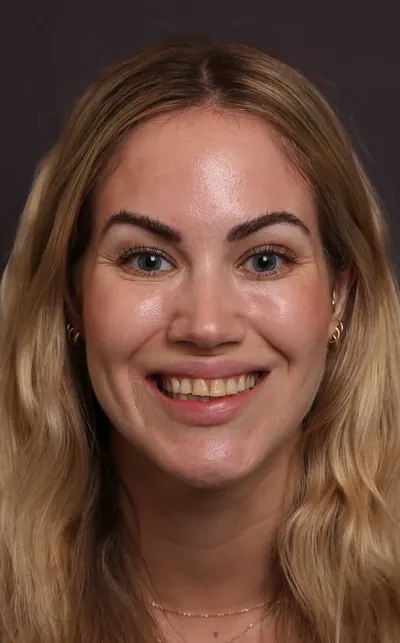
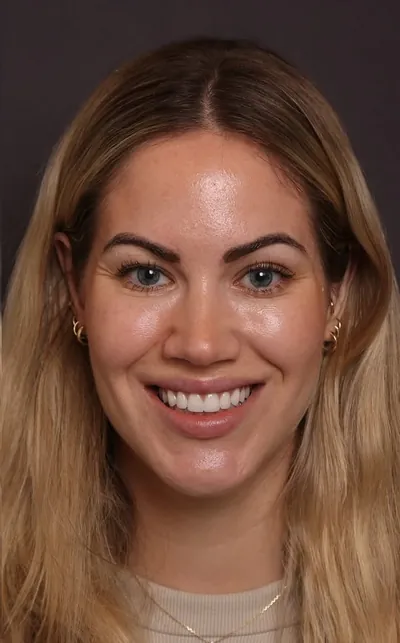
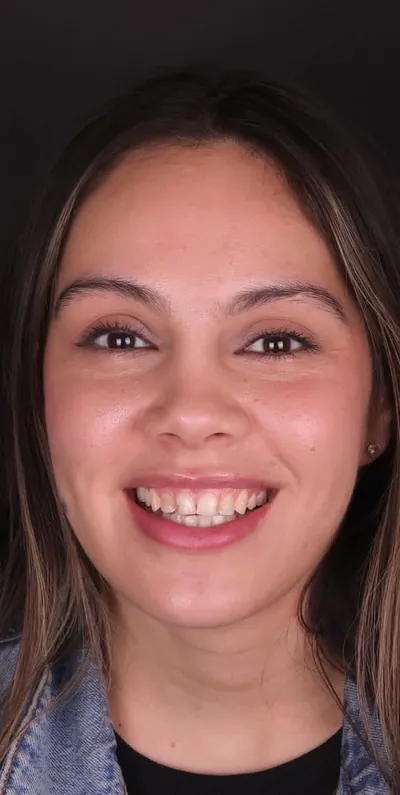
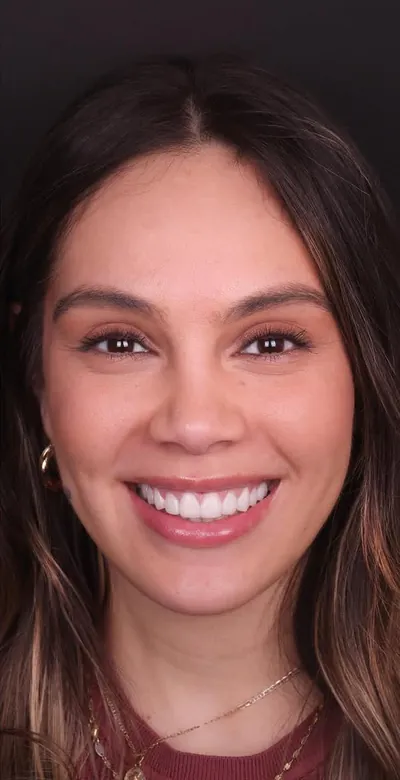
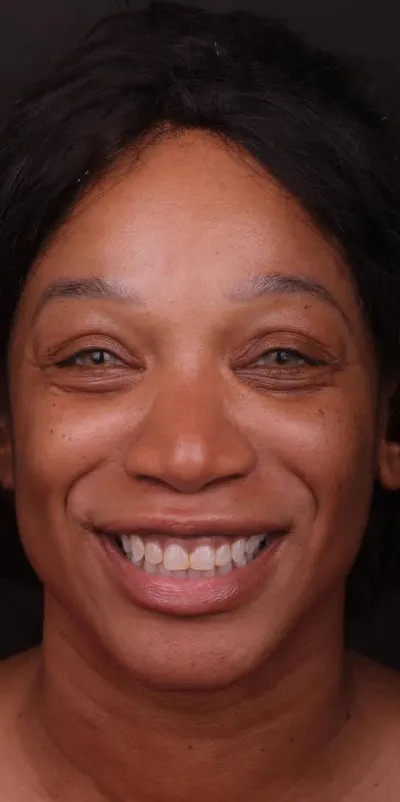
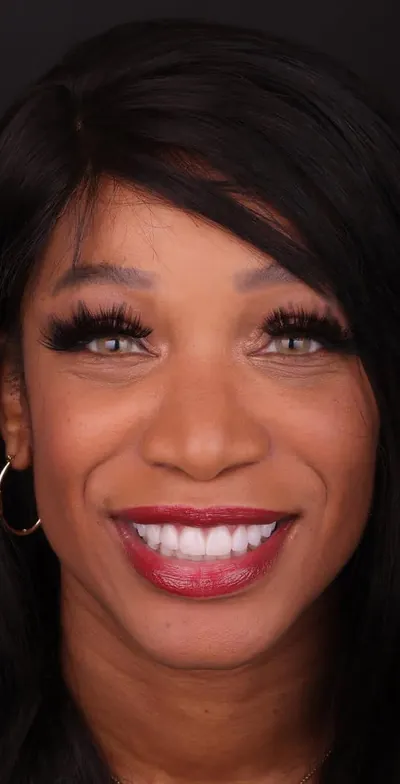
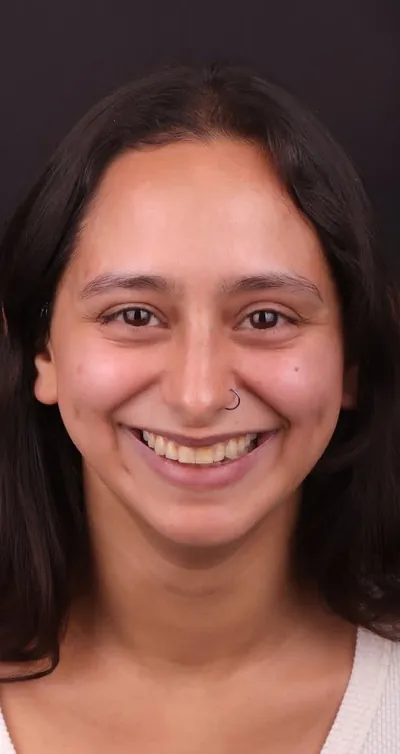
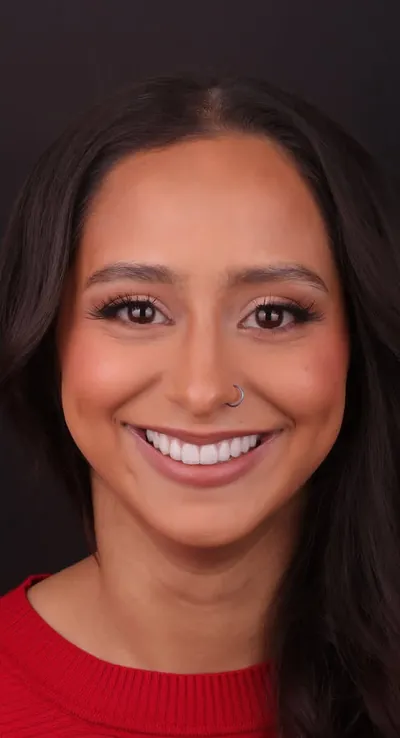
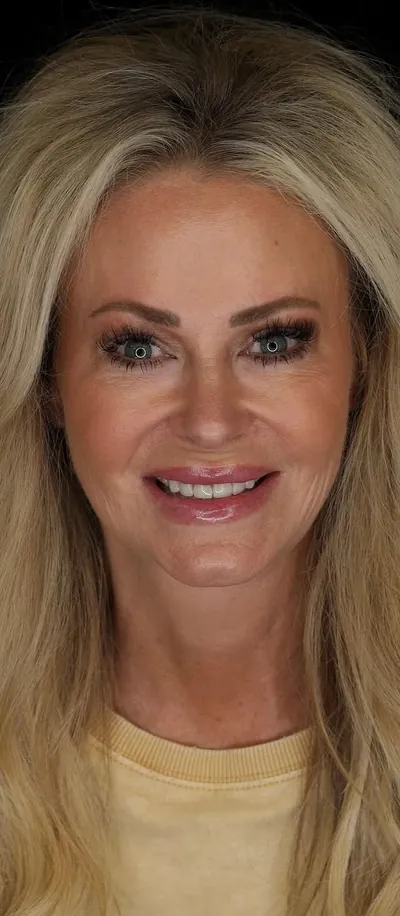
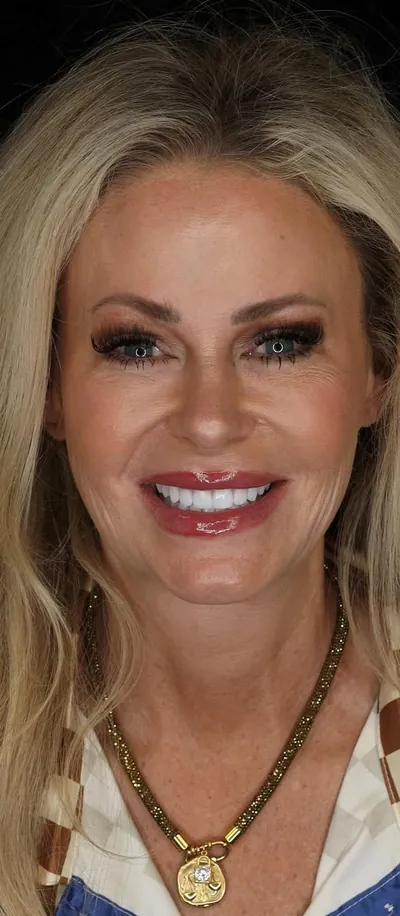


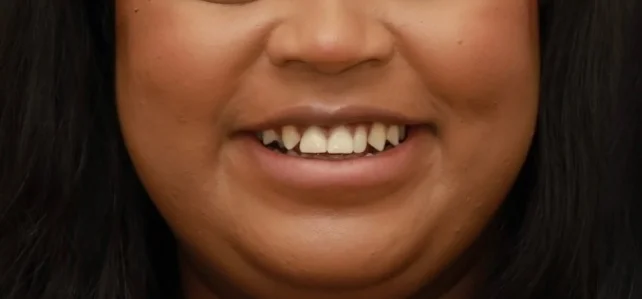
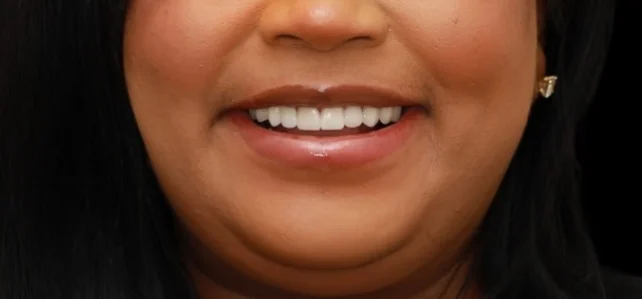


Photographs are of real patients treated at the clinic and are published with their consent. Individual results depend on the starting condition, the treatment plan and aftercare; these images are not a promise of a particular outcome.
What is included in your dental implants Turkey package price, and what do full mouth implants abroad cost?
Every NexWell patient receives a single all-inclusive price with no hidden fees. There are no coordination charges and no surprises on arrival.
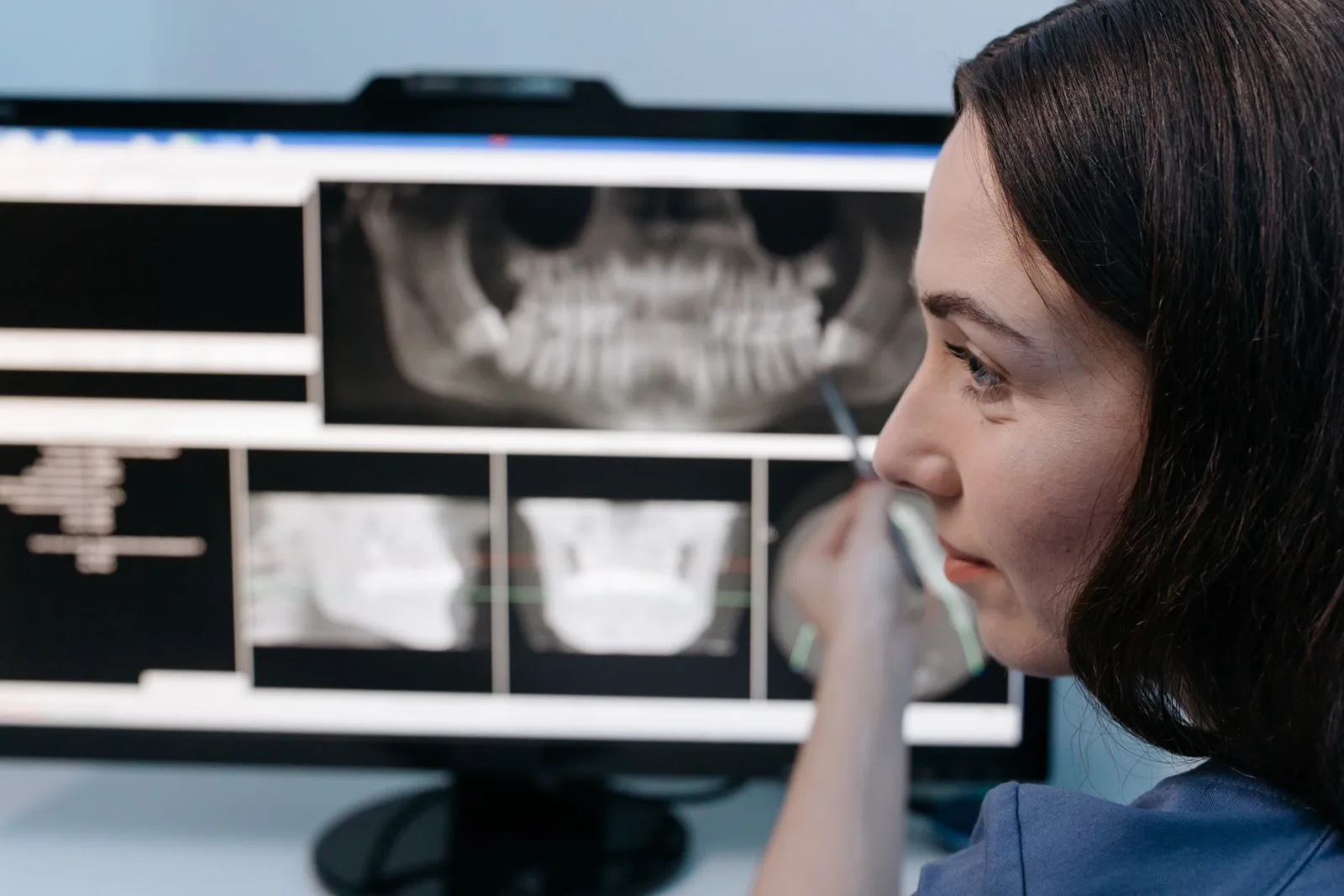
CBCT scan and bone assessment
3D cone-beam CT scan on arrival to confirm bone volume and finalise treatment plan.
Implant surgery and sedation
All titanium implants, surgical fees, anaesthesia or sedation, and clinic time included.
Same-day temporary bridge
Fixed temporary prosthesis placed on the day of surgery: you leave with a complete smile.
Hospital stay
Post-operative recovery care and all clinic accommodation for the required duration.
Implant documentation
Full records of implant brand, system, and batch numbers provided for follow-up at home.
Aftercare coordination
A named member of your NexWell Clinics team is available throughout recovery and osseointegration.
Same treatment name, different systems: this is what actually changes the price
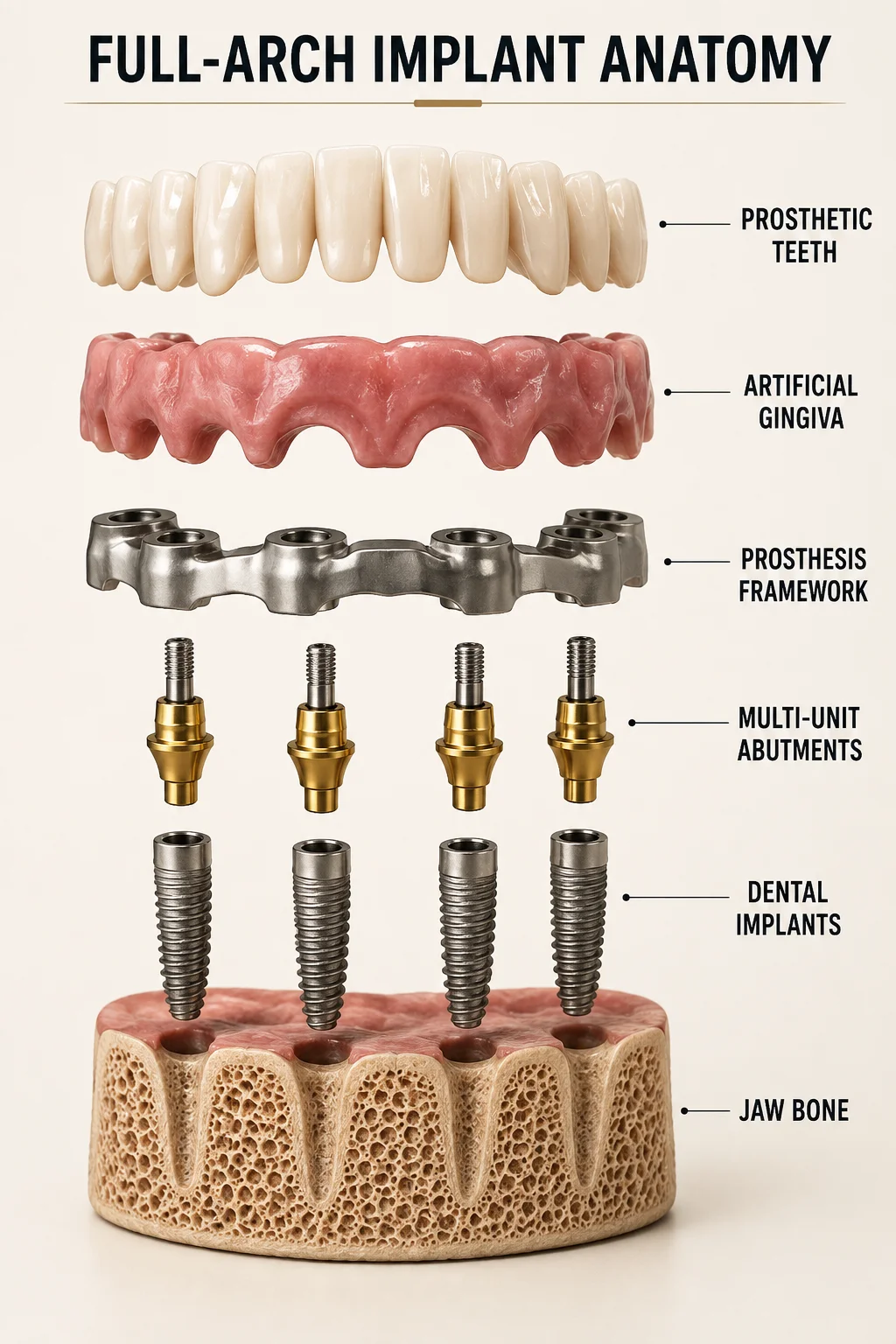
Implant Brand Tiers and What They Mean for Pricing and Long-Term Care in Turkey
Dental implant brands sit in three broad tiers. Premium international brands such as Straumann, Nobel Biocare and Zimmer Biomet are manufactured to the highest precision standards, carry extensive long-term clinical outcome data and are supported by service and parts networks in most countries.
Mid-tier brands from established European and American manufacturers offer solid performance at lower cost. Entry-level brands, including some produced primarily for the dental tourism market, carry significantly less long-term data.
For patients whose treatment will be managed locally after Turkey, service and parts compatibility matter. An implant from a brand without international distribution may be difficult to work with at home if future adjustments or component replacement are needed years later.
This is especially relevant for full-arch cases where the prosthetic components must be interchangeable with the implant system.
Turkish clinics often give patients a choice between brand tiers and price accordingly. A clinic that cannot explain why it selected a particular brand for a particular patient's anatomy and situation has not given the choice the clinical deliberation it deserves.
Provisional Teeth: One of the Most Frequently Misunderstood Cost Elements in Turkish Implant Quotes
Provisional teeth, the temporary restorations worn while implants integrate, represent one of the most commonly misunderstood cost elements in Turkish implant quotes. Some clinics include a full fixed provisional in every quote. Others include only a removable flipper. Others include nothing and treat provisionals as a negotiable add-on.
For single-implant cases, the provisional question is minor because temporary restorations are low cost. For full-arch cases, the provisional bridge is significant. The difference between a well-made fixed immediate-loaded provisional and a removable transitional appliance is substantial in terms of patient experience and function during the healing period.
Patients comparing two full-arch quotes at different prices should confirm whether each includes a fixed provisional from day one or assumes a removable temporary during integration. If one includes a fixed bridge from day one and the other does not, they are describing different scopes and cannot be compared numerically without resolving that difference first.
How NexWell Reviews Implant Cost Proposals and Helps Patients Make Comparisons
NexWell reviews implant cost proposals from Turkey by standardising scope so that price comparisons reflect equivalent treatment plans rather than superficially similar labels. For patients with multiple proposals, this regularly reveals that the cheapest option excludes components the patient will need and the most expensive option is sometimes genuinely the best real value.
We assess whether each clinic's bone assessment protocol is appropriate for the patient's history, whether the provisional restoration plan is realistic for someone flying home days after surgery and whether the aftercare model includes a credible remote support pathway.
For patients at the planning stage who have not yet received proposals, NexWell can help structure the submission to shortlisted clinics so that responses are specific, comparable and clinically meaningful rather than package menus that cannot be meaningfully evaluated against each other.
Full mouth reconstruction cost in Turkey: how much do full mouth dental implants cost?
Turkey prices are all-inclusive: CT scan, implants, surgery, sedation, temporary prosthesis, and aftercare. UK and US prices are average private clinic rates and exclude prosthetic work.
| Procedure | Turkey 🇹🇷 | UK 🇬🇧 | USA 🇺🇸 | Australia 🇦🇺 | Canada 🇨🇦 |
|---|---|---|---|---|---|
| All-on-4 (per arch) | $5,700–$8,900 (£4,490–£7,010 / €5,250–€8,200) | $12,700–$20,300 | $15,000–$27,500 | A$18,000–A$28,000 | C$15,000–C$24,000 |
| All-on-6 (per arch) | $7,200–$11,750 (£5,670–£9,250 / €6,630–€10,820) | $17,800–$27,950 | $23,000–$35,000 | A$25,000–A$38,000 | C$22,000–C$32,000 |
| Full mouth All-on-4 (both arches) | $11,400–$17,800 (£8,980–£14,020 / €10,500–€16,390) | $25,400–$40,650 | $26,000–$70,000 | A$36,000–A$56,000 | C$30,000–C$48,000 |
| Full mouth All-on-6 (both arches) | $14,350–$23,500 (£11,300–£18,500 / €13,220–€21,640) | $35,550–$55,900 | $40,000–$70,000 | A$50,000–A$76,000 | C$42,000–C$65,000 |
| Single implant (Straumann / Nobel) | $890–$1,400 (£700–£1,100 / €820–€1,290) | $2,550–$4,450 | $2,500–$4,500 | A$4,000–A$6,500 | C$3,500–C$5,500 |
| Bone graft (if required) | $230–$850 (£180–£670 / €210–€780) | $1,500–$3,200 | $1,500–$3,000 | A$2,500–A$4,500 | C$2,000–C$3,800 |
All NexWell packages include CT scan, implant surgery, sedation, temporary prosthesis, and aftercare coordination. Final pricing confirmed after bone assessment review.
Patient reviews
Reviews from NexWell patients
Google reviews from NexWell's clinic network, kept as written.
4.9 · 1,506 Google reviews across NexWell's clinic network
Selected reviews
A few reviews from NexWell's clinic network, kept as written, selected only because they don't name a specific clinic or clinician.
“I would like to sincerely thank Adam for his outstanding support, professionalism, and care throughout my journey. From the beginning, he has been kind, patient, and attentive, always taking the time to answer my questions and make sure I feel comfortable and well-informed. His clear communication and warm personality made the entire experience much easier and reassuring. Adam consistently goes above and beyond in his support, showing genuine care and dedication…”
“I had the pleasure of visiting this dental clinic in Turkey and was welcomed with respect, kindness, and a hospitality that made me feel at home. I felt completely at ease from the very first moment and trusted their professionalism immediately. Even my second visit for a check-up was flawless: consistent care, attention, and warmth. I highly recommend this clinic to anyone seeking skillful care combined with a truly human experience.”
“My teeth cleaning went well. Very satisfied.”
Photo assessment · three guided shots
Not sure how much rebuilding your case needs?
The gap between a few implants and a full arch is decided by what is left to build on. Three guided photos give our clinical team enough to say which direction your case points in, before any scan or travel.
All-on-4 vs All-on-6, and how to choose the best All-on-4 clinic in Turkey
Your implantologist will recommend All-on-4 or All-on-6 after reviewing your CBCT scan and bone density assessment. Both systems can be placed in a single surgical session with same-day temporary prostheses.
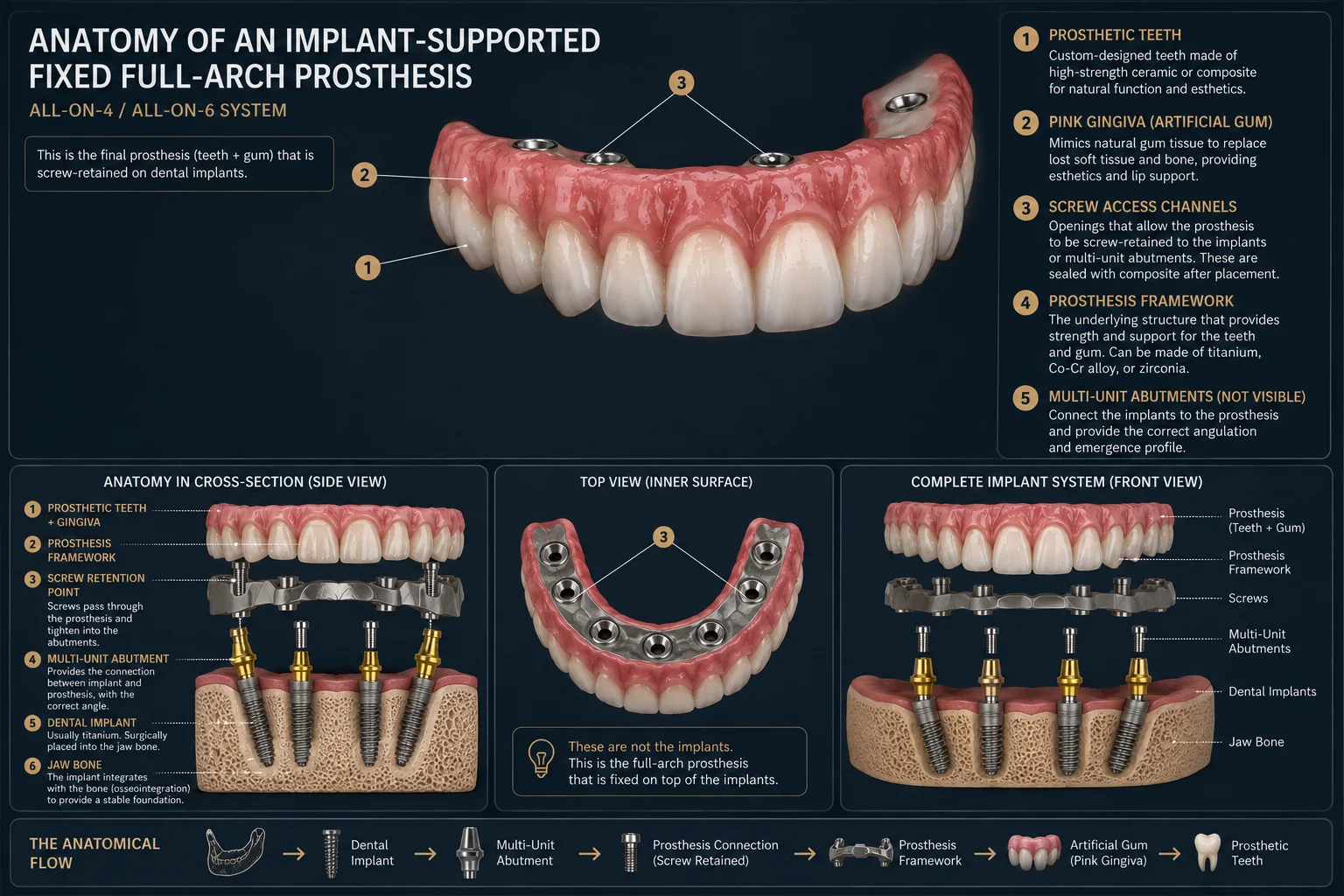
All-on-4 Dental Implants
Most popular- 4 titanium implants per arch
- Posterior implants angled at 30–45° for maximum bone contact
- Suitable for most bone densities: often avoids bone grafting
- Same-day temporary bridge included
- Best for: patients seeking the most cost-efficient full-arch solution
All-on-6 Dental Implants
Maximum stability- 6 titanium implants per arch for enhanced load distribution
- Recommended for higher bite force or lower bone density
- More surface contact for greater long-term stability
- Same-day temporary bridge included
- Best for: patients wanting maximum stability or with back-molar stress patterns
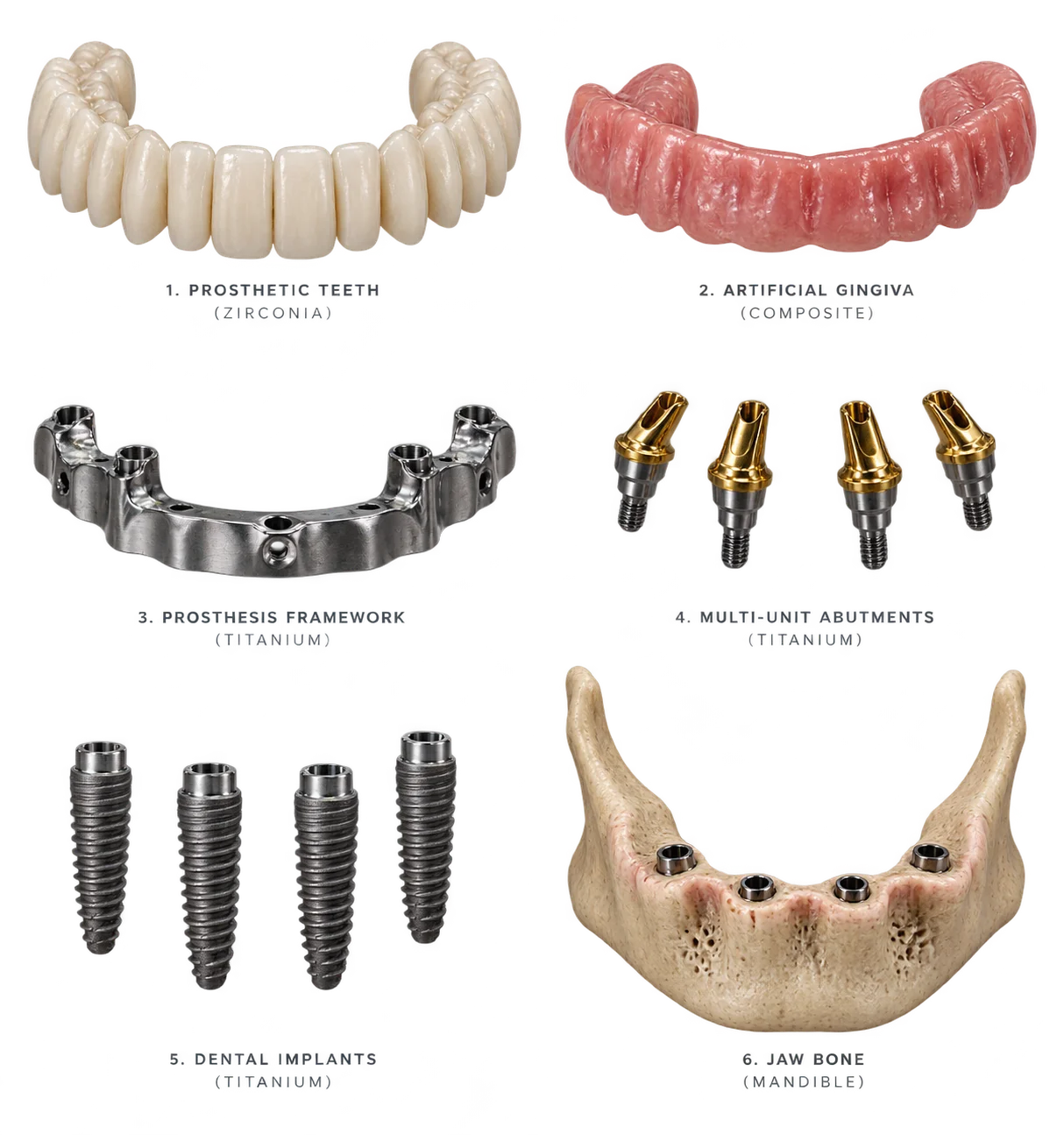
Which implant brands are used in Istanbul, and what counts as the best dental implants in Turkey?
NexWell Clinics, Istanbul use the same internationally certified implant systems as top dental practices in the UK and USA. You receive full documentation of the implant brand, system, and batch number: important for any future maintenance at home.
Straumann
Switzerland
Gold standard in implantology. 98.8% 10-year survival for SLA implants in a published clinical study (Buser et al., 2012, source below).
Nobel Biocare
Sweden / USA
Inventor of the osseointegrated implant. 99.2% 10-year survival for TiUnite implants in a prospective study (Östman et al., 2012). Nobel Active and NobelReplace systems used for All-on-4.
BEGO
Germany
ISO 13485 certified. Widely used across European implant centres. Strong mid-range value.
Osstem
South Korea
World's third-largest implant manufacturer. FDA and CE cleared. High-volume global track record.
Always ask your clinic to confirm the implant brand and provide the batch number before surgery. NexWell Clinics, Istanbul provide this as standard practice.
Teeth in a day in Turkey: the timeline from consultation to final bridge
Before travel
1–2 weeks
Remote pre-assessment: share your dental X-rays or CBCT scan. Implantologist reviews bone density and confirms treatment plan. Treatment plan issued.
Visit 1: Surgery
5–7 days in Istanbul
Day 1: CBCT scan and pre-operative assessment. Day 2: implant surgery (3–5 hours) under sedation. Same-day temporary fixed bridge placed. Days 3–6: recovery and post-op checks.
Osseointegration
4–6 months at home
Titanium implants fuse with the jawbone. You function normally on the temporary bridge throughout. No restrictions on daily life. Remote check-in with your NexWell Clinics team.
Visit 2: Final bridge
3–5 days in Istanbul
Osseointegration confirmed. Impressions taken. Final zirconia or porcelain bridge fabricated and fitted. Bite adjustments completed. Full treatment concluded.
Home follow-up option
Ongoing
Your implant records (brand, batch, X-rays) are provided for any future maintenance with a dentist at home. Annual check-up recommended.
Is it safe to get same day dental implants in Turkey?
Treatment takes place at TEMOS-accredited dental clinicsin Istanbul. TEMOS International is an independent, Germany-based accreditation body focused specifically on international patient care: clinics are audited on-site against standards for clinical quality and patient safety. (JCI accreditation is a separate, hospital-focused standard used by Turkey's major hospital groups, not standalone dental clinics.)
The implantologists who treat NexWell patients are board-certified members of the Turkish Dental Association (TDB), with many holding additional fellowship qualifications from the International Team for Implantology (ITI) or European Association for Osseointegration (EAO). Turkey performs over 200,000 dental implant procedures for international patients annually.
Straumann and Nobel Biocare, the systems most commonly used at NexWell Clinics, have some of the most robust long-term data in implantology. In peer-reviewed 10-year studies, Straumann SLA implants showed a 98.8% survival rate and Nobel Biocare TiUnite implants 99.2%. Across all implant systems and clinical settings, an independent 2019 meta-analysis reported 96.4% 10-year survival. Individual outcomes depend on bone quality, oral hygiene, smoking status and general health: your implantologist will discuss your personal risk profile before treatment.
Sources
- Buser D, et al. 10-year survival and success rates of 511 titanium implants with a sandblasted and acid-etched surface. Clin Implant Dent Relat Res. 2012, PubMed
- Östman PO, et al. Ten years later: results from a prospective single-centre clinical study on 121 oxidized (TiUnite) Brånemark implants. Clin Implant Dent Relat Res. 2012, PubMed
- Howe MS, Keys W, Richards D. Long-term (10-year) dental implant survival: a systematic review and sensitivity meta-analysis. J Dent. 2019, Journal of Dentistry
What warranty comes with a dental implant in Turkey?
| Case type | Warranty term |
|---|---|
| Full-arch (All-on-4 / All-on-6 / full-mouth) | Lifetime on the titanium implant fixture, 5 years on the crowns and bridge |
| Single implant or crown | 5-year restoration warranty on the crown; the fixture term for a single-implant case is set out in your own treatment agreement, not assumed to be the same as the full-arch term above |
What takes the warranty away
- Smoking
- Untreated gum disease
- Missed peri-implant maintenance visits (at least every 5-6 months, per Monje et al. 2016)
- Accidental trauma or an accident
- Clenching or grinding without wearing the protective guard you were given
- An uncontrolled systemic condition, such as unmanaged diabetes
- Work altered or repaired at another clinic without agreement
This list describes standard implantology practice, not a clause-by-clause contract: the binding version is the one written into your own treatment agreement with your NexWell clinic, so ask for the full terms and exclusions in writing before you pay anything. None of this is a clinical guarantee, and it is not offered as one: a warranty is a commercial undertaking about components and workmanship, not a prediction of how your bone will heal. Read how disputed cases are assessed.
Long-Term Value: Why Aftercare Planning Affects What Implants Actually Cost You
The sticker price of a dental implant in Turkey is only one dimension of its total cost. The other dimension is what maintaining, adjusting and protecting that implant costs over the subsequent years.
Implants placed with proper bone assessment, appropriate loading protocols and good prosthetic design require relatively little maintenance beyond routine hygiene and periodic check appointments. Those placed in compromised bone, with mismatched bite loading or without clear follow-up planning may require early restorative revisions, repeated adjustments or in rare cases implant removal and replacement.
For international patients, remote follow-up arrangements and documented clinical records significantly reduce the cost of managing minor post-treatment issues at home. A clinic that provides a complete case summary, radiographs and prosthetic specifications at discharge allows a local dentist to handle minor interventions rather than requiring the patient to fly back to Turkey for each small concern.
All-on-4 and full mouth dental implants abroad vs dentures: how do they compare?
Full mouth implants are permanently fixed to the jawbone: they do not move during eating or speaking and require no adhesives. Unlike removable dentures, implant-supported bridges stimulate the jawbone and prevent the progressive bone loss that occurs beneath a denture over time.
The upfront cost of implants is higher than dentures. However, quality dentures typically require replacement every 5–8 years and ongoing adhesive costs, while implants, with proper maintenance, last 15–25 years. For most patients, the total lifetime cost difference narrows significantly, and the functional and quality-of-life benefit of fixed implants is substantially higher.
| Factor | Full mouth implants | Removable dentures |
|---|---|---|
| Fixed vs removable | Permanently fixed | Removable daily |
| Bone preservation | Yes: stimulates bone | No: bone loss continues |
| Lifespan | 15–25+ years | 5–8 years (replacement) |
| Eating restrictions | None after healing | Avoid hard/sticky foods |
| Turkey cost (full mouth) | Full price list → | $1,020–$3,200 |
When this table isn't the right fit
Dental Implant Cost Questions to Get in Writing Before Booking
A low headline number rarely tells the whole story on implants. Confirm these points in writing before a cost comparison means anything:
- Which implant system is being used and what is the documented brand and series?
- Does the quote include the crown and abutment or only the implant fixture?
- What is the bone assessment protocol and does the quoted price assume adequate bone?
- Is sedation included and if so what type?
- Are extraction fees inside the quoted figure?
- Does the price cover provisional teeth and if so what material and method?
- What is the definitive restoration material and when is it delivered?
- What is included in a single visit versus what requires a return trip?
- How are adjustment and complication costs handled after the patient returns home?
The quote only becomes a decision-ready figure once the implant system, crown inclusion and return-visit terms are confirmed in writing.
Full mouth dental implants in Turkey: choosing the best implant surgeons, and FAQs
Explore related dental treatments in Turkey
Dental Implants Before & After Photos
Real full-mouth case photos: including what a genuine All-on-4/All-on-6 implant result actually looks like.
Read guideUSA vs Turkey: Full Mouth Cost
What US patients pay at home versus all-inclusive in Turkey, and what you save.
Read guideTurkey vs Mexico Dental Implants
For US patients weighing the two top dental-tourism destinations.
Read guideAll-on-4 Dental Implants Turkey
Four implants per arch: the most cost-efficient full-arch option. Cost and process.
Read guideAll-on-6 Dental Implants Turkey
Six implants per arch for maximum stability and load distribution.
Read guideZygomatic Implants Turkey
Fixed teeth for severe bone loss when you have been told you cannot have implants.
Read guideDental Implant Cost Guide
Full breakdown of single, All-on-4, All-on-6 and full mouth implant costs in Turkey.
Read guideDental Implants Turkey vs UK
Side-by-side comparison of cost, quality, and process for single and multiple implants.
Read guideIs Turkey Safe for Dental Implants?
Accreditation, surgeon credentials and safety standards: the question patients ask first.
Read guideWhat a clinic should ask you for before surgery
None of this is legally compulsory, and that is exactly what makes it useful. What a clinic asks for when nothing forces it tells you how that clinic works. So read the list twice: once as the work-up you should have done, once as a measure of the clinic in front of you.
Blood tests
These are read together, as one picture, not ticked off one by one. A team planning surgery without a recent set of them is planning half-blind.
Complete blood count (CBC / hemogram)
The overall picture of your blood: anaemia, signs of infection, platelet levels. It is the baseline any surgical team wants in front of it before starting.
Blood glucose
Blood sugar affects how you heal and how prone you are to infection after a procedure. What is needed is a current reading. A result from three years ago tells nobody anything.
Coagulation tests (PT, INR)
How quickly your blood clots. The team plans around bleeding on the basis of it, and all the more so if you take blood thinners.
Infection safety
These three are taken as routine, not as a judgement about you: they protect you, the team, and the patient who comes after you. What a result means belongs to your doctor, not to a search engine.
HBsAg (Hepatitis B)
Screening for hepatitis B. Theatre scheduling and instrument handling are organised around it.
Anti-HCV (Hepatitis C)
Screening for hepatitis C. It often goes years without symptoms and shows up only in the lab.
HIV 1/2
Standard screening before an operation. A serious clinic asks for it in order to plan safely, not in order to judge you.
Bisphosphonate use
Bisphosphonates are bone medicines, most often taken for osteoporosis, sometimes as part of cancer treatment. In the jaw they matter more than anywhere else: in people who take them, or who took them in the past, an implant or an extraction carries a risk of osteonecrosis of the jaw (MRONJ). The effect on bone can outlast the final dose, so a course you finished years ago still counts.
This is not something you book at a lab. It is a question about your medication history. If you take a bisphosphonate, or ever have (under any brand name, as tablets or as an infusion), say so before a treatment plan is written, not after. Bring the name of the drug and, if you know them, the dates. A clinic that never asks what you take has not assessed you.
A good clinic asks you for all of this on its own. If yours doesn't, ask why. The side that writes your treatment plan should not be the only side judging it. This list is the simplest way to keep that judgement in your own hands.
This section is not a medical assessment and does not prescribe tests. Which of these apply to you, and what any result means, is a conversation with your own doctor and with the clinic performing the procedure.
New teeth in Turkey: ready to restore your full smile?
Get a personalised All-on-4 or All-on-6 treatment plan within 24 hours. Share your dental records and your NexWell Clinics team will arrange a remote assessment with your implantologist, with no obligation.
Medical content on this page is reviewed in accordance with our editorial policy. See our medical disclaimer.
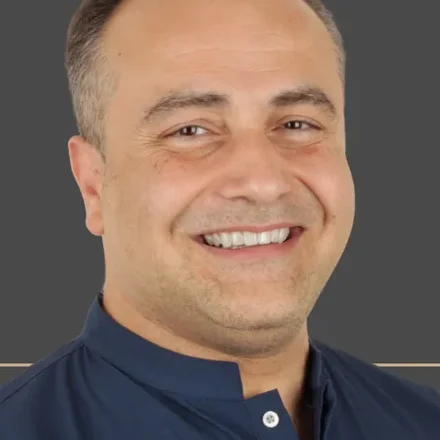
Dt. M. Cem Mekik
Dt. M. Cem Mekik graduated from Hacettepe University Faculty of Dentistry in 2001 and has practised implant dentistry since. He holds an Osstem Implant Global Course Director certificate and is on the training faculty of Osstem Implant Türkiye's clinical training centre (OIC) for implant surgery, and has been a member of the International Team for Implantology (ITI) since 2005. He is a NexWell medical reviewer for full-mouth implant content.
- DDS, Hacettepe University; Osstem Implant Global Course Director; ITI member since 2005
- Turkish Dental Association (TDB)