Knee Replacement Surgery in Turkey: What to Expect and How to Plan
- TEMOS-accredited clinics
- JCI-accredited hospitals
- Board-certified surgeons and a licensed clinical team
- 3,000+ international patients treated
A NexWell guide for patients considering knee replacement surgery in Turkey, covering total and partial knee replacement, surgical approach, rehabilitation requirements, long-term outcomes and how to evaluate orthopaedic hospitals.
Written quote from a NexWell coordinator, usually within 24 hours.
Quick answer
Total knee replacement in Turkey costs $7,500–$11,000 all-inclusive of surgery, implant, anaesthesia, hospital stay and initial physiotherapy, around 60% less than the UK private sector's $17,800–$24,150 (2026). Partial knee replacement runs $7,000–$10,000, and bilateral replacement $12,500–$18,000. Implant brand and rehabilitation intensity are what mainly change the quote.
Why Patients Consider Knee Replacement and When It Is Indicated
Knee replacement surgery is indicated when knee joint damage, most commonly from osteoarthritis, causes persistent pain significantly impacting quality of life and function despite conservative management. Patients who have undergone extended periods of physiotherapy, weight management, oral anti-inflammatory therapy and intra-articular injections without adequate relief are typically the strongest candidates.
The degree of structural damage on weight-bearing X-ray or MRI, combined with clinical examination findings and functional limitation, guides the indication. Severe joint space narrowing, bone-on-bone contact or significant deformity are radiological findings that align with surgical candidacy. Moderate damage where conservative options are genuinely not exhausted is less clearly an indication for surgery.
Turkey has developed a strong orthopaedic surgery infrastructure with facilities that handle high volumes of primary and revision joint replacement surgery. International patients coming for knee replacement in Turkey benefit from short waiting times, modern implant systems and significantly lower costs than in the UK, Ireland or the USA.
The degree of structural damage on weight-bearing X-ray or MRI, combined with clinical examination findings and functional limitation, guides the indication.
Total Knee Replacement Versus Partial Knee Replacement: Key Differences
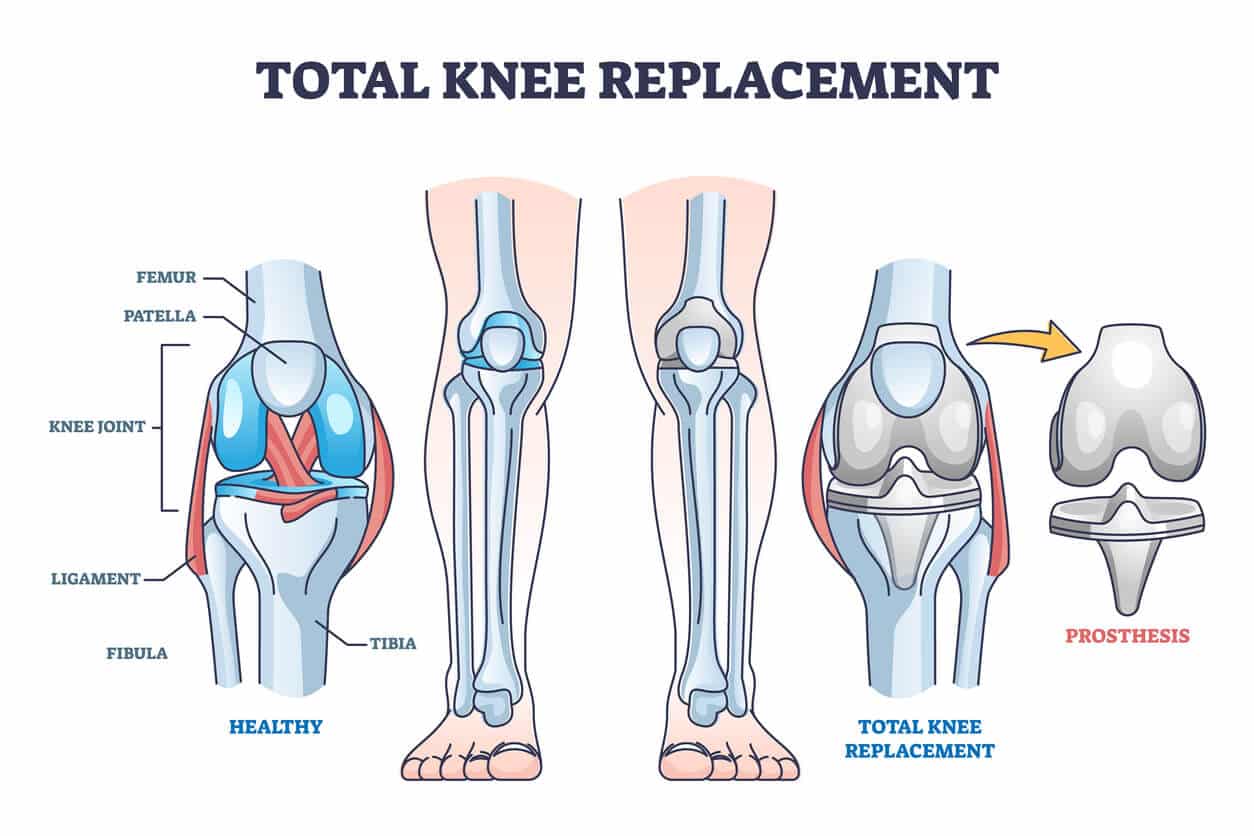
Total knee replacement replaces all three compartments of the knee joint with implant components. It is the most common type of knee replacement and is appropriate when arthritis affects the majority of the joint surface or when deformity involving multiple compartments is present.
Total knee replacement has a long track record: pooled national-registry data put 15-year implant survival at about 93%, falling to roughly 82% at 25 years.
Partial knee replacement, also called unicompartmental knee replacement, replaces only the most affected compartment of the knee, most commonly the medial compartment. It preserves more native bone and ligament tissue, results in a more natural-feeling knee in most patients and has a potentially shorter recovery period.
However, it is appropriate for a more limited patient subset, and failure requiring conversion to total knee replacement is a known outcome in a proportion of cases.
The choice between total and partial replacement should be based on the pattern of joint damage, the patient's anatomy and their knee ligament integrity rather than age alone. Patients should expect the orthopaedic surgeon to explain clearly which approach is recommended for their specific imaging findings and why.
Treatment Plan
Ready for a written Knee Replacement Surgery in Turkey: What to Expect and How to Plan quote?
A NexWell coordinator reviews your case and replies with a personalised treatment plan and indicative pricing — usually within 24 hours.
What Knee Replacement Surgery and the Initial Hospital Stay Involve
Knee replacement surgery in Turkey is performed under spinal or general anaesthesia and typically takes one to two hours depending on case complexity. Patients are admitted to hospital the day before surgery for pre-operative assessment, blood tests and anaesthetic review.
Most patients begin physiotherapy the day after surgery, typically standing and taking first steps with walking aids within twenty-four to forty-eight hours of the procedure. This early mobilisation is a standard component of modern enhanced recovery protocols and significantly reduces post-operative complications from immobility.
The initial hospital stay is typically three to five days. Discharge readiness is based on wound status, pain control, range of motion progress and the ability to safely manage personal care and transfer with walking aids.
International patients typically remain in Turkey for a total of ten to fourteen days after surgery, staying in a hotel or recovery facility close to the hospital for post-discharge physiotherapy sessions and the first wound check before flying home.
Rehabilitation Requirements After Knee Replacement Surgery
Rehabilitation after knee replacement is critical to achieving a good functional outcome. In the first six weeks, the goal is to achieve full extension of the knee, restore meaningful flexion and establish a safe walking gait with progressively reducing walking aid dependence. Physiotherapy during this phase is intensive, typically three to five sessions per week.
Patients who travel to Turkey for knee replacement should arrange a physiotherapy provider at home before travel who can continue the rehabilitation programme from the day of return. A written rehabilitation protocol provided by the Turkish surgical team should be handed to the home physiotherapist.
Gaps in physiotherapy during the first six weeks increase the risk of stiffness that is more difficult to recover later.
Full recovery to optimal functional capacity including walking without restriction, returning to recreational activities and achieving maximum range of motion typically takes three to six months. The final level of function is closely related to the quality of rehabilitation rather than only the surgery itself.
Implant Systems Used in Turkey and What to Ask About
Turkish orthopaedic hospitals performing knee replacement in volume typically use globally recognised implant systems including Zimmer Biomet, Stryker, DePuy Synthes and Smith and Nephew. These are the same systems used in Western European hospitals and are backed by extensive long-term outcome registry data.
Patients should ask which specific implant system will be used for their case. The choice of implant affects both the procedural approach and long-term revision risk. Cement versus cementless fixation, cruciate retaining versus posterior-stabilised designs and kinematic versus mechanical alignment approaches are all factors that orthopaedic surgeons consider in pre-operative planning.
For international patients, one additional consideration is whether the implant can be identified and serviced by orthopaedic surgeons in their home country if revision is needed in future. All major international systems are identifiable and serviceable globally, which is another reason to confirm implant brand before surgery.
How NexWell Supports Patients Evaluating Knee Replacement in Turkey
NexWell helps patients planning knee replacement in Turkey by reviewing the hospital's orthopaedic programme quality indicators, implant systems used and post-operative rehabilitation infrastructure. We check whether the clinical evaluation process is genuinely thorough enough to confirm surgical indication and implant selection rather than simply processing patients through a predetermined package.
For patients with specific considerations including obesity, previous knee surgery, significant deformity or comorbidities such as diabetes, we assess whether the clinic has the specialist support infrastructure to manage these appropriately and whether the risk assessment and patient optimisation process is adequate before surgery is booked.
Knee Replacement Turkey Cost - 2026
| Procedure | Turkey | UK | USA |
|---|---|---|---|
| Total Knee Replacement | $7,500-$11,000 | $17,800-$24,150 | $30,000-$50,000 |
| Partial Knee Replacement | $7,000-$10,000 | $16,500-$22,850 | $28,000-$45,000 |
| Bilateral Knee Replacement | $12,500-$18,000 | $27,950-$38,100 | $50,000-$80,000 |
Indicative private-hospital ranges for international patients. Final pricing depends on implant brand, length of stay, and rehabilitation intensity.
Vetted partner network
NexWell coordinates with TEMOS-accredited clinics or Ministry of Health–licensed facilities in Turkey.
No obligation
Get your Knee Replacement Surgery in Turkey: What to Expect and How to Plan plan
Send your case and a coordinator returns a written plan and an indicative quote — usually within a day.
Questions Patients Ask Before They Commit
Related reading
orthopaedics
Hip Replacement Surgery in Turkey
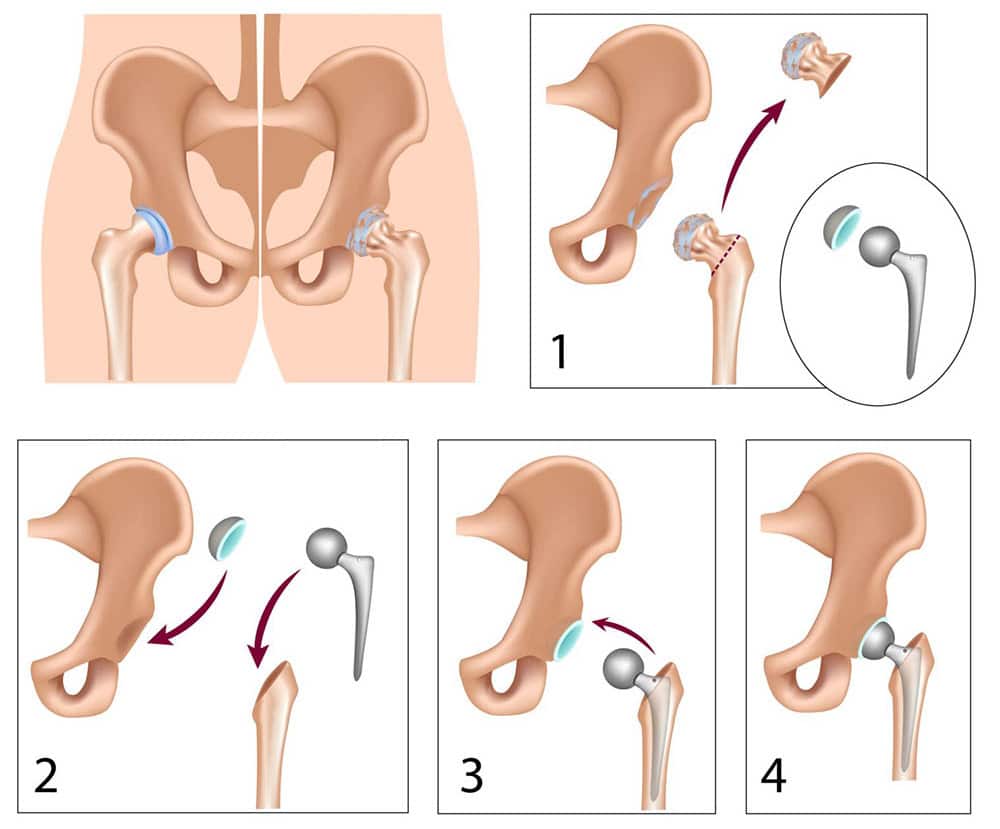
Turkey offers hip replacement pathways for international patients who need better mobility, lower pain, and a clearer rehabilitation plan than fragmented private options often provide. The strongest providers make implant choice, hospital recovery, and aftercare legible from the start.
orthopaedics
ACL Repair Surgery in Turkey
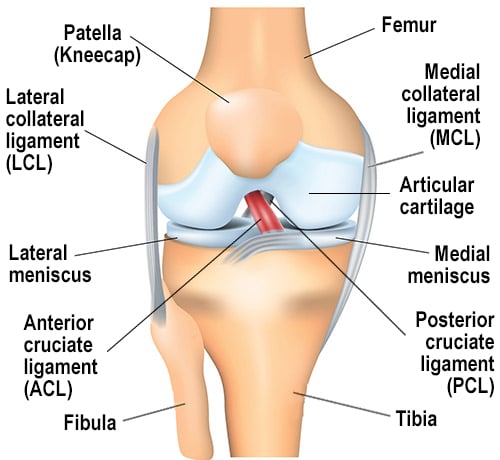
ACL surgery in Turkey is most valuable when the clinic combines accurate diagnosis, graft selection logic, and a realistic return-to-sport pathway. International patients should evaluate rehab quality and follow-up discipline as seriously as the operation itself.
Plan the next step clearly
Use this page as a decision-support guide, then move into quote review, treatment comparison, and travel planning with coordinator support.
Decision Context
Patients compare this treatment inside the trip around it
Treatment pages perform better when they acknowledge arrival flow, destination trust, and the recovery rhythm patients are trying to visualise before booking.

The provider decision starts with arrival confidence
Patients compare treatment pages while also asking how first-day logistics, transfers, and scheduling will actually work.

The destination still influences medical trust
A treatment page is stronger when it recognises that the city itself remains part of the decision frame for international patients.

Recovery pacing changes how people evaluate options
Different procedures feel more or less realistic depending on how patients picture the slower hours between appointments.