Turkey Teeth Gone Wrong: Why It Happens and How to Make Sure It Doesn't
The 'Turkey teeth gone wrong' stories are real, but they share a pattern that has nothing to do with the country. Here's what actually causes them and the exact steps that keep you on the right side of the line.
Quick answer
The 'Turkey teeth gone wrong' stories are real, but they share a pattern that has nothing to do with the country. Here's what actually causes them and the exact steps that keep you on the right side of the line.
Search 'Turkey teeth gone wrong' and you'll find genuinely upsetting cases. They're worth understanding rather than dismissing, because they share a clear, avoidable pattern. The failures aren't random, and they're not about Turkey being uniquely dangerous. They're about a specific kind of cheap, aggressive treatment that exists wherever cosmetic dentistry is sold at volume.
The Pattern Behind 'Gone Wrong' Cases
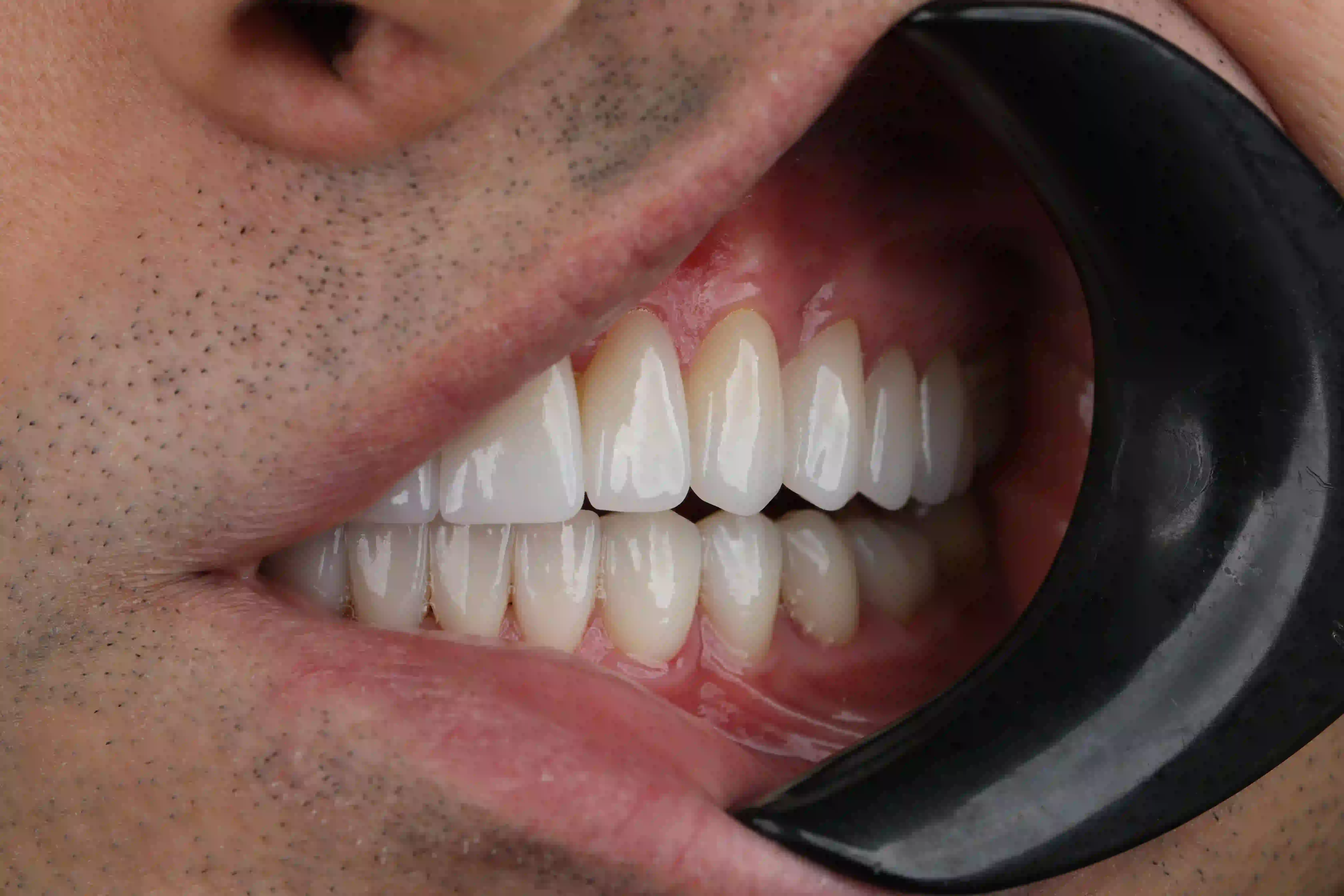
Almost every horror story shares the same ingredients: healthy teeth ground down to small pegs for crowns; no proper diagnostics or planning; a rushed timeline ('new smile in 2 days'); the cheapest possible quote; and no real aftercare once you're home. The damage (exposed nerves, gum recession, infections, crowns that fail in a few years) comes from over-preparation, not from geography.
The same procedure done conservatively and properly is a completely different outcome.
In a 2022 British Dental Association survey, 86% of UK dentists said they had treated patients who developed problems after dental treatment abroad, and 65% said repairs cost patients at least £500 (Dentistry.co.uk, 14 July 2022).
The survey does not report the share of all patients treated abroad who had problems, so it shows what dentists see in their chairs, not how often treatment abroad goes wrong. Understand the core choice in veneers vs crowns in Turkey.
Why Budget Mills Push Crowns
Crowns let a clinic change every tooth dramatically and fast, which suits a high-volume, low-price business model, but they require removing far more healthy tooth than minimal-prep veneers. Once a tooth is reduced to a peg, there's no going back; the patient is committed to restorations for life, and if the work is poor, fixing it is expensive and invasive.
That irreversibility is exactly why the right clinic recommends the least destructive option that achieves your goal.
One Reported Case: What Martyn Kurrant Says Happened
In August 2026, The Times reported the account of Martyn Kurrant, 46. The price gap is what decided it for him: £6,400 for treatment in Turkey against the £40,000 he had been quoted by a private dentist in the UK: six times cheaper. Years of gum disease had left 15 of his teeth severely damaged or missing, and he was self-conscious about them. "I just wanted to be able to smile and chew again," he told the paper.
His treatment was to include 28 new crowns over his existing teeth, for the bright, uniform look these packages are sold on. (Source: The Times, via its verified @thetimes Instagram account, 28 August 2026.)
The first stage went the way patients hope it will. Two teeth were extracted and a bone graft with sinus lifting was carried out to support nine implants due to be placed six months later; he wore a temporary denture in the meantime. In May 2024, after that stage, Kurrant messaged the clinic on WhatsApp: "You guys have literally changed my life."
Three months after that first stage, and three months before the implants and crowns were due, he became unwell at his home in Essex, had multiple seizures and was taken to hospital. A photograph from his hospital bed shows a head dressing marked "NO BONE FLAP". He has had five brain surgeries since, including a titanium skull plate fitted after an infection in his sinus spread to his brain.
He spent three months in a wheelchair, then relearned how to walk and talk. "I'm sleeping a lot, my anxiety is huge, and I've lost a lot of confidence," he says.
How that account should be read matters as much as the account itself. The Times attributes the link between the dental treatment and what followed to Kurrant: its own wording is "claims Martyn Kurrant". That is a patient's account, not a clinical or legal finding, and we are not presenting it as one. Here is the line between what has been reported and what has not been established:
| Fact | Status |
|---|---|
| Kurrant paid £6,400 for treatment in Turkey, against a £40,000 UK private quote | Reported (The Times, 28 August 2026) |
| Treatment plan included 28 crowns over existing teeth | Reported (The Times) |
| First stage: two extractions, plus a bone graft and sinus lifting to support nine implants planned for six months later | Reported (The Times) |
| Kurrant's May 2024 WhatsApp message to the clinic: "You guys have literally changed my life" | Reported (The Times) |
| Seizures at home in Essex three months after the first stage, followed by hospital admission | Reported (The Times) |
| Five brain surgeries since, including a titanium skull plate, after a sinus infection spread to his brain | Reported (The Times) |
| That the dental treatment caused the infection | Kurrant's own account as reported; presented by The Times as his claim, not as an established clinical or legal finding |
| The clinic's own account of the case | Outside the source we have. We have not seen a statement either way and are not inferring one |
What the case is genuinely useful for is the question it puts in front of anyone weighing a quote: what does a six-fold price difference actually tell you? On its own, less than people assume.
A large part of the gap between Turkish and UK dentistry is structural (labour, lab and property costs), which is why an honest quote in Istanbul is lower without the materials being worse; we break that down in Turkey teeth cost. But a low number can also mean the plan is thinner than the case needs. The figure is information, not a verdict, and it is worth asking what sits behind it.
Kurrant's plan was not a cosmetic veneer job. Extractions, a bone graft and a sinus lift are oral surgery carried out millimetres from the maxillary sinus, and surgery of that kind carries an infection risk wherever in the world it is performed, including in the US or the UK if it lands in careless hands.
A case this severe is extreme, but the underlying risk isn't unique to Turkey: it comes from who performs the surgery, not which country they practise in. Turkish clinics carry out sinus lifts and bone grafts with genuinely advanced surgical technique, and results are routinely good, but a procedure at this level shouldn't be delegated casually.
It needs to be carried out by a qualified oral or maxillofacial surgeon, not simply whichever dentist is fitting your crowns. That is the part patients tend to under-read when treatment is presented as a smile package with a hotel attached.
Before agreeing to any surgical stage, ask in writing what the specific risks are, what happens if an infection or complication develops after you fly home, who you contact out of hours, and who pays for revision work, and whether the answer is a written policy or a verbal reassurance.
Two further checks are cheap and quick. Accreditation is one: it does not guarantee an outcome, but it means an outside body has audited infection control, sterilisation and patient-safety protocols on site. Some clinics carry TEMOS International accreditation; ask your coordinator in writing which accreditations your specific clinic currently holds.
The second is a second opinion on the treatment plan itself, ideally from a dentist in your own country who has no stake in the booking. If two independent clinicians describe the same case in very different terms, that difference is worth resolving before a tooth is touched.
This section summarises one reported case. It is not a statement about any clinic's standards, about dentistry in Turkey generally, or about the treatments involved, and nothing here is medical advice; discuss your own case with a qualified clinician.
How to Make Sure Yours Doesn't Go Wrong
Pick the clinic, not the price. Demand a real consultation with imaging; ask whether you're getting veneers or crowns and how much tooth will be removed; refuse rushed timelines; verify credentials and complication history; and confirm aftercare you can reach. This is precisely the gap NexWell exists to close.
We vet and match clinics on these standards and steer you to conservative care. Start with how to choose a clinic in Turkey, our plain-English explainer on what Turkey teeth actually are, or a no-pressure assessment.
The Clinic Matters More Than the Country
The result of any of these treatments depends far more on the clinic and clinician than on the destination. NexWell vets and assigns the clinic and clinician for your case, so you don't gamble on a name found online. See our verified specialists in Istanbul, Antalya and London, or get a no-obligation assessment.
Frequently asked questions
Why do Turkey teeth go wrong?
Because budget high-volume clinics grind healthy teeth down to pegs for crowns, skip proper planning, rush the timeline, and offer no real aftercare. That over-preparation causes nerve and gum damage and early failure. It's about cheap, aggressive dentistry, not Turkey itself.
Can Turkey teeth be fixed if they go wrong?
Usually, but it's expensive and invasive, and over-prepared teeth can't be restored to their natural state. Prevention (choosing a conservative, qualified clinic from the start) is far better than trying to fix poor work later.
How common is it for Turkey teeth to go wrong?
Bad outcomes are concentrated in cheap, rushed crown work at high-volume mills, not in conservative treatment at reputable clinics. Choosing the clinic and procedure carefully moves you out of the at-risk group.
What does a very large price difference between quotes mean?
By itself, not much. A lot of the Turkey/UK gap is structural (labour, lab and property costs), so a lower honest quote is normal. It becomes a warning sign when the low number comes with no proper diagnostics, a compressed timeline, or a plan that looks thinner than your case needs. Treat the figure as information to question, not as the decision.
Has serious harm after dental treatment abroad actually been reported?
Yes. In August 2026 The Times reported the account of Martyn Kurrant, 46, who says he had five brain surgeries after a sinus infection spread to his brain, following the first surgical stage of treatment he chose in Turkey for £6,400 against a £40,000 UK quote. The Times presents the connection as his claim rather than an established clinical or legal finding, and it is a single reported case, not a pattern.
Guide: The Complete Medical Tourism Handbook
Cost comparisons, clinic evaluation checklist, packing list & recovery tips. Everything you need to plan your treatment in Turkey.
Instant download. Your email is only used to send the guide and a few planning tips. No spam, unsubscribe anytime.
Related reading
dental
Turkey Teeth (Turkish Teeth): An Honest Guide 2026
What are 'Turkey teeth'? An honest, dentist-reviewed guide to what the term means, what they cost, and the veneers-or-crowns decision that prevents regret.
dental
Veneers vs Crowns in Turkey: The Difference That Decides Your Result
The single most important 'Turkey teeth' decision is veneers vs crowns, and most horror stories come from getting crowns when veneers would have done. Here's the difference, when each is right, and what to insist on.
dental
Are Turkey Teeth Safe? An Honest Guide to the Risks and How to Avoid Them
Are 'Turkey teeth' safe? The honest answer: it depends on the clinic and the procedure, not the country. Here's what's actually risky, what's not, and the exact checks that separate a great result from a horror story.
dental
Turkey Teeth Reversal: Can Over-Prepared Teeth Be Fixed?
Can Turkey teeth be reversed? The honest answer: teeth filed down for crowns can't be returned to natural, but poor or failing work can usually be remade or replaced. Here's what's actually possible, and how to avoid needing a reversal.
Written by the NexWell editorial team. Medically informed content. How we create content