Smile Design Consultation: What Turkish Cosmetic Dentists Actually Examine
A detailed breakdown of what a thorough smile design consultation covers (facial analysis, proportions, bite, gum health, and patient goals) and how to tell the difference between a real assessment and a booking call.
Quick answer
A detailed breakdown of what a thorough smile design consultation covers (facial analysis, proportions, bite, gum health, and patient goals) and how to tell the difference between a real assessment and a booking call.
Not every 'consultation' before a Hollywood Smile or veneer treatment is the same. Some are clinical assessments; others are booking calls with dental photographs. Understanding what a thorough consultation looks like (and what gets examined and why) helps patients distinguish between clinics that plan carefully and those that plan for speed.
1. Facial and smile zone analysis
A genuine smile design consultation starts with the face, not the teeth.
The dentist assesses: facial thirds (forehead-to-nose, nose-to-chin ratio), facial width relative to dental arch, lip line at rest and in full smile, gum visibility (gummy smile assessment), midline alignment between teeth and facial centre, and the relationship between upper and lower teeth during smile dynamics.
This analysis determines what smile zone is visible, how many teeth need to be included in the design, and whether any structural factors (lip position, gum level, jaw alignment) affect the treatment plan. Clinics that skip this step and proceed directly to photographing teeth are making design decisions without the most important context.

2. Proportional assessment: golden ratio benchmarks
Once the facial frame is established, proportional analysis moves to the teeth themselves.
Key measurements include: visible width of central incisors, width-to-height ratio (ideally 0.75–0.85), the ratio between central and lateral incisor width (approaching φ ≈ 1.618 in harmonious smiles), smile arc relative to the lower lip, buccal corridor (the dark space at the sides of the smile), and incisal edge position relative to the lower lip at rest.
This proportional data guides veneer width, length, and shape. It is also what drives the Digital Smile Design simulation: without accurate measurements, the digital preview is decorative rather than functional.

Treatment Planning
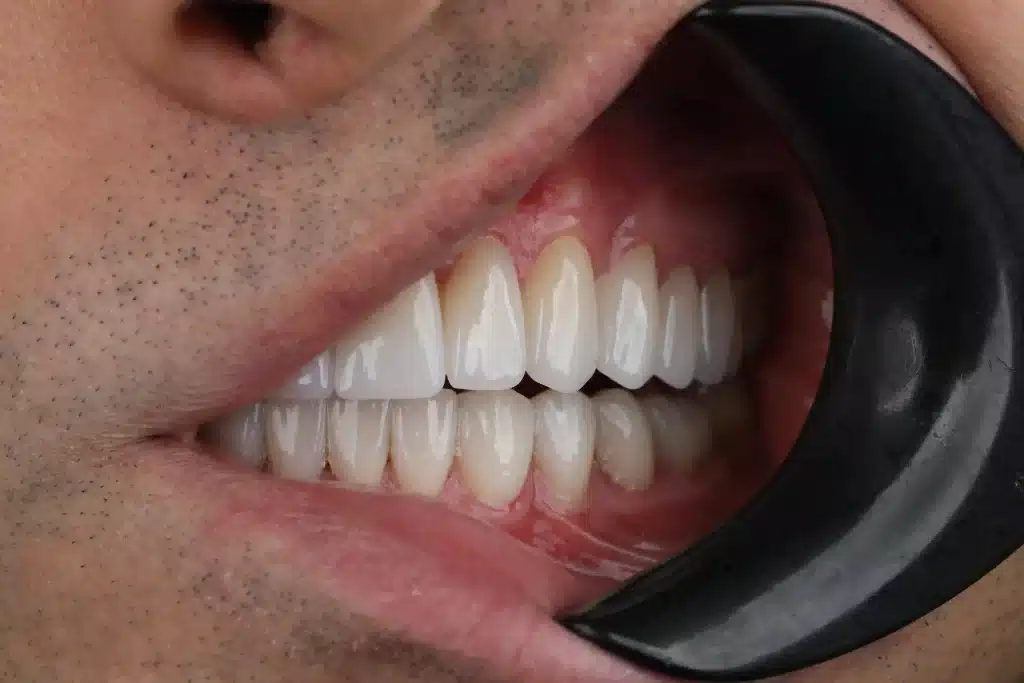
Want to understand how to achieve a smile like this?
We translate aesthetic goals into a clinical treatment plan, then arrange your treatment at our contracted clinics with the right team for your case.
3. Bite and occlusion evaluation
Cosmetic treatment planning cannot ignore functional considerations. The bite examination covers: overbite and overjet, lateral and protrusive movements, signs of bruxism or parafunctional habits, TMJ (jaw joint) health, and whether existing restorations affect the bite balance.
This evaluation affects treatment planning significantly. A patient with active bruxism needs a different material strategy and potentially an occlusal guard protocol. A deep overbite may limit how much length can be added to upper teeth without causing premature wear. Identifying these factors before preparation protects the longevity of the result.
4. Gum health and tissue assessment
Veneers and crowns are placed adjacent to gum tissue. Gum health affects both the aesthetic result and the long-term stability of the restoration.
The gum assessment checks: gum line symmetry (uneven gum levels create a visible imbalance even with perfect veneers), gum recession, pocket depth (periodontal health), and whether gingival contouring is needed before or during the veneer procedure.
Patients with active periodontal disease are not appropriate candidates for immediate cosmetic veneer treatment. The sequence matters: stabilise gum health first, design the smile second.
5. Goal elicitation: reference discussion and expectation calibration
A well-run consultation spends significant time on what the patient wants to achieve, and whether it is achievable within their facial structure.
This includes: review of any reference images the patient brings, discussion of what specifically the patient wants to change, calibration of realistic outcomes given bone structure, lip dynamics, and existing tooth position, and shade selection philosophy (what shade of white is appropriate for the patient's skin tone and facial colouring).
A clinician who agrees immediately with every reference image, or who produces a design without discussing your specific anatomy, is not providing a genuine clinical assessment.
Red flags: what distinguishes a genuine assessment from a booking call
These signs suggest a consultation is focused on booking rather than clinical assessment:
- Quote provided before any photographs or X-rays are reviewed
- No discussion of bite or gum health
- No proportional analysis: immediate jump to shade selection
- Digital simulation produced without facial analysis input
- Mock-up not mentioned or positioned as an optional extra
- High-pressure booking timeline (limited-time offer)
A genuine assessment takes longer, asks more questions, and may identify reasons to adjust or delay the cosmetic plan. That friction is the service.
Frequently asked questions
What should I bring to a smile design consultation in Turkey?
Bring any recent dental X-rays or panoramic images you have. Also bring reference photos of smiles you like, celebrity or otherwise. These are useful for communicating your aesthetic goals, even if the clinician will explain what is and isn't achievable for your facial structure.
How long does a proper smile design consultation take?
A thorough smile design consultation takes 60–90 minutes. This allows time for facial analysis, proportional assessment, X-rays, Digital Smile Design preview, and discussion of the treatment plan. Consultations shorter than 30 minutes are unlikely to cover all necessary clinical ground.
Can I have a remote consultation before travelling to Turkey?
Yes. NexWell conducts remote assessments using photographs and any available X-rays. This gives you a treatment framework and clinic comparison before committing to travel. The in-person consultation on Day 1 of your trip confirms and refines the remote assessment.
What if different clinics give me different treatment plans?
Different plans for the same case are common. The differences usually involve: number of teeth in the plan, material choice, and whether preparatory work (gum contouring, whitening, orthodontic alignment) is recommended first. NexWell reviews all proposals and helps you evaluate which reflects the most clinically sound approach for your case.
Guide: The Complete Medical Tourism Handbook
Cost comparisons, clinic evaluation checklist, packing list & recovery tips. Everything you need to plan your treatment in Turkey.
Related reading
dental
Smile Design Turkey 2026: Cost, Process & Clinics
Digital smile design with E.max veneers from $2,000 in Turkey. DSD & mock-up included, 5–7 day treatment.
smile-design
Golden Ratio Smile Design: How φ Translates Into Dental Treatment
How the golden ratio guides tooth proportions, smile arc, and veneer planning at Turkish cosmetic clinics.
dental
How to Get a Hollywood Smile in Turkey: The Real 7-Day Patient Workflow
A day-by-day breakdown of what actually happens during a Hollywood Smile treatment in Turkey: consultations, mock-ups, preparation, final placement, and what to expect on each day.
smile-design
Smile Proportion Analysis
Send your photos for a smile proportion analysis: golden ratio benchmarks, treatment options, 24h response.
dental-treatments
Veneers Turkey Cost 2026: Composite vs Porcelain Pricing Guide
Understand veneer pricing in Turkey by case size, material, smile design complexity, and the difference between cosmetic volume clinics and high-control aesthetic workflows.
Written by the NexWell editorial team. Medically informed content. How we create content