Medically reviewed by Dt. Tunç Berge, MSc: Esthetic Dentistry & Implantology. Last reviewed June 2026
Dental Implant Abutment Explained: The Connector Between Implant and Crown
- TEMOS-accredited clinics
- JCI-accredited hospitals
- Board-certified surgeons and a licensed clinical team
- 3,000+ international patients treated
A plain-English NexWell explainer on the dental implant abutment: what this connector does, how stock and custom abutments differ, why material choice matters, and when it is placed during treatment.
Written quote from a NexWell coordinator, usually within 24 hours.

Quick answer
A plain-English NexWell explainer on the dental implant abutment: what this connector does, how stock and custom abutments differ, why material choice matters, and when it is placed during treatment.
What Is a Dental Implant Abutment?
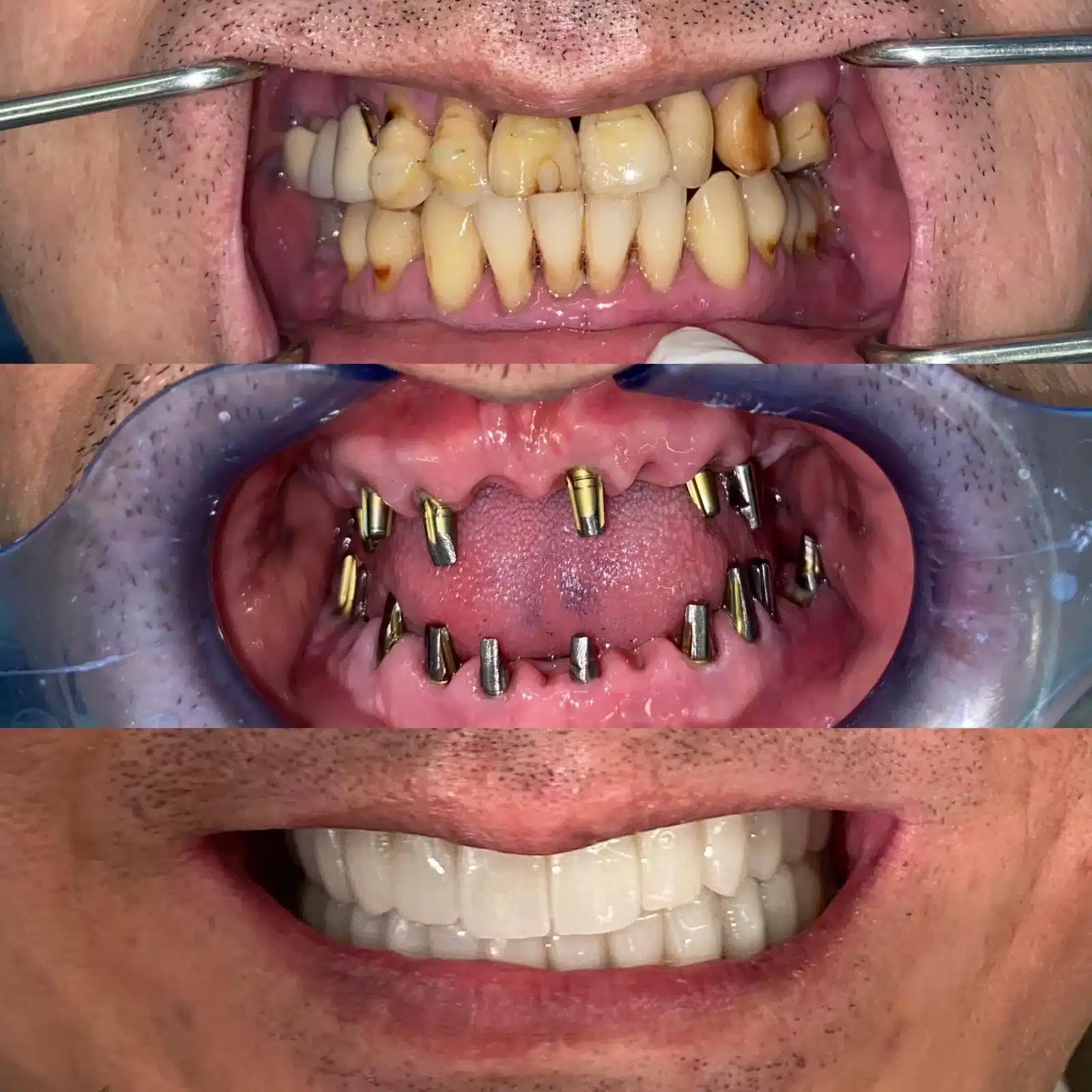
An abutment is the small connector that joins the part of the implant buried in your jaw to the visible tooth on top. A modern dental implants restoration is built in three layers: the titanium fixture set into bone, the abutment screwed into that fixture, and the dental crowns that sits on the abutment.
The abutment is the middle piece, and although patients rarely see it, it does the structural work of transferring chewing load from the crown down into the implant.
The abutment becomes relevant only after the implant has bonded to the bone through osseointegration. Before that bond is stable, there is nothing solid for an abutment to support. Once integration is confirmed, the abutment is the component that turns a healed implant into a tooth you can actually use.
Because it sits at the gum line, its shape and material also influence how natural the final result looks and how well the surrounding tissue stays healthy.
The abutment is the middle piece, and although patients rarely see it, it does the structural work of transferring chewing load from the crown down into the implant.
Abutment Types: Stock vs Custom, Titanium vs Zirconia
Not all abutments are the same. They differ in how they are made (stock or custom) and in what they are made from (commonly titanium or zirconia). A clinic chooses based on the position of the tooth, the gum profile, the bite and how visible the area is when you smile.
Type
Typical use
Main advantage
Stock (prefabricated) abutment
Standard cases, back teeth, simpler single-tooth work
Readily available and lower cost; predictable for routine sites
Custom (CAD/CAM milled) abutment
Front teeth, awkward angles, uneven gum lines
Shaped to the individual tooth and gum for a more natural emergence
Titanium abutment
Most positions, especially load-bearing back teeth
Very strong and well documented for long-term function
Zirconia abutment
Front, high-aesthetic zones with thin or translucent gums
Tooth-coloured, so no grey shadow shows through the gum
The titanium versus zirconia choice is mostly about strength versus appearance. Titanium abutments are the long-standing workhorse for areas under heavy chewing force. Zirconia abutments are favoured in the smile zone, where a metal abutment can sometimes cast a faint grey tint through thin gum tissue.
Where both strength and aesthetics matter, some cases use a hybrid abutment with a titanium base and a zirconia upper section. None of these choices guarantees a specific outcome; the right option depends on your individual anatomy and is decided by your treating clinician.
Treatment Plan
Ready for a written Dental Implant Abutment Explained: The Connector Between Implant and Crown quote?
A NexWell coordinator reviews your case and replies with a personalised treatment plan and indicative pricing — usually within 24 hours.
How the Abutment Connects Implant to Crown
The connection runs in a clear sequence: implant to abutment to crown. The implant fixture has an internal channel; the abutment seats into that channel and is held by a small screw tightened to a precise torque. The crown is then either cemented onto the abutment or, in screw-retained designs, secured through the abutment with its own access channel.
A precise fit at this junction matters more than most patients expect. A poorly fitting abutment can leave a micro-gap where bacteria gather, which is one reason clinics often plan the connection digitally using a CBCT scan and intraoral scanning rather than guesswork.
Accurate planning also protects the result regardless of implant system, since dental implant brands use slightly different connection geometries that the abutment must match exactly.
Whether the case is a single tooth, a multi-unit bridge, an All-on-4 arch or an All-on-6 arch, the same principle holds: the abutment is the controlled, repairable interface between the fixed-in-bone part and the part you can see and replace.
When the Abutment Is Placed in Treatment
Timing depends on the protocol your case follows. In a conventional two-stage plan, the implant is placed first and left to integrate for several months; the abutment is then connected at a second, minor appointment once the bond is confirmed.
In single-stage or immediate loading protocols, a temporary abutment and provisional tooth may be fitted much sooner, sometimes on the same day, although the definitive abutment and final crown still come later.
The surrounding clinical picture also affects timing. If the site needed a bone graft or a sinus lift to build adequate support, the abutment stage waits until that foundation has healed.
Cases planned around limited bone density may stage things more cautiously, and severe deficits occasionally route toward zygomatic implants instead. For larger restorations such as full mouth dental implants, abutment selection is coordinated across the whole arch so the final bridge seats evenly.
None of these timelines is fixed; your clinician sets the schedule after assessing how your specific site is healing.
Common Questions About Implant Abutments
Common patient questions about dental implant abutments, answered in plain terms. These notes are educational and are not a substitute for assessment by a qualified clinician.
Vetted partner network
NexWell coordinates with TEMOS-accredited clinics or Ministry of Health–licensed facilities in Turkey.
Board-certified review
Content reviewed by Dt. Tunç Berge — Turkish Dental Association (TDB).
5.0★ from real patients (5 reviews)
“I was told by two dentists at home that I didn't have enough bone. They did the graft and implants in one trip. Six months later I came back for the final crowns. Incredible team.” — Mark T., Dublin, Ireland
No obligation
Get your Dental Implant Abutment Explained: The Connector Between Implant and Crown plan
Send your case and a coordinator returns a written plan and an indicative quote — usually within a day.
Questions Patients Ask Before They Commit
Related reading
dental
Dental Implants in Turkey
Replace a single tooth or your entire smile with premium dental implants in Istanbul. Same brands as London specialists, a fraction of the cost. 5-day treatment packages. TEMOS-accredited dental clinics.
dental
Dental Crowns in Turkey
Restore damaged, weakened, or aesthetically compromised teeth with zirconia, E-max, or porcelain-fused-to-metal crowns. Same-week treatment at TEMOS-accredited clinics in Istanbul.
Treatment Guide
Osseointegration Explained: How Dental Implants Fuse With Bone
The biological process by which a titanium implant bonds with jawbone: stages, what helps or harms it, and a realistic timeline.
Treatment Guide
Dental Implant Brands Compared: Straumann, Nobel Biocare, Osstem & Astra Tech
Compare major dental implant brands on origin, segment, case suitability and how to read warranty claims honestly.
Plan the next step clearly
Use this page as a decision-support guide, then move into quote review, treatment comparison, and travel planning with coordinator support.
Decision Context
Patients compare this treatment inside the trip around it
Treatment pages perform better when they acknowledge arrival flow, destination trust, and the recovery rhythm patients are trying to visualise before booking.

The provider decision starts with arrival confidence
Patients compare treatment pages while also asking how first-day logistics, transfers, and scheduling will actually work.

The destination still influences medical trust
A treatment page is stronger when it recognises that the city itself remains part of the decision frame for international patients.

Recovery pacing changes how people evaluate options
Different procedures feel more or less realistic depending on how patients picture the slower hours between appointments.
References
- Comparison of Clinical Outcomes of Titanium vs Zirconia Implant Abutments: An Overview of Systematic Reviews (PMC)
- Al-Thobity AM: Titanium Base Abutments in Implant Prosthodontics: A Literature Review (Eur J Dent, PMC)
- Fracture Resistance of Titanium vs Zirconia Implant Abutments: Systematic Review and Meta-Analysis (PMC)