All-on-6 Dental Implants in Turkey: Stability, Cost and Candidacy
A NexWell planning guide for patients comparing All-on-6 in Turkey with a clearer view of when six implants make sense, how it differs from All-on-4 and what actually changes a full-arch quote.
- JCI-accredited hospitals
- TEMOS-accredited clinics
- Board-certified surgeons and a licensed clinical team
- 3,000+ international patients treated
- 5-star chain hotel accommodation
- VIP airport transfers
Written quote from a NexWell coordinator, usually within 24 hours.
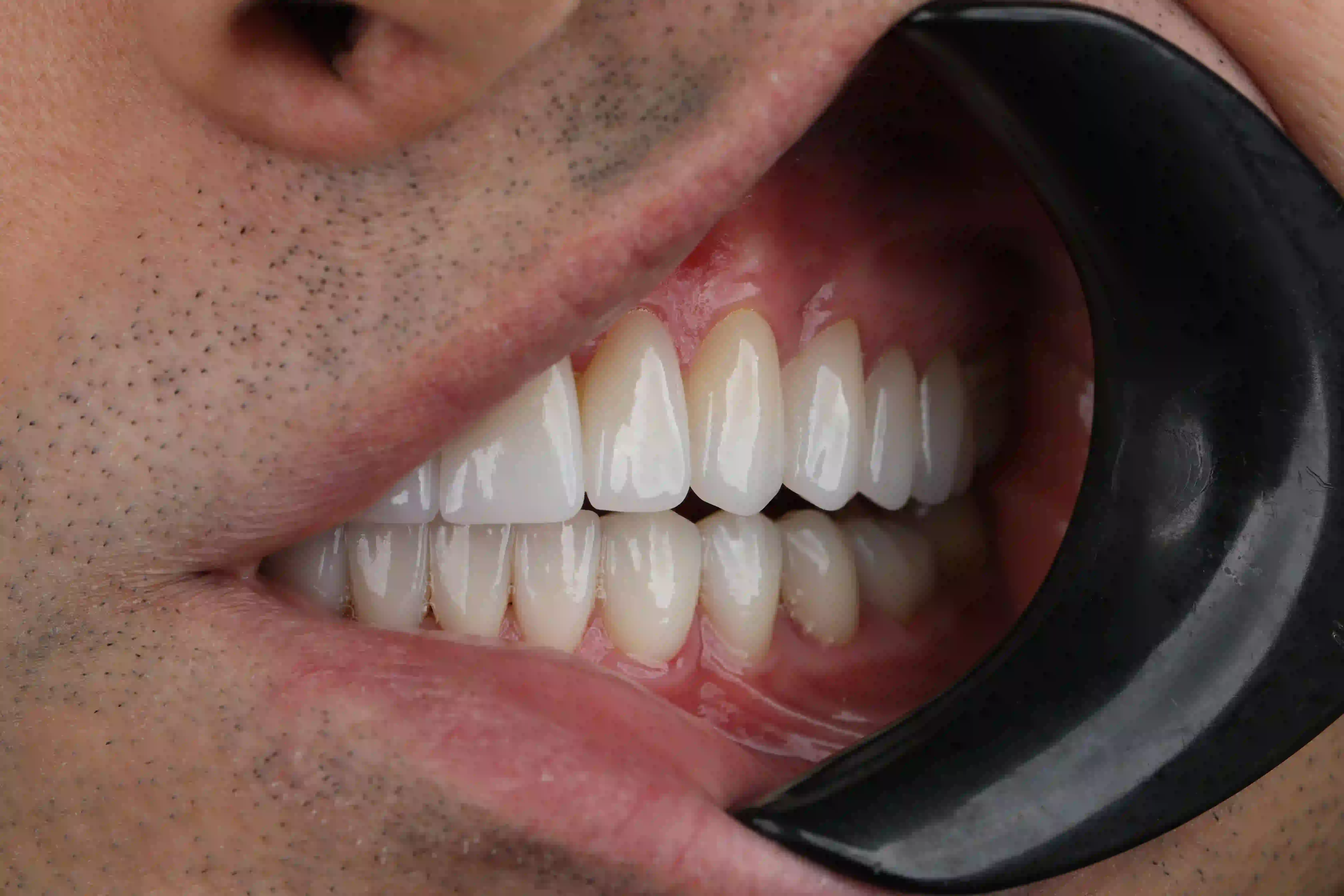
Written quote from a NexWell coordinator, usually within 24 hours.
Quick answer
All-on-6 dental implants in Turkey cost $7,200–$11,750 per arch ($14,350–$23,500 for both arches), including surgery, provisional teeth and the final bridge, up to 80% less than the US's $23,000–$35,000 per arch, and around 65% less than the UK's $17,800–$27,950 per arch (2026). All-on-6 adds two extra implants over All-on-4 for stronger load distribution, which is why the price sits higher.
All-on-6 Is Usually Chosen for Load Distribution, Not for Marketing Impact
Patients often hear All-on-6 described as a premium version of All-on-4, but the real question is simpler: does the case benefit from two extra support points? In many full-arch plans, six implants are chosen because the clinician wants broader force distribution, more prosthetic stability or a more conservative response to bone or bite risk.
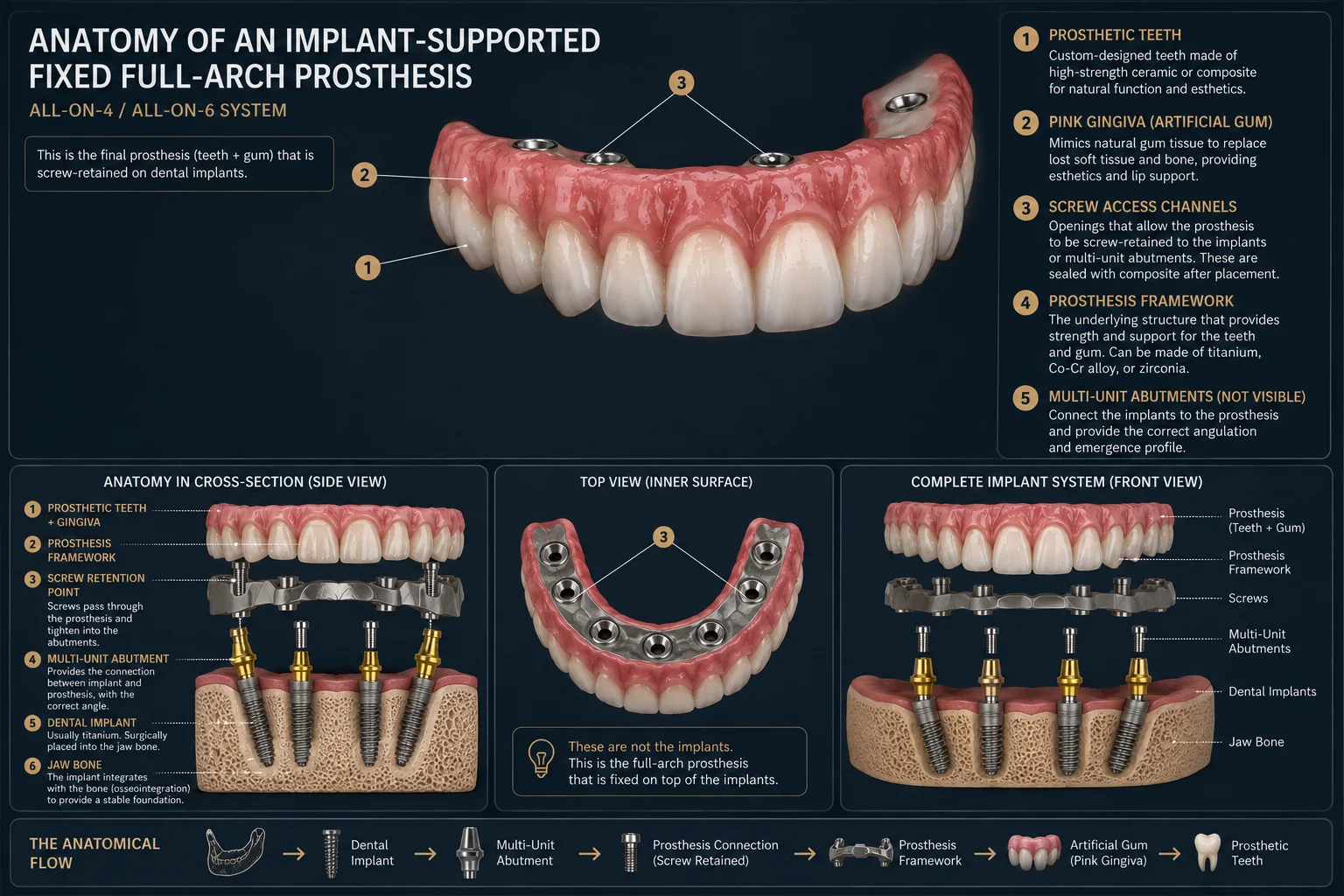
Six implants earn their place when the patient's anatomy and bite genuinely call for a wider support base than four implants provide. Imaging and bite analysis are what confirm that need, before any implant count gets written into a quote.
Six implants earn their place when the patient's anatomy and bite genuinely call for a wider support base than four implants provide.
All-on-4 and All-on-6 Are Different Full-Arch Strategies
| Feature | Typical use case | Planning effect |
|---|---|---|
| All-on-4 | Patients with acceptable bone and a simpler full-arch loading plan | Often lower-cost and efficient when force distribution is still adequate |
| All-on-6 | Patients with heavier bite force, lower bone confidence or a preference for broader support | Often chosen for added stability and more balanced prosthetic load |
| Staged alternative plan | Cases where neither immediate All-on-4 nor All-on-6 is the cleanest first move | May change timing, provisional strategy or the number of visits |
Patients should expect the clinic to explain why six implants solve a clinical problem, not only why the number sounds stronger.
What Usually Changes an All-on-6 Quote in Turkey
The main budget drivers are usually:
- whether the case is one arch or both arches
- whether extractions, grafting or sinus work are included
- whether the quote covers immediate provisional teeth
- whether the final bridge is acrylic, monolithic zirconia or another restorative design
- whether sedation, diagnostics and post-travel adjustment logic are already in scope
- whether the clinic is quoting surgery only or the broader restorative journey
This is why two All-on-6 quotes can look similar in label and still represent very different treatment pathways.
Cross-Market Comparison Only Works When Bridge Scope Is Held Constant
All-on-6 single arch
Turkey
$7,200-$11,750
USA
$23,000-$35,000
UK: $17,800-$27,950 · Saving: Often around 65% lower vs UK, up to 80% lower vs US
All-on-6 both arches
Turkey
$14,350-$23,500
USA
$40,000-$70,000
UK: $35,550-$55,900 · Saving: Often around 65% lower vs UK, up to 80% lower vs US
| Procedure | Turkey | USA | UK | Saving |
|---|---|---|---|---|
| All-on-6 single arch | $7,200-$11,750 | $23,000-$35,000 | $17,800-$27,950 | Often around 65% lower vs UK, up to 80% lower vs US |
| All-on-6 both arches | $14,350-$23,500 | $40,000-$70,000 | $35,550-$55,900 | Often around 65% lower vs UK, up to 80% lower vs US |
These ranges are directional only. A fair comparison depends on whether implant system, temporary teeth, final bridge material and revision obligations are defined in the same scope.
When All-on-6 Usually Makes More Sense
All-on-6 is commonly discussed when the patient has stronger bite forces, wants more support points under a full-arch bridge or is being planned more conservatively than a four-implant approach would allow. It may also be favored where a clinician wants additional stability in the lower jaw or a broader load pattern over time.
Where the upper jaw lacks the bone even six implants need, zygomatic implants can be the route that avoids extensive bone grafting.
That does not make it automatically better than All-on-4. It makes it more appropriate in the right anatomy and risk profile.
How NexWell Reviews an All-on-6 Proposal Before Recommending a Next Step
NexWell checks:
Force distribution is the part a sound plan can explain without reaching for the implant count. That, not the number six, is what actually separates a defensible proposal from a marketing one.
- 1whether the case truly benefits from six implants rather than four
- 2bridge, provisional and final restorative stages kept separate
- 3implant brand, sedation and diagnostics stated explicitly in the quote
- 4whether force distribution and support logic are explained in plain, checkable language
- 5whether post-return adjustments and complications are realistic for an international patient
Treatment Plan
Ready for a written All-on-6 Dental Implants in Turkey: Stability, Cost and Candidacy quote?
A NexWell coordinator reviews your case and replies with a personalised treatment plan and indicative pricing — usually within 24 hours.
What the All-on-6 Treatment Journey Looks Like in Turkey for International Patients
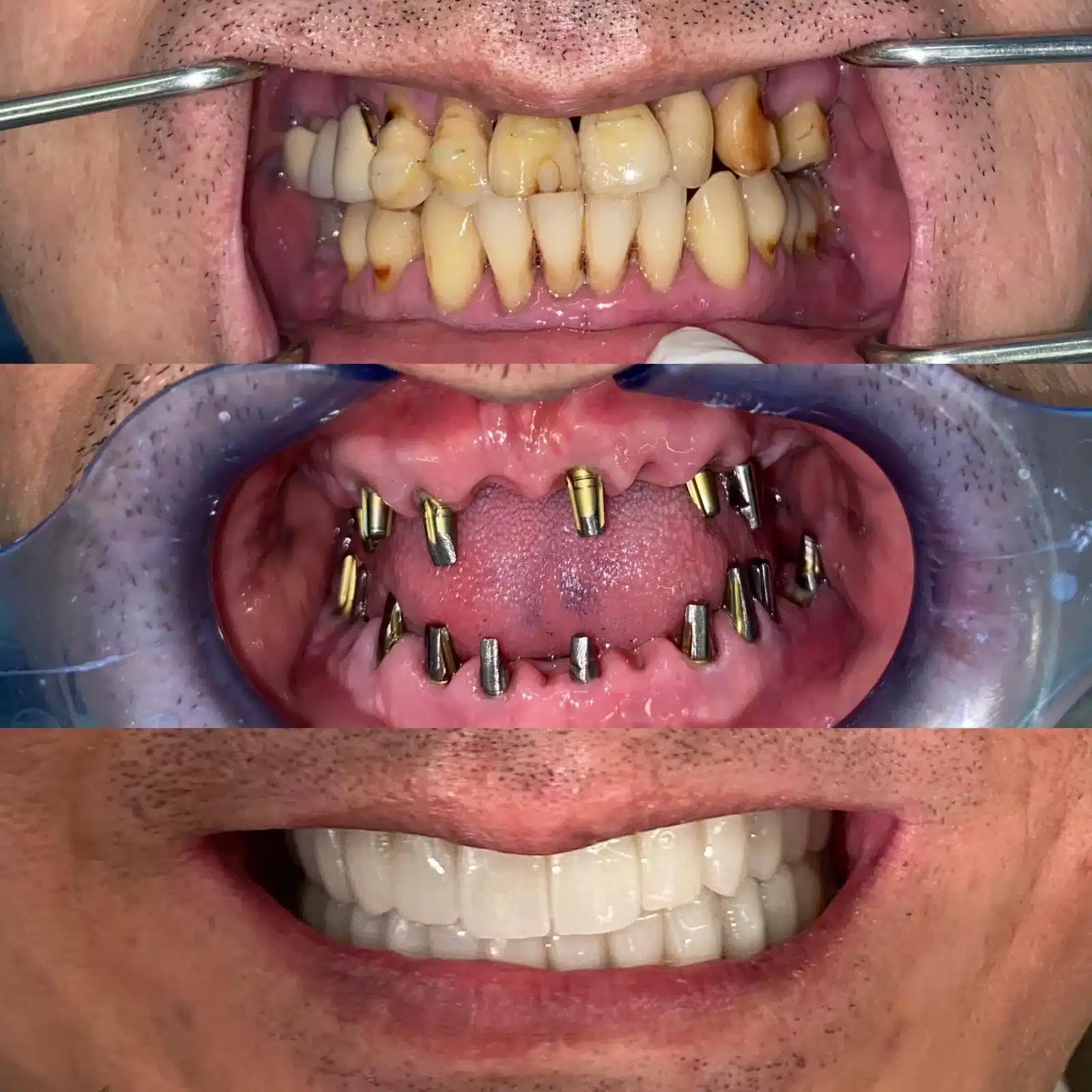
A typical All-on-6 case in Turkey for an international patient unfolds across two visits separated by an osseointegration period of three to six months. The first visit covers pre-surgical diagnostics and CBCT planning, extraction of remaining teeth where needed, implant placement surgery and placement of immediate provisional teeth where the clinical situation allows.
The osseointegration interval depends on the patient's bone density, whether grafting was required and whether immediate loading was used. During this period, patients remain in provisional function with temporary restoration.
The second visit is typically shorter: two to four days for abutment placement, fitting and adjustment of the definitive bridge, bite checks and final polishing. The clinic should confirm in advance whether the definitive bridge is already prepared from pre-taken records or whether it requires additional impressions or scans during the second visit.
International patients benefit from clear scheduling of both visits before the first procedure is booked.
Full-Arch Bridge Care and Long-Term Outcomes After All-on-6
A properly placed All-on-6 case with a well-designed zirconia or hybrid bridge can provide functional, aesthetic full-arch dentition for fifteen to twenty years or longer, depending on maintenance. The structures that require most management are not the implants themselves but the prosthetic components: abutment screws, bridge material and the gum-tissue interface under the bridge.
Patients with All-on-6 bridges need to establish a daily cleaning routine using an interdental brush, water flosser or specifically designed implant hygiene tools to reach under the bridge and around the emergence points. Standard flossing is typically insufficient for full-arch designs.
Clinic review visits every six to twelve months should include radiographs of implant-bone interface, screw torque check and bridge surface assessment. Patients who travel for these reviews can often have them done locally by an experienced implant dentist who has received a handover of the original records.
All-on-6 bridges are designed to be serviceable. Screws can be replaced, surface repairs can sometimes be done chairside and bridge remakes, while significant, are defined events rather than failures of the underlying implant.
Common Misunderstandings in All-on-6 Full-Arch Treatment Planning
One of the most common misunderstandings around All-on-6 cases is treating the implant count as the primary variable. Many patients ask whether to choose four or six implants without understanding that the right answer depends on bone volume, bite force, posterior support position and the overall force distribution the case needs rather than a preference between numbers.
A second common mistake is not asking whether the provisional teeth are removable or fixed. Fixed provisionals provide immediate function and confidence during healing. Removable provisionals are a different experience. Patients sometimes discover this distinction for the first time on surgery day.
A third error is not understanding the difference between a provisional acrylic bridge and a definitive zirconia bridge. Both are teeth in function, but they have different durability, aesthetics and replacement timelines. If the quoted price only covers acrylic provisionally, the total cost of the case is understated.
Patients who ask these questions in writing before travel almost always experience fewer surprises and better-managed transitions between stages.
Questions to Confirm Before Committing to an All-on-6 Clinic in Turkey
An All-on-6 case has more moving parts than the headline price suggests. Ask for written answers on:
- Why does the plan use six implants rather than four for this specific anatomy?
- What implant system is being used and is it the same system for all six placements?
- Are immediate provisional teeth planned and are they fixed or removable?
- What is the definitive bridge material: acrylic, monolithic zirconia, hybrid ceramic or another design?
- Is the bridge single-structure or is it segmented and why?
- When is the second visit expected and what does it include?
- How many clinic days are needed for each visit?
- What is the clinic's policy if an implant fails to integrate?
- How does the clinic handle adjustments or complications after the patient returns home?
Confirming bridge material and the second-visit timeline before surgery defines the full treatment scope and cuts mid-case ambiguity far more than package pricing alone.
How NexWell Reviews All-on-6 Proposals Before Recommending a Clinic
NexWell evaluates All-on-6 proposals by examining whether the implant count recommendation is clinically grounded in the patient's bone anatomy, bite force and arch configuration rather than commercially motivated. The choice between four and six implants should come from imaging analysis, not a package menu.
We review the provisional teeth plan, specifically whether fixed provisionals are included from day one or whether removable options are being normalised without adequate explanation to the patient.
We also review the definitive bridge specification, checking whether quoted zirconia includes information on monolithic versus layered design, single-structure versus segmented bridge and whether the volumetric and aesthetic plan is explicit.
For aftercare, we assess whether the clinic provides a realistic remote monitoring pathway for patients who cannot return to Turkey at short notice.
Patients with stable, well-documented All-on-6 cases can usually manage minor adjustments through a local implant dentist working from the original treatment records, but this requires the Turkish clinic to provide adequate documentation in an exportable format upon request. These operational details matter as much as surgical quality for patients managing a complex case from abroad over a period of years.
How Much Does All-on-6 Cost in Turkey?
All-on-6 in Turkey typically costs $7,200–$11,750 per arch, or $14,350–$23,500 for both arches, compared with $17,800–$27,950 per arch in the UK and $23,000–$35,000 in the USA, savings of around 65% versus the UK and up to 80% versus the US for a comparable implant system.
The two extra implants versus All-on-4 push the price above the four-implant range, mainly because of the added surgical time, components and lab work needed to seat six fixtures per arch.
Within that range, the exact figure depends on implant brand, whether any grafting is needed and whether the final bridge is acrylic, hybrid or monolithic zirconia. Ask for a written breakdown that separates the surgical phase from the definitive bridge stage before comparing quotes across clinics.
Is All-on-6 Painful?
Implant placement for All-on-6 is carried out under local anaesthesia or IV sedation, so patients typically feel pressure rather than pain during surgery.
Because six implants are placed per arch rather than four, the surgical session and the first days of swelling are often slightly more pronounced than an All-on-4 case, though most patients still describe the first three to five days, managed with standard prescribed pain relief and a soft-food diet, as more manageable than expected.
Discomfort levels vary with individual pain tolerance, whether grafting was required and how many implants were placed in a single session. Your implantologist will set realistic expectations for your specific case, including a bruising or swelling timeline, before treatment begins.
How Long Does All-on-6 Last?
The titanium implant posts used in All-on-6 are designed to fuse with the jawbone through osseointegration and, with good oral hygiene and regular check-ups, can typically function for decades. The zirconia or hybrid bridge attached to them is a separate, replaceable component: most full-arch zirconia bridges last fifteen to twenty years before a reline or remake is recommended.
Longevity depends on bite force, whether a night guard is used for bruxism, smoking status and how consistently the patient attends six-to-twelve-monthly reviews for screw-torque and tissue checks. Ask your clinic in writing what warranty terms apply to your specific implant brand and bridge material, since coverage varies by provider.
Am I a Candidate for All-on-6?
All-on-6 is usually considered for patients who are missing most or all of their teeth on one or both arches and who have lower bone density, a heavier bite or a history of All-on-4 complications elsewhere, the two additional implants spread load more broadly across the arch.
Good candidates typically are in general good health with no uncontrolled diabetes, have no active gum disease (or are willing to treat it first), and are non-smokers or willing to pause smoking around surgery.
Patients with severe long-term bone loss may still need a graft before six implants can be placed, or may be better suited to zygomatic implants in extreme cases. A review of your CT scan by a NexWell-affiliated implantologist will confirm candidacy before you book travel.
How Long Does the All-on-6 Procedure Take?
Surgery to place six implants per arch typically takes three to five hours under sedation or local anaesthesia, somewhat longer than a typical All-on-4 case. Most patients budget five to eight days in Istanbul for the first visit: arrival and consultation, CT scan, implant surgery with same-day provisional teeth where the case allows, a short recovery window and a final check before flying home.
The permanent zirconia or hybrid bridge is usually fitted three to six months later, once the six implants have fully integrated with the bone. This second visit is typically shorter, at two to four days, and can sometimes be compressed with digital workflows that prepare the bridge in advance.
Is All-on-6 in Turkey Safe?
All-on-6 carries the same general surgical and dental risks anywhere in the world, infection, implant failure or nerve involvement are possible, though uncommon when performed by an experienced full-arch implantologist. Because six implants are placed per arch, surgical planning and CBCT-based positioning matter even more than in a four-implant case.
Choosing an accredited clinic with a surgeon who has documented full-arch case volume meaningfully reduces this risk. Confirming that case volume, the complication protocol and the implant system's approval status in writing is a reasonable ask before any commitment is made.
Medically reviewed by Dt. Alp Erdem, DDS: Oral & Maxillofacial Surgery. Last reviewed March 2026
Contracted clinics
NexWell coordinates with TEMOS-accredited clinics or Ministry of Health–licensed facilities in Turkey.
Board-certified review
Content reviewed by Dt. Alp Erdem — Turkish Dental Association (TDB).
5.0★ from real patients (4 reviews)
“I spent months comparing clinics online. The team was the only one that asked for my CBCT scan before quoting a price. The surgery went exactly as planned and I flew home with fixed teeth on day three.” — James H., London, United Kingdom
No obligation
Get your All-on-6 Dental Implants in Turkey: Stability, Cost and Candidacy plan
Send your case and a coordinator returns a written plan and an indicative quote — usually within a day.
Questions Patients Ask Before They Commit
Related reading
dental
All-on-4 Dental Implants in Turkey
Complete full-arch restoration anchored by just four strategically placed implants: often delivered as same-day teeth. Save up to 90% compared to UK and US prices, without compromising on quality or safety.
dental
Dental Implants in Turkey
Replace a single tooth or your entire smile with premium dental implants in Istanbul. Same brands as London specialists, a fraction of the cost. 5-day treatment packages. TEMOS-accredited dental clinics.
dental-treatments
Full Mouth Dental Implants Turkey: Planning, Cost Logic and Case Selection
A buyer-focused guide to full mouth dental implants in Turkey, including who qualifies, what changes the budget, and how to compare All-on-4, All-on-6, and staged rehabilitation.
dental-treatments
How to Choose the Best Dental Clinic in Turkey Without Guesswork
A practical checklist for choosing a dental clinic in Turkey, focused on lab quality, planning discipline, revision policy, and who actually handles your case.
Plan the next step clearly
Use this page as a decision-support guide, then move into quote review, treatment comparison, and travel planning with coordinator support.
Decision Context
Patients compare this treatment inside the trip around it
Treatment pages perform better when they acknowledge arrival flow, destination trust, and the recovery rhythm patients are trying to visualise before booking.

The provider decision starts with arrival confidence
Patients compare treatment pages while also asking how first-day logistics, transfers, and scheduling will actually work.

The destination still influences medical trust
A treatment page is stronger when it recognises that the city itself remains part of the decision frame for international patients.

Recovery pacing changes how people evaluate options
Different procedures feel more or less realistic depending on how patients picture the slower hours between appointments.