Dental Treatment in Turkey vs Poland: Cost, Quality and How to Choose
A NexWell comparison for UK, Irish and German patients weighing dental treatment in Turkey against Poland: indicative cost bands, how quality and regulation actually differ, the real trade-offs on travel and aftercare, and a framework for deciding.
- JCI-accredited hospitals
- TEMOS-accredited clinics
- Board-certified surgeons and a licensed clinical team
- 3,000+ international patients treated
- 5-star chain hotel accommodation
- VIP airport transfers
Written quote from a NexWell coordinator, usually within 24 hours.

Written quote from a NexWell coordinator, usually within 24 hours.
Quick answer
A NexWell comparison for UK, Irish and German patients weighing dental treatment in Turkey against Poland: indicative cost bands, how quality and regulation actually differ, the real trade-offs on travel and aftercare, and a framework for deciding.
Why Compare Turkey and Poland for Dental Treatment?
Turkey and Poland are compared because both are established, credible destinations for UK, Irish and German patients looking to have dental work done outside their home healthcare system, and each earns that reputation for genuinely different reasons, not because one is simply "better" than the other.
Poland's case is strong and deserves to be taken seriously on its own terms. It has been a full EU member state since 2004, and that membership historically underpinned formal cross-border healthcare rights for EU citizens under Directive 2011/24/EU.
Poland also sits a short flight from most of Western Europe, so patients from London, Dublin or Frankfurt can typically reach a clinic in two to three hours rather than the longer haul to Turkey. Its dental sector has a genuinely wide pool of English-speaking practitioners, and cities such as Kraków and Wrocław have built established, well-reviewed dental-tourism infrastructure over more than a decade.
None of this is marketing gloss: it is a real, defensible reason patients choose Poland.
Turkey's case is different rather than automatically superior. Its dental sector has grown around very high patient volumes, particularly for complex full-arch and implant-heavy cases, which has pushed many clinics to build dedicated international-patient logistics, airport transfers, translators, and coordinated multi-appointment scheduling, as standard rather than an add-on.
Poland's case is strong and deserves to be taken seriously on its own terms.
Turkey's price bands, covered in detail below, also tend to sit lower at most points of comparison, though not because the underlying dental work is somehow lesser; it reflects a different cost base and a market built at larger scale.
The honest starting point for this page is that both are viable, both have real dentists doing real work under real regulatory systems, and the right choice depends on what you are treating, how you want to travel, and what trade-offs matter most to you, not on which country "wins" in the abstract.
How Do Turkey and Poland Compare on Dental Treatment Cost?
On paper, Turkey's price bands sit at or below Poland's for every treatment listed here, though the gap narrows sharply for All-on-4 and the two countries share the exact same starting price at the entry level of that procedure, so cost alone should not be the only factor in your decision.
| Treatment | Turkey | Poland |
|---|---|---|
| Single implant with crown | $400–$1,480 | $600–$1,800 |
| Zirconia crown (per tooth) | $170–$410 | $290–$660 |
| Porcelain veneer (per tooth) | $230–$520 | $320–$700 |
| All-on-4 (per arch) | $5,700–$8,900 | $5,700–$12,500 |
Figures are indicative ranges in USD as of August 2026, not quotes: treat them as a starting point for research, not a number to hold any clinic to before you have a written, itemised quote based on your own imaging and treatment plan.
The wide spread within each country's own range is worth explaining rather than glossing over: it is driven mainly by the implant or material brand tier a clinic uses. A premium, long-track-record implant system costs more than a budget alternative in both Turkey and Poland, so within-country variation can be as large as the gap between countries.
That applies to Turkey's own numbers just as much as Poland's: a low headline Turkey figure and a high headline Turkey figure can reflect two genuinely different products, not two prices for the same thing. For a fuller breakdown of Turkey's own implant, crown and All-on-4 pricing by brand tier, see our dental implants Turkey cost guide.
The All-on-4 row deserves a direct callout: both countries' bands start at exactly $5,700. There is no floor-level price advantage for Turkey on this procedure: the difference sits entirely at the top of the range, where Poland's ceiling runs meaningfully higher. Do not read a Turkey-favouring gap into the base price where none exists.
One more honesty check: because the bands overlap, a well-priced Poland clinic at the bottom of its range can still cost less than a premium Turkey clinic at the top of its range for the same procedure. Country of treatment sets a general band, not the final invoice: the specific clinic and your specific case decide that.
Separately, some published Poland crown prices you may find elsewhere quote multi-tooth or package pricing as if it were a single-tooth fee; the zirconia crown band above is built from clinic-published single-tooth figures to avoid that distortion.
Treatment Plan
Ready for a written Dental Treatment in Turkey vs Poland: Cost, Quality and How to Choose quote?
A NexWell coordinator reviews your case and replies with a personalised treatment plan and indicative pricing — usually within 24 hours.
Are Dental Quality Standards Different in Turkey and Poland?
The regulatory frameworks in Turkey and Poland are different on paper, but in practice the outcome you get depends far more on the individual clinic and dentist you choose than on which of the two countries you fly to.
In Poland, dentists are licensed and supervised by the Naczelna Izba Lekarska (the Supreme Chamber of Physicians and Dentists) and its regional chambers. To practise, a graduate must pass the LDEK licensing examination and complete a mandatory twelve-month postgraduate internship before working independently.
Poland's dental education is also aligned with EU-wide standards under Directive 2005/36/EC on the mutual recognition of professional qualifications, which is the mechanism that lets a Polish-trained dentist's qualification be recognised across the EU. This is a genuinely robust, transparent system, and it is one of the stronger arguments in Poland's favour.
There is an important nuance for UK readers specifically: since Brexit, UK patients no longer have the same automatic cross-border reimbursement rights under Directive 2011/24/EU that EU citizens retain.
The right to seek treatment in Poland has not disappeared, but the EU-level reimbursement pathway that used to apply to UK patients does not carry over in the same form post-Brexit: worth confirming with your own healthcare provider before assuming any cost is recoverable.
In Turkey, dentistry is regulated at the national level, and reputable clinics working with international patients typically hold additional voluntary accreditations, from bodies such as ISO or, where the clinic is hospital-affiliated, JCI, on top of the baseline national licensing every practising dentist requires. A national licence, in either country, tells you a dentist is legally qualified.
It does not by itself tell you whether a specific clinic runs excellent infection control, uses reputable implant brands, or has a strong record with international full-arch cases.
The practical takeaway is the same one that applies to choosing a dentist at home: verify the individual clinic: its accreditations, the implant brands it actually uses, patient reviews specific to your procedure, and a written treatment plan, rather than assuming the country's general reputation settles the quality question for you.
The Real Trade-Offs Between Turkey and Poland
Beyond price and regulation, four practical factors usually decide how a treatment trip actually feels, and each one favours a different side honestly.
Travel time favours Poland. From London, Dublin or most German cities, a flight to Warsaw, Kraków or Wrocław typically runs two to three hours, against roughly four hours or more to Istanbul or Antalya. For a short single-appointment procedure, or for a patient who finds long-haul travel physically difficult, that difference is real and should not be minimised.
Case volume and full-arch experience tend to favour Turkey. Turkey's dental sector has grown specifically around high-volume international treatment, including complex full-mouth and All-on-4/All-on-6 reconstructions, and many clinics have built their entire logistics model: coordinated multi-visit scheduling, in-house lab turnaround, dedicated patient coordinators: around that kind of case.
Poland has strong dentists doing excellent full-arch work too, but the sheer scale of international full-arch caseload that Turkey's clinics report handling is a genuine point of difference, not a marketing claim about one country being more skilled.
Aftercare and continuity of care are roughly even, with a caveat. Both countries have clinics experienced in remote follow-up, sending records to a local dentist, and structuring warranty terms around your ability to attend review appointments.
Neither country automatically wins here: the deciding factor is whether the specific clinic has a clear, written aftercare and follow-up plan, not which country it operates in. Ask about this directly regardless of destination; a warranty is worth asking a clinic about as a specific, written term, not something to assume exists.
Language is close to a tie for UK, Irish and German patients. Poland has a genuinely wide pool of English-speaking dentists, reflecting both training exposure and its established international-patient sector.
Turkish clinics serving international patients typically staff English-speaking coordinators and often the treating dentist as well, but this varies more clinic-to-clinic than Poland's does, so it is worth confirming directly for any specific clinic you are considering rather than assuming it by country.
How to Decide Between Turkey and Poland
Because the Turkish and Polish price bands overlap so heavily, All-on-4 starts at exactly the same figure in both, the country you choose tells you far less about your outcome than the clinic you choose. That is why the useful exercise is not weighing two countries against each other, but putting the same eight questions to any clinic in either of them.
Ask these before you commit, and ask them in writing:
1. Is there a written, itemised quote, broken down by procedure, or only a single total figure? 2. Is the implant brand and its country of manufacture named explicitly? 3. Is the sedation or anaesthesia team included in the quoted price? 4. Are temporary prosthetics, imaging and follow-up appointments included, or billed separately? 5.
Who provides the warranty, what does it cover, and, if a revision is needed, who pays for the return trip? 6. Where is the laboratory: in-house at the clinic, or an outside subcontractor? 7. How many cases like yours has the treating dentist handled in the past year? 8. How many visits does the treatment plan require, and is a second trip likely?
A practice in Kraków and a practice in Istanbul should both answer all eight without hesitation. Where the answers diverge: an unnamed implant system, a lump-sum figure, a warranty nobody will put in writing: you have learned something the price table could never have told you.
There is no need to land on a single winner between the two countries. Patients choose Poland for shorter travel and EU-based continuity of care; patients choose Turkey for its price bands and its depth of experience with complex full-arch cases.
Either can be the right choice, provided the decision is made clinic by clinic, with a written treatment plan and quote in hand, rather than on the country's reputation alone.
Medically reviewed by Dt. Tunç Berge, MSc: Esthetic Dentistry & Implantology. Last reviewed August 2026
Contracted clinics
NexWell coordinates with TEMOS-accredited clinics or Ministry of Health–licensed facilities in Turkey.
Board-certified review
Content reviewed by Dt. Tunç Berge — Turkish Dental Association (TDB).
No obligation
Get your Dental Treatment in Turkey vs Poland: Cost, Quality and How to Choose plan
Send your case and a coordinator returns a written plan and an indicative quote — usually within a day.
Questions Patients Ask Before They Commit
Related reading
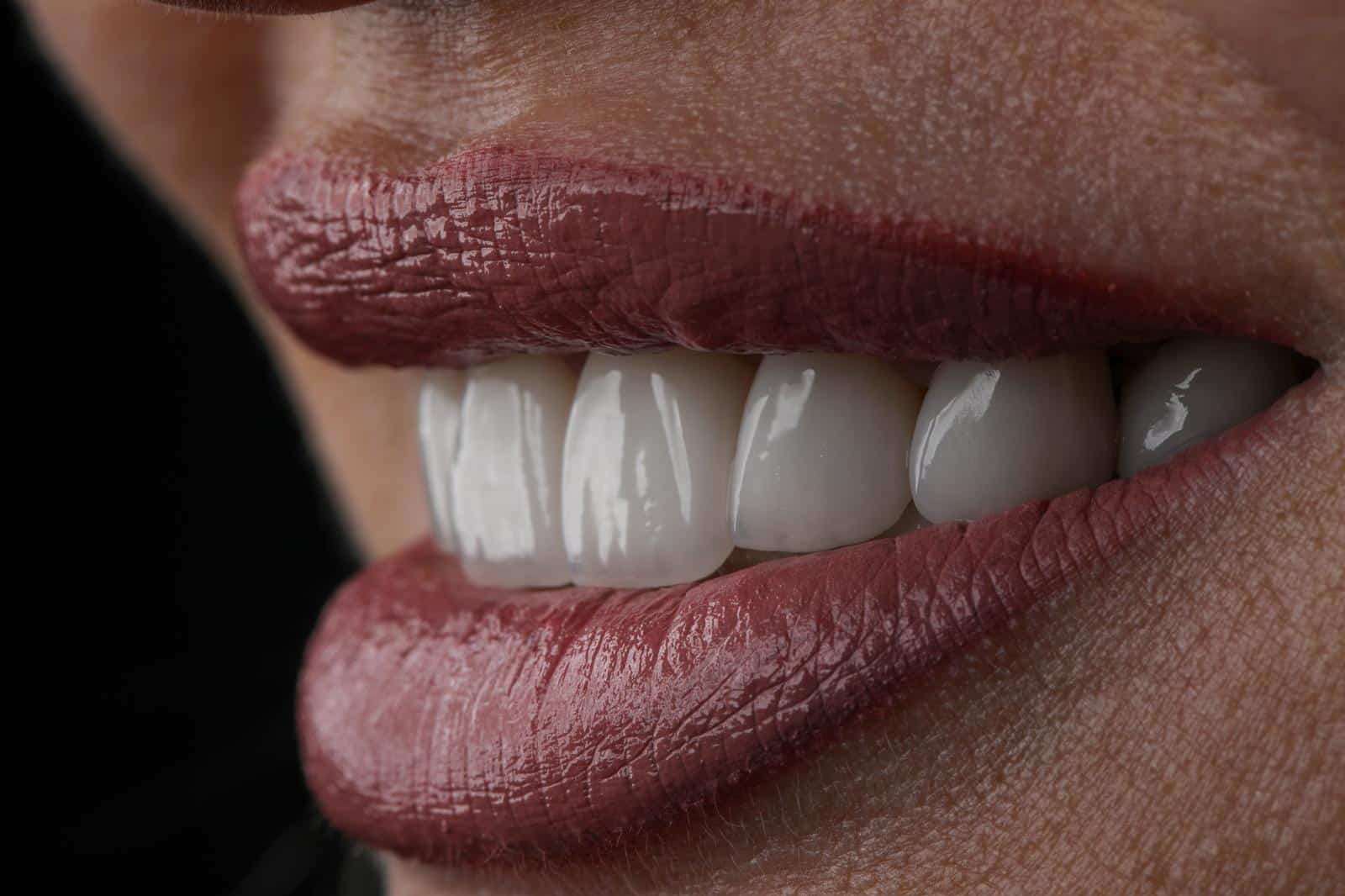
Treatment Guide
Dental Treatment in Turkey vs Hungary: Cost, Standards and What to Weigh
Compare dental treatment in Turkey and Hungary on cost, EU patient rights and the real trade-offs of travel and aftercare.
Treatment Guide
Dental Treatment in Turkey vs Germany: Cost, Quality and What to Weigh
Compare dental treatment in Turkey and Germany on cost, accreditation standards and the real trade-offs of travel and aftercare.
dental
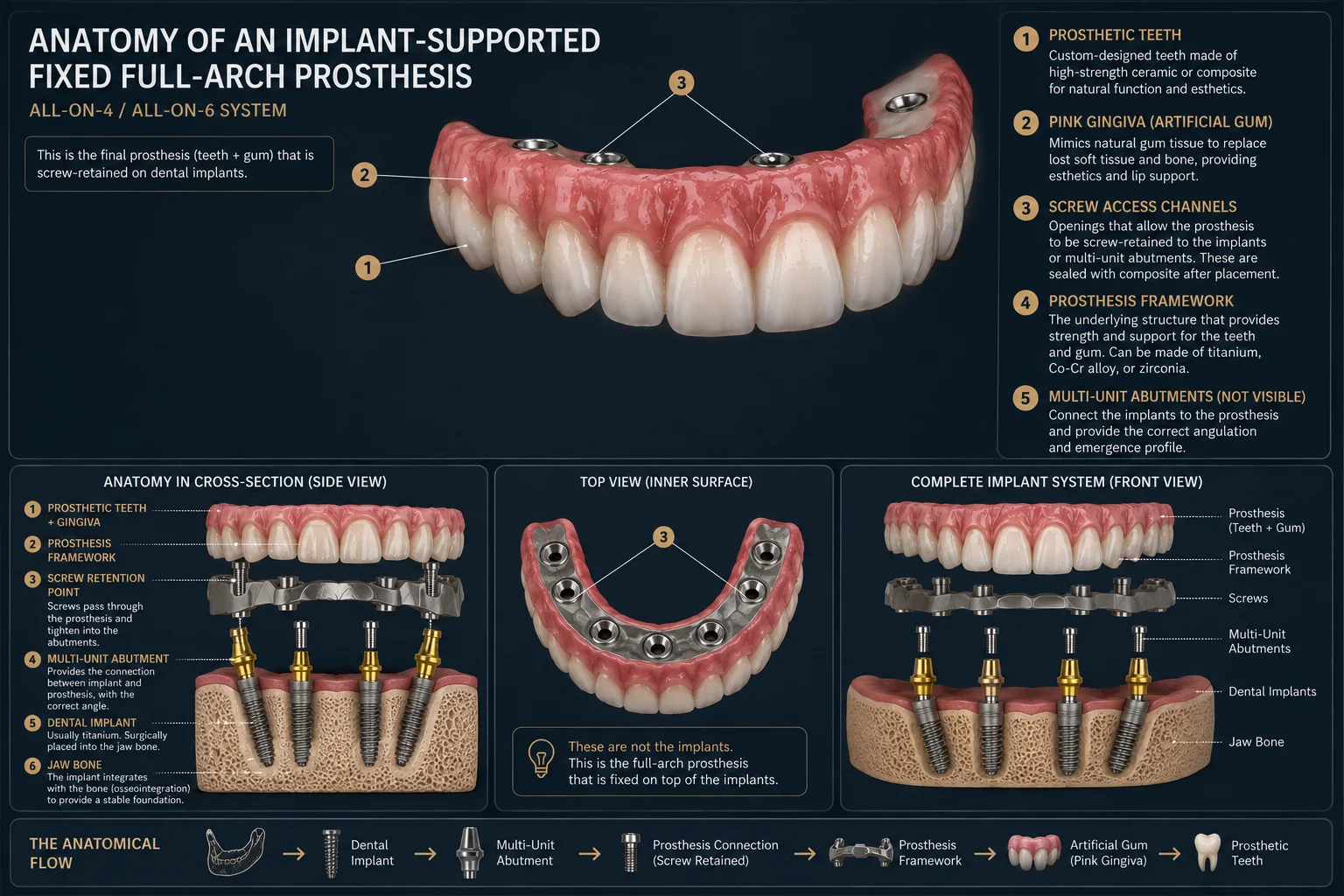
All-on-4 Dental Implants in Turkey
Complete full-arch restoration anchored by just four strategically placed implants: often delivered as same-day teeth. Save up to 90% compared to UK and US prices, without compromising on quality or safety.
Treatment Guide
Dental Treatment in Turkey vs Croatia: Cost, Standards and What to Weigh
Compare dental treatment in Turkey and Croatia on cost, EU patient rights and the real trade-offs of travel and aftercare.
Plan the next step clearly
Use this page as a decision-support guide, then move into quote review, treatment comparison, and travel planning with coordinator support.
Decision Context
Patients compare this treatment inside the trip around it
Treatment pages perform better when they acknowledge arrival flow, destination trust, and the recovery rhythm patients are trying to visualise before booking.

The provider decision starts with arrival confidence
Patients compare treatment pages while also asking how first-day logistics, transfers, and scheduling will actually work.

The destination still influences medical trust
A treatment page is stronger when it recognises that the city itself remains part of the decision frame for international patients.
Recovery pacing changes how people evaluate options
Different procedures feel more or less realistic depending on how patients picture the slower hours between appointments.