Dental Treatment in Turkey vs Croatia: Cost, Standards and What to Weigh
A NexWell comparison of dental treatment in Turkey versus Croatia: indicative cost ranges for implants, crowns, veneers and All-on-4, an honest look at EU device standards and clinic accreditation, the real trade-offs around travel and aftercare, and a clear framework for deciding which route fits your case.
- JCI-accredited hospitals
- TEMOS-accredited clinics
- Board-certified surgeons and a licensed clinical team
- 3,000+ international patients treated
- 5-star chain hotel accommodation
- VIP airport transfers
Written quote from a NexWell coordinator, usually within 24 hours.
Written quote from a NexWell coordinator, usually within 24 hours.
Quick answer
A NexWell comparison of dental treatment in Turkey versus Croatia: indicative cost ranges for implants, crowns, veneers and All-on-4, an honest look at EU device standards and clinic accreditation, the real trade-offs around travel and aftercare, and a clear framework for deciding which route fits your case.
Why Patients Compare Turkey and Croatia
Patients comparing Turkey and Croatia are choosing between two well-established dental-tourism destinations, not weighing a safe bet against a gamble: both countries have treated large numbers of international patients for years, just from different geographic starting points.
For a patient in Italy, Austria, Germany or the UK who has settled on treatment outside their own country, Croatia and Turkey are two of the most commonly compared answers to the question of where.
Croatia's case is genuinely strong. It has been an EU member since 2013, which brings it under the Cross-Border Healthcare Directive (2011/24/EU) discussed in more detail below, and its geography is a real asset: much of the country is reachable by car from Italy, Austria and Slovenia, not only by flight.
That combination of EU membership and Adriatic-coast tourism infrastructure means the treatment-and-holiday model many patients picture is genuinely realistic in Croatia, not just marketing language: Zagreb and the coastal city of Rijeka are both established dental centres with decades of experience treating patients from neighbouring countries.
Turkey enters the comparison for different reasons, not because Croatia falls short.
Clinics geared toward international patients in cities such as Istanbul and Antalya handle a very large volume of cases, implant surgery, full-arch reconstruction, multi-tooth veneer work, and many have built package-and-coordination models specifically around this kind of trip: airport transfer, accommodation, translated consent and a single point of contact from arrival to discharge.
For larger, multi-visit cases, that scale can matter as much as the headline price.
For a patient in Italy, Austria, Germany or the UK who has settled on treatment outside their own country, Croatia and Turkey are two of the most commonly compared answers to the question of where.
This page does not try to declare a winner. Croatia offers EU-level patient protections and, for much of Western Europe, a genuinely short trip: sometimes a drive rather than a flight. Turkey offers a large-volume, tightly packaged treatment model and, on several procedures, a lower cost floor.
Which matters more depends on the size of your case, how much you value proximity if something needs a follow-up visit, and how you weigh Croatia's EU legal framework against the scale and pricing Turkey has built around exactly this kind of patient.
Cost Compared: Indicative Ranges
Turkey and Croatia's published price ranges overlap on some procedures and diverge sharply on others, so the honest comparison depends on which treatment you need, not a single country-wide verdict. Every figure here is a published market range collected in August 2026, not an offer: no clinic in either country can price your case honestly until it has seen your imaging and written a plan against it.
| Treatment | Turkey | Croatia |
|---|---|---|
| Single implant with crown | $400–$1,480 | $805–$1,500 |
| Zirconia crown (per tooth) | $170–$410 | $290–$550 |
| Porcelain veneer (per tooth) | $230–$520 | $250–$575 |
| All-on-4 (per arch) | $5,700–$8,900 | $4,600–$9,200 |
On single implants and zirconia crowns, Turkey's published floor sits clearly below Croatia's. On veneers the gap is narrow, Turkey's floor of $230 is only slightly below Croatia's $250, and on All-on-4 the pattern reverses outright: Croatia's floor of $4,600 actually undercuts Turkey's floor of $5,700.
Any claim that Turkey is simply "the cheaper option" does not survive contact with this table, and a page that hid the All-on-4 row to avoid saying so would not be trustworthy.
The veneer row carries a specific caveat worth flagging. Published Croatian veneer figures at the low end of the range frequently blend composite and zirconia work under a single "veneer" heading, which understates the realistic cost of porcelain, for a genuine porcelain veneer in Croatia, a floor closer to $330 is more realistic than the $250 headline figure suggests.
The width of the implant and All-on-4 rows in both countries comes from the same underlying cause: implant brand tier. Economy systems sit near the floor of each range and premium systems near the ceiling, in Croatia as much as in Turkey: Turkey's own single-implant band is itself 3.7 times as wide floor-to-ceiling ($400 to $1,480) for exactly this reason.
Croatia's All-on-4 band is proportionally wider still: its ceiling of $9,200 is exactly double its floor of $4,600, compared with Turkey's ceiling running at roughly 1.6 times its own floor.
A wide band is not a red flag on its own: it simply means the number means little until you know which implant system it prices, which is exactly why an itemised, written quote is the only comparison that means anything on a case this size. For Turkey's own implant, crown and All-on-4 pricing broken down by brand tier, see our dental implants Turkey cost guide.
Treatment Plan
Ready for a written Dental Treatment in Turkey vs Croatia: Cost, Standards and What to Weigh quote?
A NexWell coordinator reviews your case and replies with a personalised treatment plan and indicative pricing — usually within 24 hours.
Quality and Standards: An Honest Comparison
Regulation differs between Turkey and Croatia in specific, concrete ways, EU medical-device law and a formal cross-border patient-rights framework, and beyond those two points, the more accurate statement is that standards vary by clinic, not by country.
Croatia's EU membership brings two real, structural advantages. First, under the Cross-Border Healthcare Directive (2011/24/EU), EU citizens treated in another member state are entitled to the same standard of care as local patients and, in defined circumstances, limited reimbursement from their home health system: a genuine protection Turkey cannot offer, since it sits outside the EU legal framework entirely.
One honest caveat for UK readers specifically: since Brexit, this directive no longer applies to UK citizens in the way it once did, so the practical value of this particular protection depends on where you live.
Second, any dental implant placed in Croatia must carry CE marking under the EU Medical Device Regulation (MDR): a real, enforceable, EU-wide minimum standard for the device itself, not a marketing claim.
On the professional side, registration with the Croatian Chamber of Dental Medicine (Hrvatska komora dentalne medicine, HKDM) is mandatory for practising dentists, and dentists qualified elsewhere in the European Economic Area benefit from automatic professional recognition.
Croatian dentists must also complete a minimum of 60 continuing professional development credits over a rolling six-year period, which is a concrete, checkable requirement rather than a vague claim of ongoing training.
Turkish clinics serving international patients, meanwhile, are the ones most likely to pursue Joint Commission International (JCI) accreditation and to source materials under ISO 13485 quality systems, but, as in Croatia, this is a clinic-level credential, not a blanket national one.
The implant systems used at reputable Turkish clinics are frequently the same globally branded, CE-marked systems used across Croatia and the rest of the EU.
Put together, the honest conclusion is close to the one that applies to almost any country comparison in dentistry: Croatia's EU framework gives it a real, structural edge on device standards and patient rights, but day-to-day clinical quality, sterilisation protocol, named materials, the dentist's own case volume, depends on the specific clinic you choose, not the passport stamp on the building.
Verifying the individual clinic still matters more than the country label.
The Real Trade-offs: Travel, Volume and Aftercare
Turkey and Croatia trade advantages depending on what you weigh: travel distance, case volume, aftercare logistics and the genuine feasibility of a treatment-holiday combination all point in different directions, and none of them favours one country outright.
Travel is Croatia's clearest, most concrete advantage. For a patient in northern Italy, Austria or southern Germany, Croatia is not just a short flight: much of the country is reachable by car, which removes flight schedules and airport transfers from the equation entirely for many travellers. Compare that with Turkey, which for the same starting points is realistically a flight of three hours or more.
For cases that may need a short follow-up visit, that difference in ease of return is a real, practical benefit and should be weighed as one.
Case volume tends to favour Turkey, particularly for larger surgical work. Clinics built around international patients in Istanbul and Antalya handle a high throughput of full-arch and multi-implant cases specifically, and a dentist's experience with a given procedure, not just their qualifications on paper, is one of the stronger predictors of outcome for complex work.
Croatia's established centres in Zagreb and Rijeka have real experience too, including decades of treating patients from neighbouring Austria and Italy, but generally at a smaller scale than Turkey's largest international-patient clinics.
The holiday-and-treatment combination is a genuine, not merely marketed, feature of choosing Croatia: the Adriatic coast has a mature tourism infrastructure independent of dentistry, so pairing a course of treatment with a coastal stay is a realistic plan rather than a stretch. Turkey's own coastal cities offer something similar, so this is less a point of difference than a shared strength of both destinations.
Aftercare and revision logistics lean toward Croatia on distance alone: if a crown needs adjusting or a screw loosens months later, a drive or short flight back is easier to arrange than a longer trip to Turkey. Reputable clinics in both countries offer remote follow-up and coordination with home-country dentists, but nothing replaces being able to return to the original clinic quickly.
Language is close to even between the two: clinics in both Croatia and Turkey that serve Italian, German or English-speaking patients typically staff coordinators and dentists in those languages, but confirming that the treating dentist, not only the front-desk coordinator, can explain your plan and consent clearly matters more than which country you choose.
How to Decide: The Same Questions for Both
Turkey and Croatia are usually reached in completely different ways: one by a short flight or even a drive along the Adriatic, the other by a longer flight into a much larger treatment operation. The questions that actually protect you, though, are identical, and none of them has anything to do with which airport you land at.
Before you commit to a clinic in either country, put these eight questions to it:
1. Is there a written, itemised quote, broken down by procedure, or only a single total figure? 2. Is the implant brand and its country of manufacture named explicitly? 3. Is the sedation or anaesthesia team included in the quoted price? 4. Are temporary prosthetics, imaging and follow-up appointments included, or billed separately? 5.
Who provides the warranty, what does it cover, and, if a revision is needed, who pays for the return trip? 6. Where is the laboratory: in-house at the clinic, or an outside subcontractor? 7. How many cases like yours has the treating dentist handled in the past year? 8. How many visits does the treatment plan require, and is a second trip likely?
Whether the practice is in Zagreb, Rijeka or Istanbul, all eight should be answerable in a single email. A clinic that answers them precisely has already told you more about your likely outcome than any national reputation could.
This page has not tried to tell you which country wins, because it genuinely depends on your case: how large the treatment is, how close you need to be if something needs adjusting, and how much weight you put on the EU legal and device-standard protections Croatia offers versus the scale and packaging Turkey has built around exactly this kind of trip.
Run both a Turkish and a Croatian clinic through the same eight questions, compare the answers side by side, and the right choice for your case will be considerably clearer than it was from the price table alone.
Medically reviewed by Dt. Tunç Berge, MSc: Esthetic Dentistry & Implantology. Last reviewed August 2026
Contracted clinics
NexWell coordinates with TEMOS-accredited clinics or Ministry of Health–licensed facilities in Turkey.
Board-certified review
Content reviewed by Dt. Tunç Berge — Turkish Dental Association (TDB).
No obligation
Get your Dental Treatment in Turkey vs Croatia: Cost, Standards and What to Weigh plan
Send your case and a coordinator returns a written plan and an indicative quote — usually within a day.
Questions Patients Ask Before They Commit
Related reading
Treatment Guide
Dental Treatment in Turkey vs Hungary: Cost, Standards and What to Weigh
Compare dental treatment in Turkey and Hungary on cost, EU patient rights and the real trade-offs of travel and aftercare.
Treatment Guide
Dental Treatment in Turkey vs Germany: Cost, Quality and What to Weigh
Compare dental treatment in Turkey and Germany on cost, accreditation standards and the real trade-offs of travel and aftercare.
dental
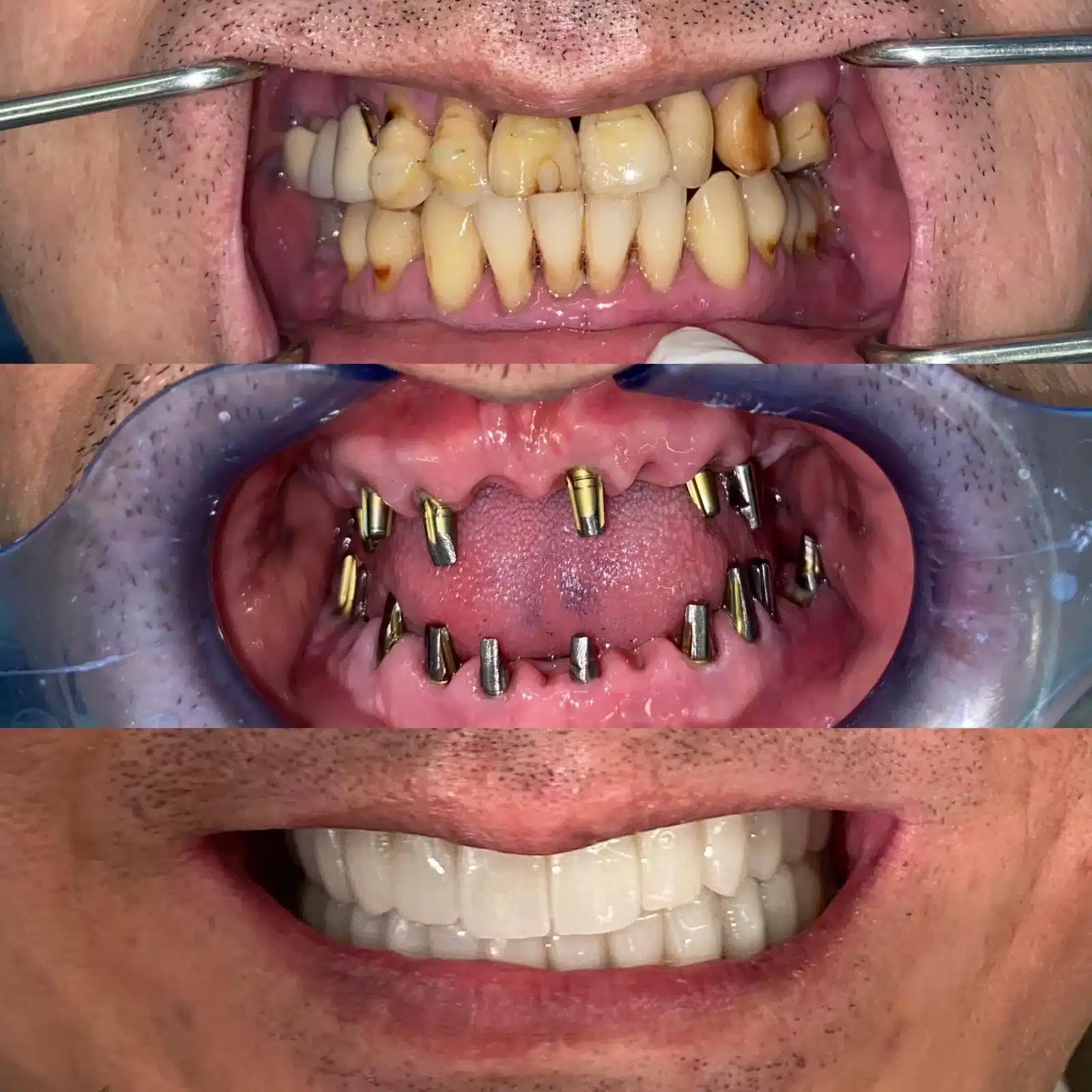
Dental Implants in Turkey
Replace a single tooth or your entire smile with premium dental implants in Istanbul. Same brands as London specialists, a fraction of the cost. 5-day treatment packages. TEMOS-accredited dental clinics.
Treatment Guide
Dental Treatment in Turkey vs Mexico: Cost, Standards and What to Weigh
Compare dental treatment in Turkey and Mexico on cost, COFEPRIS regulation and the real trade-offs of border access and aftercare.
Plan the next step clearly
Use this page as a decision-support guide, then move into quote review, treatment comparison, and travel planning with coordinator support.
Decision Context
Patients compare this treatment inside the trip around it
Treatment pages perform better when they acknowledge arrival flow, destination trust, and the recovery rhythm patients are trying to visualise before booking.

The provider decision starts with arrival confidence
Patients compare treatment pages while also asking how first-day logistics, transfers, and scheduling will actually work.

The destination still influences medical trust
A treatment page is stronger when it recognises that the city itself remains part of the decision frame for international patients.
Recovery pacing changes how people evaluate options
Different procedures feel more or less realistic depending on how patients picture the slower hours between appointments.