Medically reviewed by Dt. Tunç Berge, MSc: Esthetic Dentistry & Implantology. Last reviewed June 2026
Teeth Whitening Options: In-Office, At-Home and What Actually Works
- TEMOS-accredited clinics
- JCI-accredited hospitals
- Board-certified surgeons and a licensed clinical team
- 3,000+ international patients treated
A NexWell planning guide to teeth whitening: how in-office, dentist-supervised at-home and over-the-counter options really compare on strength, speed, cost and safety, why intrinsic and extrinsic stains respond differently, why veneers and crowns do not whiten, and how to think about sensitivity honestly.
Written quote from a NexWell coordinator, usually within 24 hours.
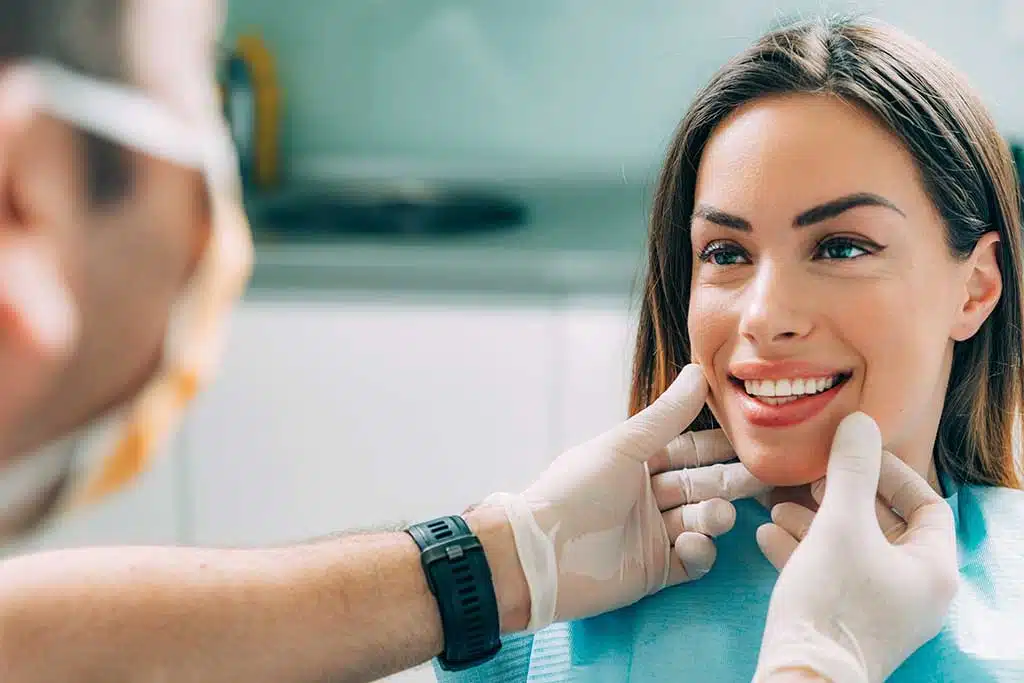
Quick answer
A NexWell planning guide to teeth whitening: how in-office, dentist-supervised at-home and over-the-counter options really compare on strength, speed, cost and safety, why intrinsic and extrinsic stains respond differently, why veneers and crowns do not whiten, and how to think about sensitivity honestly.
What Is Teeth Whitening, and What It Can and Cannot Do
Teeth whitening is the chemical lightening of tooth colour using a peroxide-based bleaching agent: either hydrogen peroxide or carbamide peroxide, which breaks down into hydrogen peroxide once it touches the tooth. The active gel diffuses through the enamel and the underlying dentine and breaks apart the pigmented molecules that have built up inside the tooth.
The result is a genuinely lighter shade, not a coating painted onto the surface.
It is worth separating whitening from simple cleaning. A professional scale-and-polish or a whitening toothpaste removes surface debris and some stain, but it cannot lighten the natural colour of the tooth itself. Only a peroxide bleaching agent does that.
This distinction explains why people who have had their teeth cleaned can still feel their smile looks dull: the cleaning addressed the surface, not the intrinsic shade.
Whitening also has honest limits. It lightens natural tooth structure, so it works on real enamel and dentine: it does not change the colour of any restorative dental work.
That means existing dental crowns, porcelain veneers, dental bonding and fillings will stay exactly the shade they were made, a point covered in detail further down.
Whitening is also a cosmetic treatment, not a permanent state: the shade gradually relapses over months to a couple of years depending on diet and habits, and most people top up periodically.
The result is a genuinely lighter shade, not a coating painted onto the surface.
Finally, whitening is not a substitute for treating disease. Active tooth decay, periodontal disease or exposed roots should be assessed and managed first, because bleaching irritated or unhealthy tissue is uncomfortable and can mask problems that need real treatment. Whitening is the finishing step on a healthy mouth, not a shortcut around one.
The Three Main Methods Compared
There are three broad routes to whiter teeth, and they differ mainly in the strength of the peroxide used, how fast they work, what they cost and how closely a clinician supervises them. The table below sets them side by side.
Factor
In-office (chairside) whitening
Dentist-supervised at-home trays
Over-the-counter (OTC) products
Who controls it
A dentist or hygienist, in the clinic
The dentist prescribes and fits, you apply at home
You, with no professional oversight
Peroxide strength
Highest, strong professional gels used with gum protection
Moderate, custom trays with professional-strength gel
Lowest: limited concentrations sold for general public use
Speed of result
Fastest; a visible change usually in one or a few sittings
Gradual; typically a couple of weeks of nightly or daily wear
Slowest and most variable; often modest over several weeks
Fit and gum protection
Gums are isolated and protected before strong gel is applied
Custom-moulded trays keep gel on teeth and off gums
Generic strips or one-size trays; gel can reach the gums
Typical cost
Highest per course
Mid-range; often the best value-to-result balance
Lowest upfront, but results and consistency vary
Safety profile
Highest oversight; sensitivity managed on the spot
Well-controlled when prescribed and fitted properly
Generally safe at low concentrations, but misuse risk is higher
In practice, in-office whitening is the route people choose when they want a fast, supervised result. Dentist-supervised at-home trays are the workhorse option: custom trays with professional gel worn over a couple of weeks, often giving a result close to in-office for less money.
Over-the-counter strips, pens and trays are the most accessible and cheapest, but the peroxide is deliberately kept low, the fit is generic, and outcomes are less predictable.
A common and sensible hybrid is to start with an in-office session for a fast jump in shade, then maintain it with custom take-home trays. Whichever route you pick, the honest expectation is shade improvement, not a fixed "Hollywood" colour: a true Hollywood smile is usually built with porcelain veneers, not bleaching, and is a different treatment entirely.
Treatment Plan
Ready for a written Teeth Whitening Options: In-Office, At-Home and What Actually Works quote?
A NexWell coordinator reviews your case and replies with a personalised treatment plan and indicative pricing — usually within 24 hours.
What Affects Your Results: Stains, and Why Veneers and Crowns Don't Whiten
Not all discolouration responds the same way, and the single biggest predictor of your result is the type of stain you have. Dentists separate stains into two families: extrinsic and intrinsic.
Extrinsic stains sit on or near the surface and come from coffee, tea, red wine, tobacco and pigmented foods. These are the stains whitening handles best. Intrinsic stains live inside the tooth and are a tougher proposition: they come from ageing, certain antibiotics taken in childhood (such as tetracycline), excess fluoride during development, or trauma to a single tooth.
Intrinsic discolouration can still improve, but it often needs longer treatment and may not lighten as fully or as evenly. Grey-toned tetracycline staining, in particular, is notoriously stubborn.
The second decisive factor is what your teeth are actually made of. Peroxide only lightens natural enamel and dentine. It has no effect on dental ceramic or composite resin.
So if you already have porcelain veneers, dental crowns, a crown on a dental implant, a dental bridge or tooth-coloured dental bonding, those restorations will not change shade no matter how much gel is applied.
This has a real planning consequence: if you whiten natural teeth that sit next to an old crown or veneer, the natural teeth get lighter while the restoration stays put, and the mismatch can become obvious. The usual sequence is to whiten first, let the shade settle, and only then match any new restorations to the finished colour.
This is also why orthodontic and cosmetic plans interact with whitening. People finishing a course of braces or clear aligners often whiten at the end as the cosmetic flourish on newly straightened teeth.
By contrast, anyone considering porcelain work for a dramatic change is choosing colour at the lab stage, so bleaching beforehand mainly serves to set the target shade.
Safety and Sensitivity: An Honest Picture
Professionally handled whitening with peroxide gels is considered safe when used appropriately, and major dental bodies recognise it as an effective cosmetic treatment. That said, side effects are common enough that they should be expected rather than treated as a surprise.
The two most frequent side effects are tooth sensitivity and gum irritation. Sensitivity happens when peroxide passes through the enamel to the dentine and reaches the nerve, producing short, sharp twinges, often to cold, during or just after treatment. Gum irritation occurs when gel contacts the soft tissue, which is exactly why custom trays and in-clinic gum isolation matter.
For most people these effects are mild and temporary, settling within a day or two, but they are more likely at higher peroxide concentrations and with overuse.
The risks rise mainly with misuse rather than with proper use: leaving gel on too long, going far beyond recommended concentrations, or whitening over and over without a break can irritate gums and aggravate sensitivity. People who already have sensitive teeth, exposed root surfaces, untreated decay or gum disease are more vulnerable and should be checked before starting.
Pregnancy and very young patients are typically advised to wait.
Results vary from person to person and cannot be guaranteed in advance, the shade relapses over time, and no whitening protocol can promise a specific final colour. Sensitivity, while usually manageable with desensitising toothpaste, fluoride and spacing out sessions, is a real and individual response, if it is severe or lasting, that is a reason to pause and speak to a dentist, not to push through.
Cost: What You're Actually Paying For
Whitening is priced by method, not by tooth, and the three routes sit at clearly different price points. Over-the-counter strips and trays are the cheapest to buy outright but deliver the least controlled result. Dentist-supervised at-home trays cost more because you are paying for custom-moulded trays and professional-strength gel, and they tend to offer the best balance of result to spend.
In-office whitening is the most expensive per course because it bundles the strongest gel, gum protection and a clinician's chair time into a fast, supervised result.
As an indicative guide, whitening in Turkey is typically a fraction of the equivalent fee in the USA, UK or Australia, which is why many people add it to a wider treatment trip.
It is frequently combined with other cosmetic work, and here sequencing matters financially as well as clinically: whitening is usually done before any new veneers, dental crowns or dental bonding so the lab can match the new restorations to your final, lighter shade.
Many patients whiten as a finishing step after a course of clear aligners too.
When you compare quotes, look past the headline number to what is included: whether custom trays and refill gel are part of the price, how many in-office sittings are covered, and whether maintenance top-up trays are extra. A cheap OTC kit that needs constant repurchasing is not always cheaper over a year than one well-fitted set of professional trays.
All figures here are indicative ranges and vary by case, the product used and the starting shade. The only reliable number is a written quote from a clinician who has examined your teeth, confirmed they are healthy enough to whiten, and set a realistic expectation for the shade change, not a promise of a specific colour.
Vetted partner network
NexWell coordinates with TEMOS-accredited clinics or Ministry of Health–licensed facilities in Turkey.
Board-certified review
Content reviewed by Dt. Tunç Berge — Turkish Dental Association (TDB).
No obligation
Get your Teeth Whitening Options: In-Office, At-Home and What Actually Works plan
Send your case and a coordinator returns a written plan and an indicative quote — usually within a day.
Questions Patients Ask Before They Commit
Related reading
dental
Hollywood Smile in Turkey
Achieve a symmetrical, brilliantly white smile with E-max and zirconia veneers at Istanbul's leading cosmetic dental clinics. Digital Smile Design technology lets you preview your new look before treatment begins.
dental
Laminate Veneers in Turkey
Ultra-thin porcelain veneers (as little as 0.2 mm) that require minimal tooth preparation. Preserve more natural enamel while achieving a stunning cosmetic result.
Treatment Guide
Dental Bonding: What It Is, Cost and How It Compares to Veneers
How composite bonding repairs chips and gaps in one visit, how it compares with veneers and crowns, and how to care for it.
dental
Dental Crowns in Turkey
Restore damaged, weakened, or aesthetically compromised teeth with zirconia, E-max, or porcelain-fused-to-metal crowns. Same-week treatment at TEMOS-accredited clinics in Istanbul.
Plan the next step clearly
Use this page as a decision-support guide, then move into quote review, treatment comparison, and travel planning with coordinator support.
Decision Context
Patients compare this treatment inside the trip around it
Treatment pages perform better when they acknowledge arrival flow, destination trust, and the recovery rhythm patients are trying to visualise before booking.

The provider decision starts with arrival confidence
Patients compare treatment pages while also asking how first-day logistics, transfers, and scheduling will actually work.

The destination still influences medical trust
A treatment page is stronger when it recognises that the city itself remains part of the decision frame for international patients.

Recovery pacing changes how people evaluate options
Different procedures feel more or less realistic depending on how patients picture the slower hours between appointments.
References
- American Dental Association: Whitening (ADA Oral Health Topics)
- MouthHealthy (ADA): Teeth Whitening
- Eachempati P et al.: Home-based chemically-induced whitening (bleaching) of teeth in adults (Cochrane Systematic Review)
- Evaluation of the Effectiveness of Different Types of Professional Tooth Whitening: A Systematic Review (PMC)