Medically reviewed by Dt. Tunç Berge, MSc: Esthetic Dentistry & Implantology. Last reviewed June 2026
Is Dental Treatment Abroad Worth It? An Honest Decision Framework
- TEMOS-accredited clinics
- JCI-accredited hospitals
- Board-certified surgeons and a licensed clinical team
- 3,000+ international patients treated
A NexWell planning guide to deciding whether travelling abroad for dental work genuinely makes sense for your case, when the saving outweighs the travel, when it does not, and how to weigh the true cost honestly.
Written quote from a NexWell coordinator, usually within 24 hours.
Quick answer
A NexWell planning guide to deciding whether travelling abroad for dental work genuinely makes sense for your case, when the saving outweighs the travel, when it does not, and how to weigh the true cost honestly.
What "Worth It" Really Means
"Is dental treatment abroad worth it?" is one of the most common questions we hear, and the honest answer is: it depends entirely on your case. There is no single yes or no that applies to everyone. For some people, travelling to Turkey for treatment is one of the best decisions they make. For others, the smarter, safer choice is to have the work done close to home.
The aim of this page is not to sell you a trip: it is to give you a clear, balanced framework so you can reach the right conclusion for your own situation.
The word "worth" hides two very different ideas. The first is price: the headline number you pay for the dental work itself. The second is value: what you actually receive once travel, time, risk and continuity of care are all factored in. A treatment can be cheap and still poor value, or more expensive and excellent value.
People who only compare headline prices often end up disappointed; people who compare total value tend to be the ones who are happy years later.
It helps to understand why prices differ in the first place. Treatment in Turkey is typically much more affordable than in the UK, Germany or the US, and there are legitimate structural reasons for this, which we explain in detail in why treatment is cheaper in Turkey. Lower clinic overheads, lower labour and lab costs, and a favourable exchange rate all play a part.
The aim of this page is not to sell you a trip: it is to give you a clear, balanced framework so you can reach the right conclusion for your own situation.
The saving is real. The question is whether, in your specific case, that saving is large enough to survive everything else you have to spend and risk to obtain it.
Throughout this guide we will keep coming back to three honest filters. First, the size of the case: a large reconstruction behaves very differently from a single small filling. Second, the clinic: outcomes depend far more on the clinic you choose than on the country you fly to. Third, continuity: whether you can realistically return for staged work, adjustments or, in the rare event something goes wrong, a revision.
Hold those three filters in mind and most of the noise around dental tourism becomes much easier to navigate. If, by the end, the answer for you is "stay home," that is a perfectly good outcome, and one we will happily tell you.
When It Genuinely Is Worth It
Travelling abroad makes the most sense when the case is large and the saving is therefore large in absolute terms. Big reconstructive work is where the maths comes alive.
Consider full mouth dental implants or an All-on-4 restoration: in high-cost countries these can run into tens of thousands, so even after flights and a hotel the difference can be substantial. The same applies to multiple dental implants, a full set of dental crowns, or an extensive smile makeover.
When the percentage saving is applied to a large bill, the absolute saving easily outweighs the cost of travel.
Cosmetic transformations sit in a similar bracket. A Hollywood smile or a set of veneers across the smile zone is both a meaningful expense and a meaningful saving abroad. Because these procedures are usually elective and planned well in advance, you have the luxury of researching carefully and timing the trip around recovery rather than rushing.
That planning window is itself part of what makes a case suitable for treatment abroad.
The second condition is just as important as case size: you must choose a genuinely reputable, properly vetted clinic. The saving only becomes good value when the quality is sound, so the time you invest in vetting is the single highest-return effort in the whole process.
Our guide to how to choose the best dental clinic walks through verifying the dentist's credentials, materials, hygiene standards and patient reviews, and you should never proceed without a written itemised quote that lists every component, brand and stage.
Broader safety considerations are covered in is dental treatment in Turkey safe.
The third condition is continuity. Treatment abroad works best when you can realistically return if needed, for a second stage, a review, or in the uncommon case of an adjustment. Reputable clinics also offer structured aftercare, and arrangements such as on-site recovery support for international patients reduce the practical friction of being away from home.
When all three conditions line up, a large case, a thoroughly vetted clinic, and a realistic ability to return, travelling abroad is frequently well worth it, and many patients are genuinely delighted with both the outcome and the cost. None of this guarantees a perfect result, but it stacks the odds sensibly in your favour.
Treatment Plan
Ready for a written Is Dental Treatment Abroad Worth It? An Honest Decision Framework quote?
A NexWell coordinator reviews your case and replies with a personalised treatment plan and indicative pricing — usually within 24 hours.
When It Is Marginal or Not Worth It
Just as honestly, there are cases where flying abroad makes little sense. The clearest is small, single-tooth work. If you need one filling, a single tooth implant, or a minor cosmetic touch-up such as dental bonding, the saving on the treatment itself is modest in absolute terms, and flights, accommodation and your own time can swallow it entirely.
When travel costs roughly match or exceed the saving, the financial argument disappears, and you are taking on travel and continuity trade-offs for little or no benefit. For small jobs, having the work done locally is often simply the better call.
Complex medical histories are another reason to think twice. If you have significant health conditions, take medications that affect healing or bleeding, or have a complicated dental situation that may evolve unpredictably during treatment, the value of being close to your own clinician rises sharply.
Procedures that depend on biological processes such as osseointegration, where an implant fuses with bone over several months, sometimes need staged appointments and monitoring. If returning for those stages is difficult, the case becomes harder to manage well from a distance.
Continuity problems can rule out otherwise sensible cases. If your schedule, budget or personal circumstances mean you genuinely cannot return for a second trip, then any treatment requiring staged work, a try-in stage, or a possible revision becomes risky to attempt abroad. The same applies if you would struggle to fund a second journey were an adjustment needed.
The UK's General Dental Council specifically highlights that follow-up care and remedies can be harder to access once you have travelled home, which is exactly why an honest assessment of your ability to return matters so much.
Finally, be wary of borderline cases where the numbers are close. Use the deciding-whether-it-is-worth-it test below, and read hidden costs carefully, because extras such as additional procedures discovered on arrival, upgraded materials, or an unplanned extra night can erode a thin saving fast.
If, after a sober calculation, the advantage is small and the inconvenience or risk is not, staying home is the rational choice. A good clinic, including ours, will tell you when your case falls into this category rather than pushing you onto a plane.
The True Cost Equation
The mistake that derails most decisions is comparing the wrong numbers. People line up the treatment price at home against the treatment price abroad and stop there. That is not the real comparison.
The honest equation looks like this: treatment abroad plus return flights plus accommodation plus food and local transport plus the realistic possibility of a second trip plus the cost of any revision, all weighed against the all-in cost of staying home. Only when both sides are built out fully can you compare like with like.
Start with the treatment figure, but treat it as an indicative range rather than a fixed promise. Reliable clinics provide a written itemised quote that breaks down each implant, crown, veneer, bone graft and sedation fee, naming the brands used. A single lump sum is a warning sign.
For realistic planning ranges on common procedures, see our cost guides for dental implant cost and the cost of veneers, and the country-by-country comparison in Turkey vs Germany.
Next, add travel honestly. Flights vary by season and how early you book; accommodation depends on the length of stay your treatment plan requires. Larger cases sometimes need a longer stay or a return visit weeks later for the final fitting, which means a second set of flights.
Build that second trip into your base case for any staged work rather than treating it as an unlikely extra: it is a normal part of how complex treatment is sequenced. Add daily living costs for the days you are away, and any income you forgo if you cannot work while travelling.
Finally, price in risk. No clinic anywhere can promise a flawless outcome, so a sensible budget includes a buffer for the possibility of an adjustment or revision.
Understanding what protection you have if that happens is essential, which is why you should study warranties & guarantees before committing: what is covered, for how long, and crucially who pays your travel back if remedial work is needed.
When you assemble all of these elements, you usually find one of two things: either the saving on a large case is so large that it comfortably absorbs every extra, or the saving on a small case is so thin that the extras consume it. The equation, not the headline, gives you your answer.
Quality, Value and Continuity Reality
A persistent myth is that quality is a property of the country. It is not. Turkey has world-class clinics with internationally trained dentists, modern equipment and premium materials, and it also has weak operators competing purely on price. Both exist, often within the same city. Your outcome is determined overwhelmingly by which clinic you walk into, not by the flag on the building.
This is the single most important idea on this page: choose the clinic, not the country. A poorly chosen clinic at home can disappoint just as a well-chosen clinic abroad can excel, and vice versa.
This is where the distinction between price and value becomes concrete. The cheapest quote you can find abroad is frequently the worst value, because it may signal rushed treatment, lower-grade materials, or corners cut on planning and hygiene. Value comes from a clinic that takes proper records, plans methodically, uses materials it will name in writing, and stands behind its work.
Paying somewhat more for that within the abroad option is usually money well spent. When you are weighing materials and longevity, encyclopedia explainers such as veneers vs crowns help you understand what you are actually paying for, so a low price does not quietly mean a lesser treatment.
Continuity of care is the genuine trade-off you accept by travelling, and it deserves an honest hearing. When your dentist is around the corner, a loose temporary, a high bite or a question is a quick appointment away. When your dentist is a flight away, that convenience is gone.
Good clinics mitigate this with clear remote aftercare, detailed records you can share with a local dentist, and structured on-site recovery support during your stay, but mitigation is not the same as having care on your doorstep. You are exchanging some continuity for a saving, and that exchange is worthwhile for some cases and not for others.
Regulation differs across borders too, and you should go in with eyes open. Protections, complaint routes and professional oversight are not identical everywhere, so part of vetting a clinic is understanding what recourse you would have. The honest position is balanced: excellent, accountable care abroad is entirely achievable when you choose carefully, while the safety net is structured differently from home.
Neither fear nor hype helps here: informed clinic selection does, and our safety overview at is dental treatment in Turkey safe lays out what to verify.
How to Decide for Your Case
Bring the framework together with a short, honest self-test. First, how large is the case? Map it onto a category: a single small procedure, or substantial work such as multiple implants, a full-arch restoration, or a smile-wide cosmetic plan. The larger the case, the more the saving outweighs travel, and the more travelling tends to make sense.
The smaller the case, the more likely local treatment wins on practicality alone.
Second, run the true cost equation from earlier with real numbers for your situation, not optimistic ones. Get an indicative range from a reputable clinic via a written itemised quote, add realistic flights and accommodation for the stay your plan needs, include a second trip if the work is staged, and add a buffer for a possible revision.
Compare that all-in figure with the all-in cost of equivalent treatment at home. If the abroad total is meaningfully lower for comparable quality, that is a point in favour. If it is close, the non-financial factors should decide it.
Third, assess continuity honestly. Can you realistically return for a second stage or an adjustment within a few weeks or months if needed? Is your medical history straightforward enough that staged, distance-managed treatment is sensible? Do you have a local dentist who can monitor and, if necessary, intervene? If you answer yes to these, the continuity trade-off is manageable.
If you answer no, weight the decision toward staying home, especially for anything staged or revision-prone.
Fourth, before anything else, vet the clinic to the standard set out in how to choose the best dental clinic, and read the companion guides on planning your dental trip and hidden costs.
The clinic decision sits above all the others: a large saving on a badly chosen clinic is a false economy, while sound work at a fair price is the whole point.
Put plainly: travelling abroad tends to be worth it for large, planned, cosmetic or reconstructive cases, with a thoroughly vetted clinic, when you can return if needed, and tends not to be worth it for small jobs, complex histories, or when returning is not realistic.
If your case falls on the "stay home" side, that is the right answer for you, and we would rather tell you so than put you on a plane that does not serve your interests.
Vetted partner network
NexWell coordinates with TEMOS-accredited clinics or Ministry of Health–licensed facilities in Turkey.
Board-certified review
Content reviewed by Dt. Tunç Berge — Turkish Dental Association (TDB).
No obligation
Get your Is Dental Treatment Abroad Worth It? An Honest Decision Framework plan
Send your case and a coordinator returns a written plan and an indicative quote — usually within a day.
Questions Patients Ask Before They Commit
Related reading
Treatment Guide
Why Is Dental Treatment So Cheap in Turkey? The Honest Reasons
The real structural reasons dental prices in Turkey are lower — wages, exchange rate, overheads, volume — and how to tell genuine savings from cut corners.
Treatment Guide
The Hidden Costs of Dental Treatment Abroad
Costs beyond the headline quote: clinical extras, second trips, travel, complications and follow-up — plus how to get a truly all-in written quote.
Treatment Guide
Is Dental Treatment in Turkey Safe? An Honest Look
What accreditation and ISO/CE standards mean, the real risks (over-treatment, aftercare, cheap packages) and how to reduce them.
dental
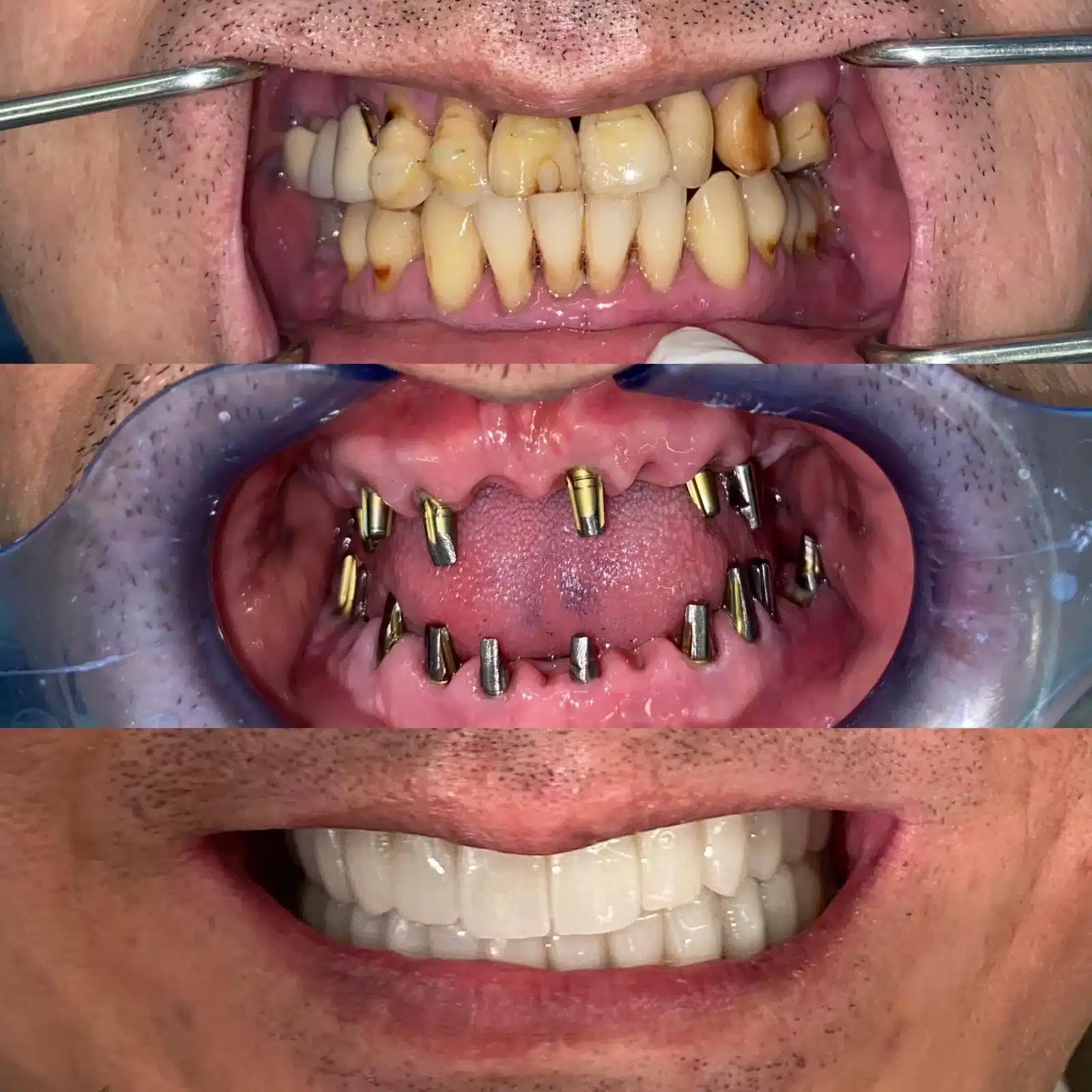
Dental Implants in Turkey
Replace a single tooth or your entire smile with premium dental implants in Istanbul. Same brands as London specialists, a fraction of the cost. 5-day treatment packages. TEMOS-accredited dental clinics.
Plan the next step clearly
Use this page as a decision-support guide, then move into quote review, treatment comparison, and travel planning with coordinator support.
Decision Context
Patients compare this treatment inside the trip around it
Treatment pages perform better when they acknowledge arrival flow, destination trust, and the recovery rhythm patients are trying to visualise before booking.

The provider decision starts with arrival confidence
Patients compare treatment pages while also asking how first-day logistics, transfers, and scheduling will actually work.

The destination still influences medical trust
A treatment page is stronger when it recognises that the city itself remains part of the decision frame for international patients.

Recovery pacing changes how people evaluate options
Different procedures feel more or less realistic depending on how patients picture the slower hours between appointments.