Medically reviewed by Dt. Tunç Berge, MSc: Esthetic Dentistry & Implantology. Last reviewed June 2026
Sensitive Teeth: Causes and How to Get Relief
- TEMOS-accredited clinics
- JCI-accredited hospitals
- Board-certified surgeons and a licensed clinical team
- 3,000+ international patients treated
A NexWell guide to sensitive teeth: why exposed dentin causes the sharp, short pain of dentine hypersensitivity, what triggers it, how at-home desensitising paste and fluoride help, and when sensitivity is a warning sign of an underlying problem that needs a dentist.
Written quote from a NexWell coordinator, usually within 24 hours.
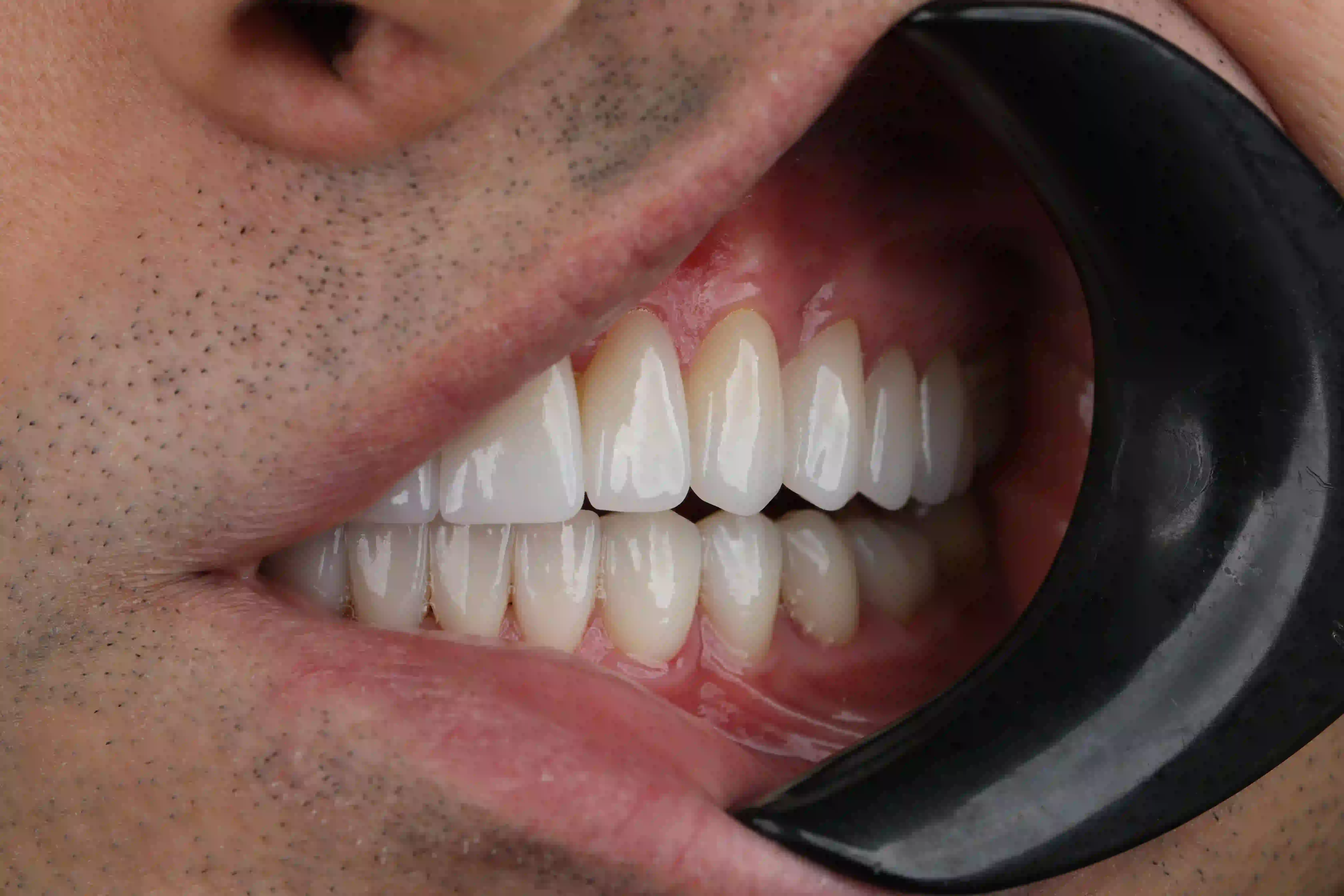
Quick answer
A NexWell guide to sensitive teeth: why exposed dentin causes the sharp, short pain of dentine hypersensitivity, what triggers it, how at-home desensitising paste and fluoride help, and when sensitivity is a warning sign of an underlying problem that needs a dentist.
What Causes Sensitive Teeth?
Sensitive teeth, known clinically as dentine hypersensitivity, produce a sharp, sudden pain in response to something that would not normally hurt a healthy tooth: a sip of cold water, a breath of cold air, something sweet, or a touch from a toothbrush. The pain is usually short and stops once the trigger is removed. That pattern is the clue to what is happening underneath.
Under the hard outer enamel of the crown, and under the cementum that covers the root, sits a softer layer called dentin. Dentin is full of microscopic channels, dentinal tubules, that lead inward toward the tooth's nerve.
When dentin is exposed and those tubules are open, hot, cold, sweet or touch stimuli cause fluid inside the tubules to move, which stimulates the nerve endings and registers as a quick jolt of pain. This fluid-movement explanation is the most widely accepted model of how sensitivity works.
So sensitivity is, at heart, a problem of exposed and open dentin. There are five common ways that exposure happens. The first is enamel wear: enamel can be thinned by acidic food and drink, by aggressive scrubbing with a hard brush, or by clenching and grinding, a habit called bruxism, which stresses and wears the biting surfaces.
Under the hard outer enamel of the crown, and under the cementum that covers the root, sits a softer layer called dentin.
The second is gum recession: when the gum margin pulls back, often as a result of periodontal disease or over-vigorous brushing, the root surface is uncovered and the root has no protective enamel at all. The third is tooth decay, where a cavity breaches the enamel and exposes the dentin beneath.
The fourth is a cracked tooth, where a fracture line opens a direct path to the dentin and pulp. The fifth is a temporary, treatment-related cause: teeth whitening can make teeth transiently sensitive while the gel passes through the enamel, an effect that typically settles after treatment.
Most everyday sensitivity is the first two, worn enamel and exposed roots, and responds well to simple measures. But because decay, a crack or gum disease can present the same way, persistent or one-sided sensitivity is worth having checked rather than self-managing indefinitely.
Common Triggers and What They Mean
Sensitive teeth rarely hurt all the time. They react to specific triggers, and the trigger pattern is itself diagnostic information your dentist will ask about. The table below maps the everyday triggers to the mechanism behind them.
Trigger
What is happening (mechanism)
Cold drinks, cold air, ice
The classic dentine-hypersensitivity response: a sudden temperature change moves fluid in open dentinal tubules and fires the nerve; usually sharp and brief
Hot drinks and food
Heat can provoke exposed dentin too; a lingering ache after heat can instead point to inflammation of the pulp and is worth checking
Sweet or sour foods
Sugars and acids draw fluid through open tubules; acidic items also erode enamel over time, widening the exposure
Brushing or touch
Mechanical contact on an exposed root or worn neck of the tooth triggers the nerve; aggressive brushing both causes and provokes this
Biting down on one tooth
Pain on biting that eases when released is a recognised pattern for a cracked tooth rather than simple sensitivity: a flag to see a dentist
After a whitening session
Transient sensitivity while the teeth whitening gel passes through enamel; usually settles within a day or two
Reading the pattern matters. Generalised, short, cold-triggered twinges across several teeth are typical of straightforward sensitivity from worn enamel or gum recession.
Pain that is concentrated on a single tooth, lingers after the trigger is gone, throbs spontaneously, or appears only on biting is a different signal and points toward decay, a crack or pulp involvement that a paste cannot fix.
Treatment Plan
Ready for a written Sensitive Teeth: Causes and How to Get Relief quote?
A NexWell coordinator reviews your case and replies with a personalised treatment plan and indicative pricing — usually within 24 hours.
At-Home Relief: Paste, Fluoride and Technique
For the common, generalised form of sensitivity, the first line of management is self-applied and inexpensive. The cornerstone is a desensitising toothpaste used twice a day, every day.
These work in one of two ways: some contain a potassium salt that calms the nerve's response, while others contain ingredients, for example stannous fluoride, arginine or calcium sodium phosphosilicate, that physically plug the open dentinal tubules so stimuli no longer reach the nerve.
Systematic reviews of randomised trials find that most of these formulations reduce sensitivity, though the effect builds over a couple of weeks of consistent use rather than overnight.
A useful technique tip: after brushing with a desensitising paste, smear a little of it directly onto the sensitive area with a fingertip and leave it rather than rinsing it straight off. This keeps the active ingredient in contact with the dentin for longer.
Fluoride is the second pillar. Fluoride strengthens enamel and helps remineralise early softening, and a fluoride mouth rinse or a higher-strength fluoride toothpaste can reduce sensitivity over time. In the clinic, a dentist can apply concentrated fluoride varnish or gel for a stronger version of the same effect.
The third pillar is technique and habits, because much sensitivity is self-inflicted. Use a soft-bristled brush and a gentle, non-scrubbing technique; brushing harder does not clean better and wears enamel and gums. Avoid brushing immediately after acidic food or drink, when softened enamel is most vulnerable. Cut back on the frequency of acidic drinks, and consider a straw for them.
If you grind or clench, ask about a night guard, since unmanaged bruxism keeps wearing the teeth no matter how good the paste is.
These measures help the common form of sensitivity. They are not a substitute for treating an actual cavity, crack or gum problem, and if there is no improvement after a few weeks of consistent use that is a reason to be assessed rather than to keep trying stronger pastes.
When Sensitivity Is a Warning Sign, and You Should See a Dentist
Sensitivity is sometimes just worn enamel, but it can also be the first symptom of a problem that needs treatment. The deciding factor is the character of the pain, not its mere presence. It is worth booking a dental assessment rather than self-managing when any of the following apply.
Pain that lingers. A quick zing that stops the moment the cold is removed is typical of ordinary sensitivity; pain that throbs or aches for minutes afterwards can indicate that the pulp inside the tooth is inflamed, which may eventually need root canal treatment.
Pain in one specific tooth. Generalised sensitivity across many teeth is usually benign. Pain pinpointed to a single tooth, especially sharp pain on biting that disappears when you let go, is a classic sign of a cracked tooth and should be examined.
A visible hole, dark spot or rough edge. These can indicate tooth decay that has reached the dentin, and a cavity will not improve with desensitising paste: it needs to be cleaned out and filled.
Receding or bleeding gums. Sensitivity along the gum line accompanied by bleeding, swelling or gum recession can reflect periodontal disease, which needs professional cleaning and management to stop further recession.
No improvement after a few weeks of correct self-care, spontaneous pain that wakes you at night, or sensitivity alongside facial swelling are all reasons to seek a prompt assessment. Most causes are very treatable when caught early: the point of seeing a dentist is to identify which is driving the pain so the right treatment is used.
In-Clinic Treatment Options
When at-home measures are not enough, or when an underlying cause is found, a dentist has a range of treatments matched to what is actually driving the sensitivity. The aim is always to identify and treat the cause, not just to mask the symptom.
For sensitivity from exposed dentin and worn necks of teeth, the simplest professional options are topical: a high-concentration fluoride varnish or gel, or a desensitising agent painted onto the exposed area to seal the open tubules. These are quick, non-invasive and can be repeated.
Where a worn or notched area at the gum line is significant, or where a small cavity is present, the dentist may place a tooth-coloured filling. Cosmetic-grade dental bonding can cover an exposed, sensitive root surface or rebuild a worn edge.
For more extensively worn or weakened teeth, a dental crown can cover and protect the whole tooth, and in some smile-focused cases veneers address worn front teeth, though these are larger interventions chosen for structural or cosmetic reasons, not for mild sensitivity alone.
If the cause is gum recession that has left a sensitive root exposed, periodontal treatment to stabilise the gums, and in selected cases a gum graft to recover root coverage, may be discussed. If the pulp is irreversibly inflamed, the lingering, throbbing kind of pain, then root canal treatment removes the affected nerve and resolves the sensitivity at its source.
And if a cracked tooth is to blame, treatment depends on how deep the crack runs.
Outcomes for sensitivity are generally good once the correct cause is treated, but they vary from person to person and no single treatment suits every case. A dentist's examination, sometimes with an X-ray, is what matches the right option to your specific tooth.
Vetted partner network
NexWell coordinates with TEMOS-accredited clinics or Ministry of Health–licensed facilities in Turkey.
Board-certified review
Content reviewed by Dt. Tunç Berge — Turkish Dental Association (TDB).
No obligation
Get your Sensitive Teeth: Causes and How to Get Relief plan
Send your case and a coordinator returns a written plan and an indicative quote — usually within a day.
Questions Patients Ask Before They Commit
Related reading
Treatment Guide
Tooth Decay and Cavities: Causes, Stages and Treatment
How plaque and acid cause decay, the stages from white-spot lesion to abscess, treatment by stage and prevention.
Treatment Guide
Cracked or Broken Tooth: Your Treatment Options
The five types of tooth crack and which treatment fits each — bonding, crown, root canal or extraction and implant.
Treatment Guide
Teeth Whitening Options: In-Office, At-Home and What Actually Works
In-office, dentist-supervised at-home and OTC whitening compared on strength, speed, cost and safety.
Treatment Guide
Gum Disease and Implants: Periodontal Treatment Before You Start
Why gum disease must usually be treated before implants: gingivitis vs periodontitis, treatment, peri-implantitis and prevention.
Plan the next step clearly
Use this page as a decision-support guide, then move into quote review, treatment comparison, and travel planning with coordinator support.
Decision Context
Patients compare this treatment inside the trip around it
Treatment pages perform better when they acknowledge arrival flow, destination trust, and the recovery rhythm patients are trying to visualise before booking.

The provider decision starts with arrival confidence
Patients compare treatment pages while also asking how first-day logistics, transfers, and scheduling will actually work.

The destination still influences medical trust
A treatment page is stronger when it recognises that the city itself remains part of the decision frame for international patients.

Recovery pacing changes how people evaluate options
Different procedures feel more or less realistic depending on how patients picture the slower hours between appointments.