Medically reviewed by Dt. Taner Bektaş, DDS: Prosthodontics. Last reviewed June 2026
How Many Veneers Do I Need? A Smile-Zone Planning Guide
- TEMOS-accredited clinics
- JCI-accredited hospitals
- Board-certified surgeons and a licensed clinical team
- 3,000+ international patients treated
A NexWell planning guide to deciding how many veneers you actually need: the smile zone, common 4 to 10+ configurations, matching vs uniform sets, and why the right number comes from photos, not a price list.
Written quote from a NexWell coordinator, usually within 24 hours.
Quick answer
A NexWell planning guide to deciding how many veneers you actually need: the smile zone, common 4 to 10+ configurations, matching vs uniform sets, and why the right number comes from photos, not a price list.
Start With Your Smile Zone, Not a Number
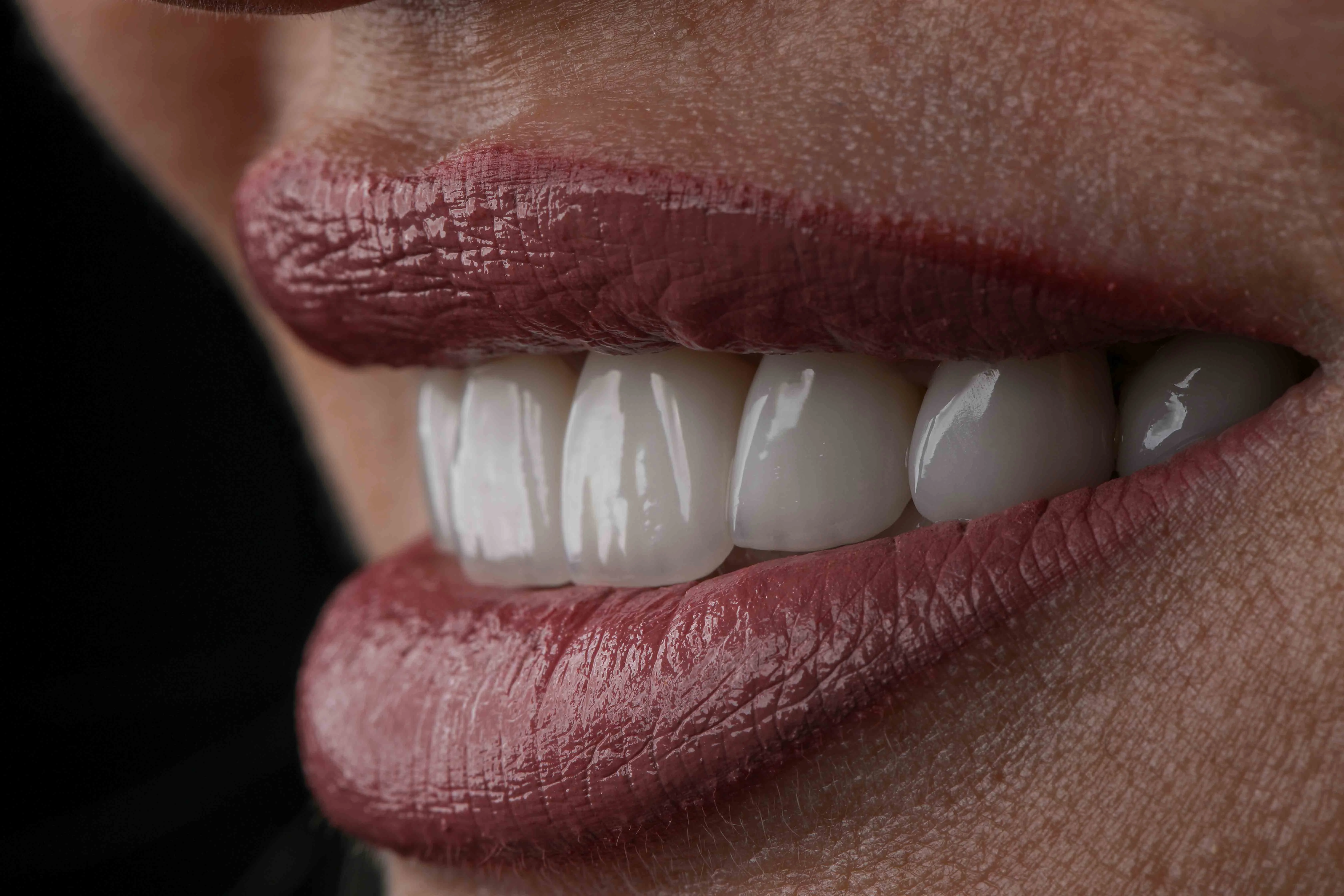
The single most useful idea in planning veneers is the "smile zone": the teeth that are actually visible when you talk, smile and laugh. Most people assume they need to treat every tooth, but you only ever display a fraction of your full dentition.
A relaxed smile typically reveals the upper front teeth and a hint of the canines, while a wide, open laugh exposes more: sometimes reaching back to the first or second premolars on each side.
Because of this, the honest first step is not "how many veneers can I afford?" but "which teeth do people see?" A dentist answers that by studying smiling photos and video, not just a static clinical exam. Lip length, lip mobility, the width of your smile and the way your jaw moves all change the picture.
Two people with identical teeth can need very different numbers because one shows eight teeth when they laugh and the other shows fourteen.
The smile zone also explains why back teeth are almost never veneered for cosmetic reasons. Molars sit in shadow and rarely show, so covering them adds cost and removes healthy tooth enamel for little visible benefit.
Enamel matters: research on ceramic veneer survival shows restorations bonded mainly to enamel last longer than those placed on exposed dentine, so preserving sound enamel on teeth nobody sees is both cheaper and kinder to your mouth.
A relaxed smile typically reveals the upper front teeth and a hint of the canines, while a wide, open laugh exposes more: sometimes reaching back to the first or second premolars on each side.
Mapping your smile zone produces a candid shortlist of candidate teeth. From there, the conversation becomes about balance and symmetry rather than chasing a round number. A common outcome is that the visible zone needs fewer veneers than the patient expected, and that some teeth in the zone are better left natural and simply whitened.
Throughout this guide we use "indicative ranges" for counts and costs; the only figure you can plan a budget around is a written itemised quote built on your own photos and a smile assessment.
The Common Configurations: 4, 6, 8, 10 and Full Arch
In practice, veneer plans cluster around a handful of configurations, and understanding them helps you read any quote you receive.
Four veneers cover the central and lateral incisors on the upper arch: the two big front teeth and the two beside them. This suits people with a narrow smile zone or a single problem area: chips, a gap or discolouration concentrated at the very front. It is the most conservative cosmetic option and overlaps with what dental bonding can sometimes address more cheaply.
Six veneers add the canines, treating the "social six" upper teeth. This is one of the most requested setups because the canines anchor the smile's width and shape. For many medium smiles, six veneers transform the visible front without touching teeth that barely show.
Eight veneers extend to the first premolars, widening coverage for people who reveal more teeth when they laugh. Ten veneers reach the second premolars and create a fuller, more uniform upper arch: the look most associated with a Hollywood smile, where consistent shape and shade run from one side of the smile to the other.
Full-arch and full-mouth sets of 20, 24 or 28 are a different category. A full upper-and-lower set is usually chosen for comprehensive cosmetic or functional reasons, sometimes alongside dental crowns where teeth are heavily restored or broken down rather than merely discoloured.
These large cases demand careful planning of the bite and should never be sold as a default package simply because the per-tooth price drops.
There is no universally "correct" configuration. The number that looks natural is the one that matches your lip line and the teeth you display, balanced against how much healthy enamel you are willing to alter. A skilled clinician will often recommend the smallest count that achieves a harmonious result, not the largest count the arch can hold.
Treatment Plan
Ready for a written How Many Veneers Do I Need? A Smile-Zone Planning Guide quote?
A NexWell coordinator reviews your case and replies with a personalised treatment plan and indicative pricing — usually within 24 hours.
Matching Natural Teeth vs a Uniform Set
Once the count is roughly settled, a second decision shapes the result: do you blend the veneers into your existing teeth, or create a uniform set across the whole visible arch?
Matching means veneering only the teeth that need correcting and colour-matching them to your natural neighbours. It is the more conservative path and preserves enamel on healthy teeth. The challenge is technical: porcelain must mimic the translucency, surface texture and shade of adjacent natural teeth, which can subtly change over time. Done well, matching is invisible.
Done poorly, the veneered teeth look slightly too perfect beside their natural neighbours.
A uniform set treats every tooth in the smile zone so they share one deliberate shape and shade. This sidesteps the matching problem entirely and is why people drawn to a smile makeover often choose six, eight or ten veneers rather than two or four. The trade-off is that you alter teeth that may have been perfectly healthy, purely for consistency.
The material you choose interacts with this decision. Porcelain veneers handle uniform sets beautifully because of their lifelike optics, while comparing composite vs porcelain veneers matters most when budget pushes you toward partial, reversible options.
Some patients combine approaches: porcelain on the four front teeth, conservative composite or whitening elsewhere, which keeps cost and enamel removal down.
There is an ethical line here that good clinicians respect. Veneering two healthy canines only so they match four veneered incisors is sometimes genuinely the best aesthetic call; doing it reflexively to inflate a treatment plan is over-treatment. If a quote jumps from four to ten veneers without a photo-based explanation of why those extra six teeth need covering, ask for the reasoning.
The right answer balances appearance against the irreversible reality that enamel, once shaped, does not grow back. A trustworthy plan documents exactly which teeth are being matched, which are being made uniform, and why each choice serves your smile rather than the invoice.
Whitening the Teeth You Don't Veneer
A point that surprises many patients: the shade of your veneers is locked in once they are made, but your natural teeth keep responding to coffee, tea and time. That gap between fixed and changeable is why teeth whitening belongs in almost every veneer plan, including plans where you veneer fewer teeth, not more.
If you choose a partial set of four or six veneers, the teeth around and behind them are still visible at the edges of your smile and especially when you laugh. Matching new veneers to dull or yellowed natural teeth produces a compromised shade, so dentists usually whiten the natural teeth first, let the colour stabilise, then make veneers to suit that brighter baseline.
This sequence is important: you cannot reliably whiten a tooth after a veneer is bonded, because the porcelain will not change colour and the bonding interface complicates bleaching.
Whitening also reduces how many veneers you need. Plenty of people arrive convinced they need ten veneers for a brighter smile when their real complaint is colour, not shape or alignment. Several weeks of supervised whitening can lift the whole smile, after which only the genuinely chipped, worn or misaligned teeth, perhaps just two or four, actually require veneers.
That is a smaller bill and far less enamel altered.
Whitening is not a cure-all. It does little for grey, tetracycline-stained or heavily restored teeth, and people with sensitive teeth may find bleaching uncomfortable and need gentler protocols. Existing fillings and crowns will not lighten, so visible restorations can still drive a veneer or replacement decision.
The practical takeaway is to treat whitening and veneer count as one combined plan rather than separate purchases. A clinician who maps your smile zone, proposes whitening for the teeth that only need brightening, and reserves veneers for the teeth with structural or shape problems is usually steering you toward the most conservative, and often least expensive, result.
If your itemised quote lists ten veneers but never mentions whitening, that is worth questioning before you commit.
Upper vs Lower Arch, and the Budget Trade-Offs
Most veneer cases concentrate on the upper arch, because the upper teeth dominate the smile zone. For a large share of patients, treating the upper six or eight teeth delivers the visible transformation they wanted, while the lower teeth show only fleetingly and can be left natural or simply whitened.
Whether you also veneer the lower arch depends on your specific smile. Some people show a clear band of lower teeth when they talk or laugh: in those cases, a brightened upper set against dull lower teeth looks unbalanced, and adding lower veneers (often a more modest four to six) restores harmony. Others barely reveal their lower teeth at all and gain little from treating them.
Again, this is decided from photos and video of how your lips move, not from a desire to make the arches symmetrical on paper.
Budget is where these choices collide. Per-tooth pricing means the difference between six and twenty veneers is large, and the temptation is to either under-treat (leaving an obvious mismatch) or over-treat (covering healthy teeth for a marginal gain). The disciplined approach is to spend on the teeth that show and stay conservative everywhere else.
Clear, honest planning around money matters here. Our cost of veneers in Turkey and Hollywood smile cost guides explain indicative ranges, but the figure you should plan around is always a written itemised quote that lists each tooth, the material, lab fees and any whitening or gum contouring included.
Beware flat "full set" prices that obscure how many teeth are actually being treated.
Function is part of the budget too. If you have a heavy teeth grinding/bruxism habit, your plan may need a protective night guard, and certain alignment issues are better and more affordably solved with clear aligners before any veneers are placed, which can reduce the count you ultimately need.
A quote that ignores grinding or alignment is not a complete plan.
Why the Right Number Is a Clinical Judgement, Not a Package
By now the theme is clear: there is no fixed answer to "how many veneers do I need?" The number emerges from a clinical and aesthetic assessment of your individual smile: your lip line, the teeth you display, the health of your enamel and gums, your bite, and the result you want.
A proper assessment combines several inputs. Smiling photographs and short video reveal your true smile zone. A clinical exam checks for decay, gum recession and existing restorations, because veneers should not be placed over active disease.
Your bite is evaluated for types of malocclusion that might need addressing first, sometimes with Invisalign or other aligners, since correcting position can shrink the number of veneers required. Only after this does a responsible dentist propose a tooth-by-tooth plan.
This is why we are cautious about over-treatment. Veneering a healthy, well-positioned tooth removes enamel permanently and commits you to maintaining that restoration for life.
The conservative principle: treat the smile zone, preserve healthy enamel, whiten where colour is the only issue, and consider veneers vs crowns honestly when a tooth is heavily damaged: protects both your teeth and your money.
Where the issue is minor, comparing veneers vs composite bonding or no-prep veneers & Lumineers may point to an even less invasive route.
No guide, including this one, can tell you your number sight unseen. What we can promise is a transparent process: a smile assessment from your photos, a frank discussion of which teeth genuinely benefit, indicative ranges so you are not surprised, and a written itemised quote before anything begins.
If you are weighing options, start by sending clear smiling photos and reviewing our cost guides, then ask any clinic to justify each tooth in the plan. The best number of veneers is the smallest one that gives you the smile you want, and a good dentist will be the first to say so.
Vetted partner network
NexWell coordinates with TEMOS-accredited clinics or Ministry of Health–licensed facilities in Turkey.
Board-certified review
Content reviewed by Dt. Taner Bektaş — Turkish Dental Association (TDB).
5.0★ from real patients (2 reviews)
“I'd been self-conscious about my teeth my entire adult life: crowded, discoloured, chipped. I sent photos, got a digital smile design back within 48 hours, and booked. Five days in Istanbul, and I came home with a completely new smile.…” — James T., Dublin, Ireland
No obligation
Get your How Many Veneers Do I Need? A Smile-Zone Planning Guide plan
Send your case and a coordinator returns a written plan and an indicative quote — usually within a day.
Questions Patients Ask Before They Commit
Related reading
dental
Laminate Veneers in Turkey
Ultra-thin porcelain veneers (as little as 0.2 mm) that require minimal tooth preparation. Preserve more natural enamel while achieving a stunning cosmetic result.

dental-treatments
Veneers Turkey Cost 2026: Composite vs Porcelain Pricing Guide
Understand veneer pricing in Turkey by case size, material, smile design complexity, and the difference between cosmetic volume clinics and high-control aesthetic workflows.
Treatment Guide
Smile Makeover Explained: How a Planned Cosmetic Redesign Works
How a smile makeover combines whitening, veneers, crowns, alignment and gum work into one sequenced cosmetic plan, with indicative Turkey costs.
Treatment Guide
Porcelain Veneers Explained: Process, Materials & Care
How porcelain veneers work: ideal candidates, the minimal-prep process, materials, lifespan, pros and cons, aftercare and indicative cost in Turkey.
Plan the next step clearly
Use this page as a decision-support guide, then move into quote review, treatment comparison, and travel planning with coordinator support.
Decision Context
Patients compare this treatment inside the trip around it
Treatment pages perform better when they acknowledge arrival flow, destination trust, and the recovery rhythm patients are trying to visualise before booking.

The provider decision starts with arrival confidence
Patients compare treatment pages while also asking how first-day logistics, transfers, and scheduling will actually work.

The destination still influences medical trust
A treatment page is stronger when it recognises that the city itself remains part of the decision frame for international patients.

Recovery pacing changes how people evaluate options
Different procedures feel more or less realistic depending on how patients picture the slower hours between appointments.