Medically reviewed by Dt. Taner Bektaş, DDS: Prosthodontics. Last reviewed June 2026
Composite vs Porcelain Veneers: An Honest Decision Guide
- TEMOS-accredited clinics
- JCI-accredited hospitals
- Board-certified surgeons and a licensed clinical team
- 3,000+ international patients treated
A NexWell planning guide to choosing between composite and porcelain veneers: how each is made, what they cost, how long they last, and which suits your goals, budget and bite.
Written quote from a NexWell coordinator, usually within 24 hours.
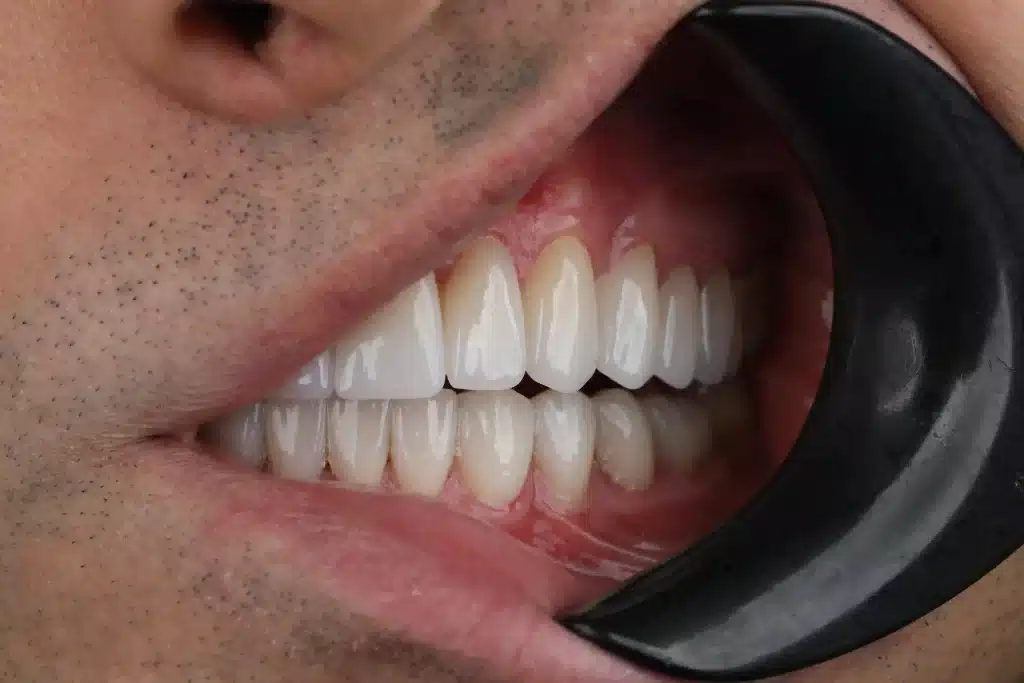
Quick answer
Composite veneers cost less upfront ($125–$230 per tooth) and can be finished in one visit, but typically last 5–7 years. Porcelain veneers cost more ($190–$360 per tooth), need 2–4 days for a lab-made fit, and usually last 10–15 years with around 95% survival at 10 years. Composite suits small, budget-conscious changes; porcelain suits a full smile makeover meant to last.
What composite and porcelain veneers actually are
Both composite and veneers share one goal: to mask the front surface of a tooth and improve its colour, shape or alignment. Where they differ is in the material and how it reaches your tooth. A composite veneer is built up directly on the tooth from a tooth-coloured resin: the same family of material used in dental bonding and white fillings.
Your dentist sculpts it layer by layer, hardens each layer with a curing light, then polishes it to a natural lustre, all in a single sitting.
A porcelain veneer is a thin, custom shell of dental ceramic made in a laboratory and then bonded to the tooth. Because it is fabricated outside the mouth, the dental technician can control colour, layering and translucency with a precision that is hard to match by hand.
Many modern porcelain veneers use materials related to those in dental crowns, such as lithium-disilicate (e.max) pressed ceramic, chosen for strength and light behaviour.
This chairside-versus-laboratory distinction drives almost every practical difference that follows: cost, number of visits, durability, how much tooth enamel is removed, and how each ages over time.
According to the American Dental Association, composite veneers "may require less tooth enamel to be removed and fewer visits", while porcelain veneers "are strong, long-lasting and natural-looking" but tend to cost more.
Your dentist sculpts it layer by layer, hardens each layer with a curing light, then polishes it to a natural lustre, all in a single sitting.
Neither material is universally "better". A skilled clinician can produce a beautiful result with either, and a rushed one can disappoint with both. The right choice depends on the specific tooth, the amount of correction needed, your budget and how long you want the result to last.
The aim of this guide is to give you the honest trade-offs so you can have an informed conversation with your dentist rather than chase a single "best" answer that does not exist. Throughout, remember that a veneer is a covering, not a cure: it does not treat underlying tooth decay or gum problems, which must be addressed first.
Chairside composite vs lab-made porcelain: the process and visits
The composite (direct) route is typically a single-appointment treatment. After lightly preparing the surface and isolating the tooth, the dentist applies a bonding agent, then builds the resin freehand to the desired shape and shade, curing as they go. Final contouring and polishing happen the same day, so you can leave with a changed smile in one visit.
This immediacy is one of composite's biggest advantages, especially for travellers on a tight schedule. It also means the artistry happens live in the chair, so the clinician's hand and eye matter enormously.
Porcelain veneers usually involve at least two stages. At the first visit, the dentist prepares the teeth (often removing a small amount of enamel), takes a digital scan or impression, agrees the shade, and fits temporary veneers. The laboratory then fabricates the shells: a process that takes several days.
At the second visit, the temporaries are removed and the porcelain is tried in, checked for fit and colour, and bonded in place. Because the work is built outside the mouth, the lab can refine details and characterise the surface in ways that are difficult chairside.
For dental tourism, this two-stage rhythm shapes the trip. Many clinics in Turkey compress porcelain treatment into one visit of several days, prep on day one, bonding later in the same week, rather than two separate journeys. A realistic porcelain timeline is often five to seven working days in-country, while a composite case for a few teeth may be completed in one or two days.
The Cleveland Clinic notes that veneer placement commonly spans preparation, temporary and bonding stages for the porcelain pathway.
Whichever route you take, the design stage deserves time. A wax-up or digital mock-up lets you preview shape and proportion before anything is bonded. If you are combining veneers with teeth whitening, whitening is usually done first, because veneers do not change colour once placed and the shade is matched to your final tooth colour.
Rushing the planning to save a day is rarely worth it; the smile you preview is the smile you keep for years.
Treatment Plan
Ready for a written Composite vs Porcelain Veneers: An Honest Decision Guide quote?
A NexWell coordinator reviews your case and replies with a personalised treatment plan and indicative pricing — usually within 24 hours.
Durability, lifespan and stain resistance
Longevity is where the two materials separate most clearly, and the published evidence is reassuringly specific. A systematic review of porcelain laminate veneers reported an estimated 10-year cumulative survival rate of around 95.5%, with debonding and fracture being the main reasons for failure.
By contrast, a 2023 systematic review and meta-analysis of resin composite laminate veneers found an estimated survival of about 88%: 91% for direct (chairside) and 84% for indirect (lab-made) composite. In plain terms, porcelain tends to last longer, but well-made composite still performs respectably over many years.
No veneer is for life, and no clinician can responsibly promise an exact lifespan. As a planning expectation, porcelain veneers commonly last in the region of 10–15 years and sometimes longer with good care, while composite veneers often need refreshing, repair or replacement sooner: frequently in the 5–7 year range. Your habits, bite and oral hygiene influence these figures as much as the material does.
Stain resistance is the other practical divider. Porcelain is glazed and largely non-porous, so it resists staining from coffee, tea, red wine and tobacco very well. Composite resin is more porous; over time it can pick up surface stains and lose some of its initial polish, which is why composite veneers usually benefit from periodic polishing and may eventually discolour at the margins.
If you drink a lot of staining beverages and want the lowest-maintenance colour stability, that consideration often nudges people toward porcelain.
Both materials can chip or debond under load. People who clench or grind, see teeth grinding and bruxism, put extra stress on any restoration, and a protective night guard is commonly advised to extend the life of either choice. Acidic diets, biting nails or ice, and using teeth as tools all shorten lifespan regardless of material.
The honest summary: porcelain generally edges ahead on durability and stain resistance, while composite trades some longevity for lower upfront cost and easier repair, discussed next.
Enamel preservation, reversibility, repairability and aesthetics
How much tooth you keep matters. Direct composite is often the more enamel-conserving option, since many cases need little or no enamel removal: a "minimal-prep" or no-prep approach. That makes composite potentially more reversible: less irreversible tooth structure is altered, so future options stay broader.
Porcelain typically requires removing a thin layer of enamel to create space for the shell and a natural emergence. Because enamel does not grow back, any preparation is permanent, which is one reason careful case selection is essential and why some patients with healthy, well-aligned teeth prefer composite or clear aligners to move teeth rather than reshape them.
Repairability favours composite. If a composite veneer chips, a dentist can often add and re-cure fresh resin chairside, frequently in one short visit. A fractured porcelain veneer usually cannot be patched invisibly and is generally replaced: a costlier, more involved fix.
So while porcelain lasts longer on average, when it does fail the remedy is bigger; composite fails more readily but is cheaper and quicker to mend.
Aesthetically, porcelain has the edge for many demanding cases. Ceramic transmits and scatters light much like natural enamel, giving depth and lifelike translucency that is hard to replicate by hand. For a full, uniform Hollywood smile or a complex smile makeover, porcelain's optical quality and stability are often decisive.
That said, in skilled hands composite can look excellent, particularly for single-tooth repairs, small gaps or modest reshaping where blending with neighbouring teeth matters more than wholesale transformation.
Comfort considerations apply too. Any enamel reduction can leave teeth temporarily more reactive, so let your dentist know if you already have sensitive teeth. Veneers also rely on healthy gums; pre-existing gum recession can expose margins and affect both appearance and longevity, so gum health is assessed before treatment.
If you are weighing veneers against fuller coverage, our veneers vs crowns and veneers vs composite bonding guides go deeper into when more or less tooth coverage is appropriate.
Composite vs porcelain veneers at a glance
Use the comparison below as a quick orientation, not a prescription. The right answer still depends on your individual teeth, bite and goals, which only an in-person or photo-based assessment can establish.
Factor / Composite veneers / Porcelain veneers
How it is made / Built directly on the tooth from resin, chairside / Custom ceramic shell made in a dental laboratory
Visits / Often a single appointment / Usually two stages (prep + bond), often a few days apart
Typical lifespan (planning guide) / Around 5–7 years; ~88% survival in studies / Around 10–15 years; ~95% 10-year survival in studies
Stain resistance / Lower, resin is more porous, can discolour over time / High, glazed ceramic resists staining well
Enamel removal / Often minimal or none; more conservative / Usually a thin layer removed; not reversible
Repairability / Easy, often patched and re-cured chairside / Harder, fractures generally mean replacement
Aesthetics / Very good in skilled hands, best for small changes / Excellent translucency, strong for full smile cases
Upfront cost / Lower per tooth / Higher per tooth
Best suited to / Minor chips, gaps, budget-conscious or reversible plans / Long-lasting, uniform, high-aesthetic transformations
Read the table as a set of trade-offs that move together. Composite clusters around lower cost, fewer visits, easier repair and enamel conservation; porcelain clusters around longer life, better stain resistance and superior optics at a higher price. Almost nobody needs the same answer for every tooth: some patients sensibly combine the two, using porcelain on highly visible front teeth and composite elsewhere.
Bring this table to your consultation and ask the dentist to map each row to your specific situation.
Who each suits, and cost and timeline in Turkey
Composite veneers tend to suit people who want a lower upfront cost, fewer visits, a more enamel-conserving and reversible approach, or who are addressing a small number of teeth: a chipped edge, a minor gap, mild reshaping. They are also a sensible way to "test" a change before committing to porcelain.
Porcelain veneers tend to suit those seeking maximum longevity, the best stain resistance, and a uniform, high-aesthetic result across the smile zone, for example a full Hollywood smile, and who are comfortable with a small, permanent amount of enamel reduction.
If you are unsure how many teeth are even involved, our how many veneers do I need guide helps frame the conversation.
Good candidates for either share the same foundations: healthy gums, no untreated decay, and a bite that can be managed (with a night guard if you grind). Veneers are not a treatment for disease; they are a cosmetic covering placed on sound, prepared teeth.
If implants or missing teeth are part of your picture, those are separate procedures, see dental implants in Turkey, and should be planned alongside, not instead of, any veneer work.
On cost, Turkey is popular because the same materials are typically offered at a fraction of UK or US private prices. For context, private porcelain veneers in the UK are commonly quoted around $890–$1,900 per tooth. Turkish clinics usually sit well below that, with composite veneers priced lower per tooth than porcelain.
We publish indicative ranges only: see our cost of veneers in Turkey and Hollywood smile cost pages, because true cost depends on tooth count, material grade, lab work and clinic.
The single reliable figure is a written itemised quote that lists each tooth, the material, the lab, and what is and is not included (consultation, scans, temporaries, follow-up, any guarantees in writing).
On timeline, a composite case for a handful of teeth can often be done in one or two days, while a full porcelain set is commonly a five-to-seven-day in-country stay covering preparation and bonding. Build in buffer days for review and minor adjustments, and never let a packed itinerary push the clinical work faster than it should go.
Request your treatment plan, shade choice and quote in writing before you travel, and treat any promise of a permanent, risk-free or "lifetime" result with healthy scepticism: no ethical clinician can guarantee that.
Vetted partner network
NexWell coordinates with TEMOS-accredited clinics or Ministry of Health–licensed facilities in Turkey.
Board-certified review
Content reviewed by Dt. Taner Bektaş — Turkish Dental Association (TDB).
5.0★ from real patients (2 reviews)
“I'd been self-conscious about my teeth my entire adult life: crowded, discoloured, chipped. I sent photos, got a digital smile design back within 48 hours, and booked. Five days in Istanbul, and I came home with a completely new smile.…” — James T., Dublin, Ireland
No obligation
Get your Composite vs Porcelain Veneers: An Honest Decision Guide plan
Send your case and a coordinator returns a written plan and an indicative quote — usually within a day.
Questions Patients Ask Before They Commit
Related reading
Treatment Guide
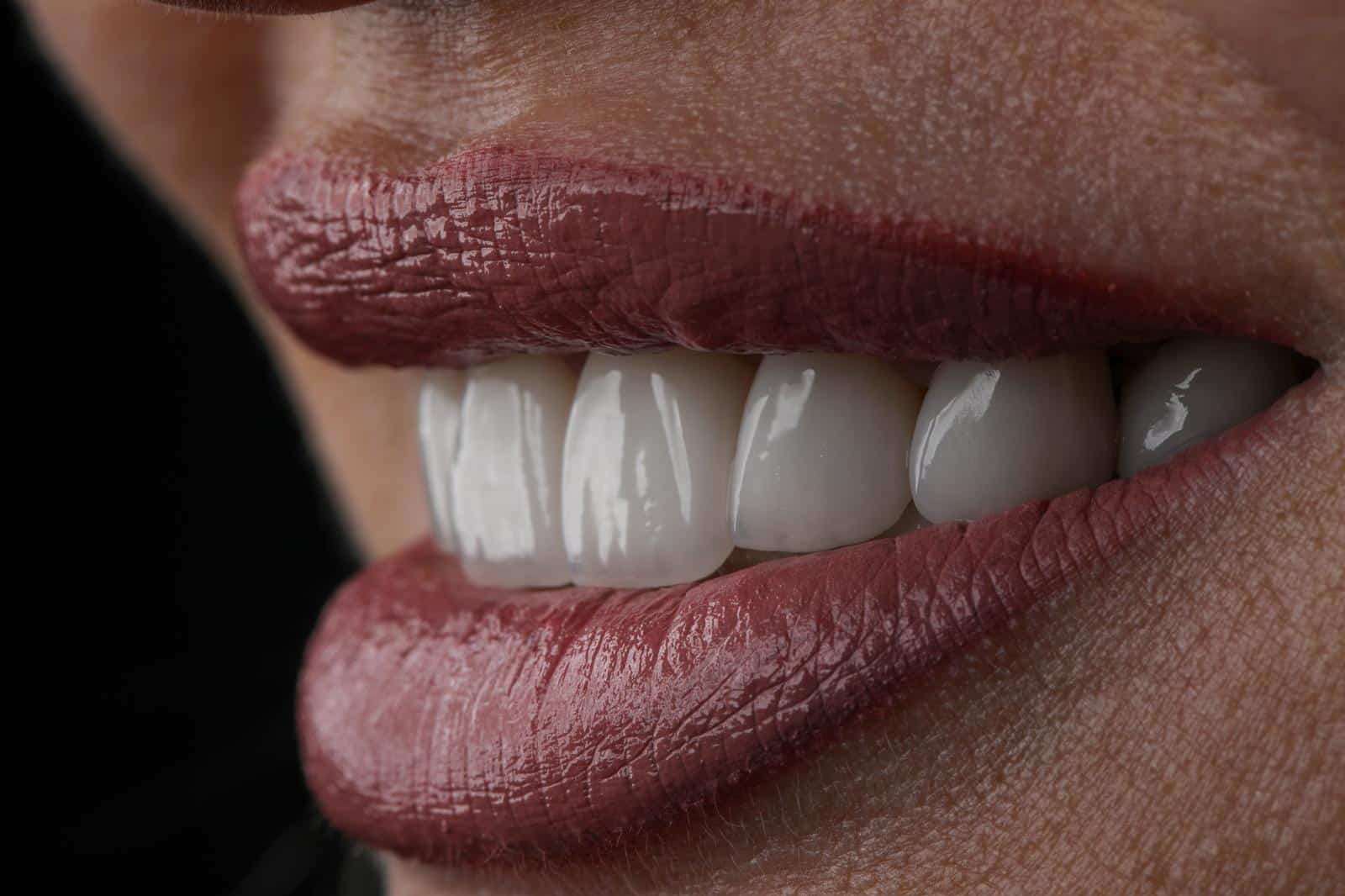
Porcelain Veneers Explained: Process, Materials & Care
How porcelain veneers work: ideal candidates, the minimal-prep process, materials, lifespan, pros and cons, aftercare and indicative cost in Turkey.
cosmetic-dentistry
Porcelain Veneers vs Composite Bonding: Durability, Aesthetics & Value Comparison
A practical comparison of porcelain veneers and composite bonding: when each is appropriate, longevity differences, maintenance requirements, and the true cost per year of each option.
dental
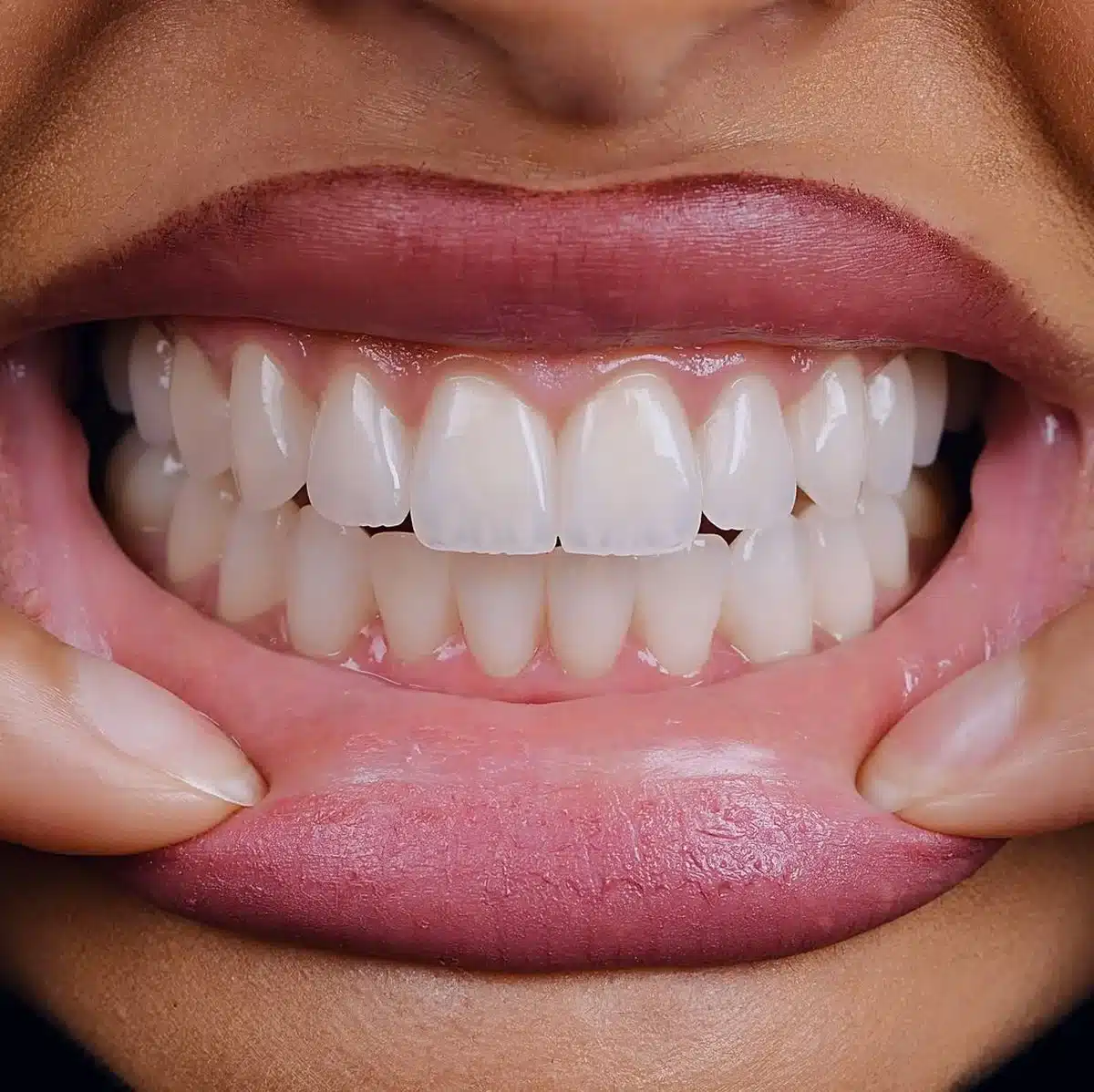
Laminate Veneers in Turkey
Ultra-thin porcelain veneers (as little as 0.2 mm) that require minimal tooth preparation. Preserve more natural enamel while achieving a stunning cosmetic result.

dental-treatments
Veneers Turkey Cost 2026: Composite vs Porcelain Pricing Guide
Understand veneer pricing in Turkey by case size, material, smile design complexity, and the difference between cosmetic volume clinics and high-control aesthetic workflows.
Plan the next step clearly
Use this page as a decision-support guide, then move into quote review, treatment comparison, and travel planning with coordinator support.
Decision Context
Patients compare this treatment inside the trip around it
Treatment pages perform better when they acknowledge arrival flow, destination trust, and the recovery rhythm patients are trying to visualise before booking.

The provider decision starts with arrival confidence
Patients compare treatment pages while also asking how first-day logistics, transfers, and scheduling will actually work.

The destination still influences medical trust
A treatment page is stronger when it recognises that the city itself remains part of the decision frame for international patients.

Recovery pacing changes how people evaluate options
Different procedures feel more or less realistic depending on how patients picture the slower hours between appointments.
References
- American Dental Association – MouthHealthy: Veneers
- Cleveland Clinic – Dental Veneers: Types, Procedure and Lifespan
- Survival Rates for Porcelain Laminate Veneers: A Systematic Review (PMC)
- Survival and Complication Rates of Resin Composite Laminate Veneers: A Systematic Review and Meta-Analysis (PubMed)